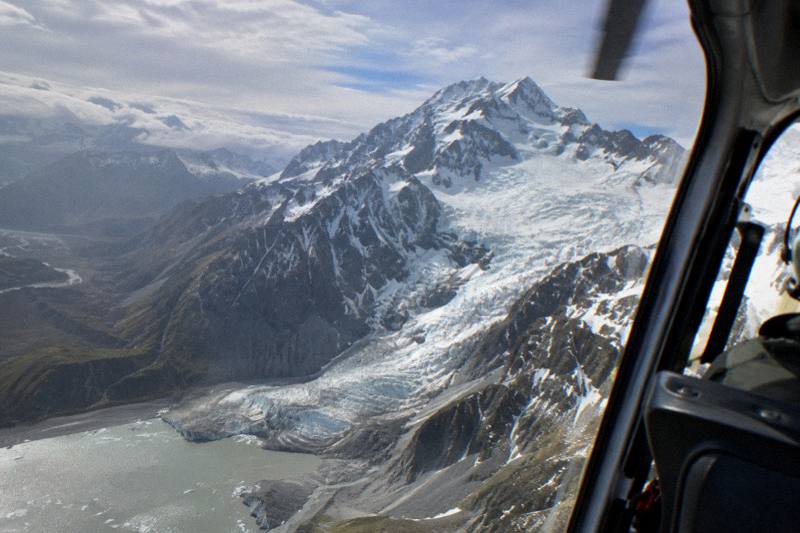
Can You Walk To The Tasman Glacier Without A Heli Hike?
You cannot walk onto the ice of the Tasman Glacier on foot, but you can walk to a moraine viewpoint above Tasman Lake in about 30 minutes. Here is what each option gives you.
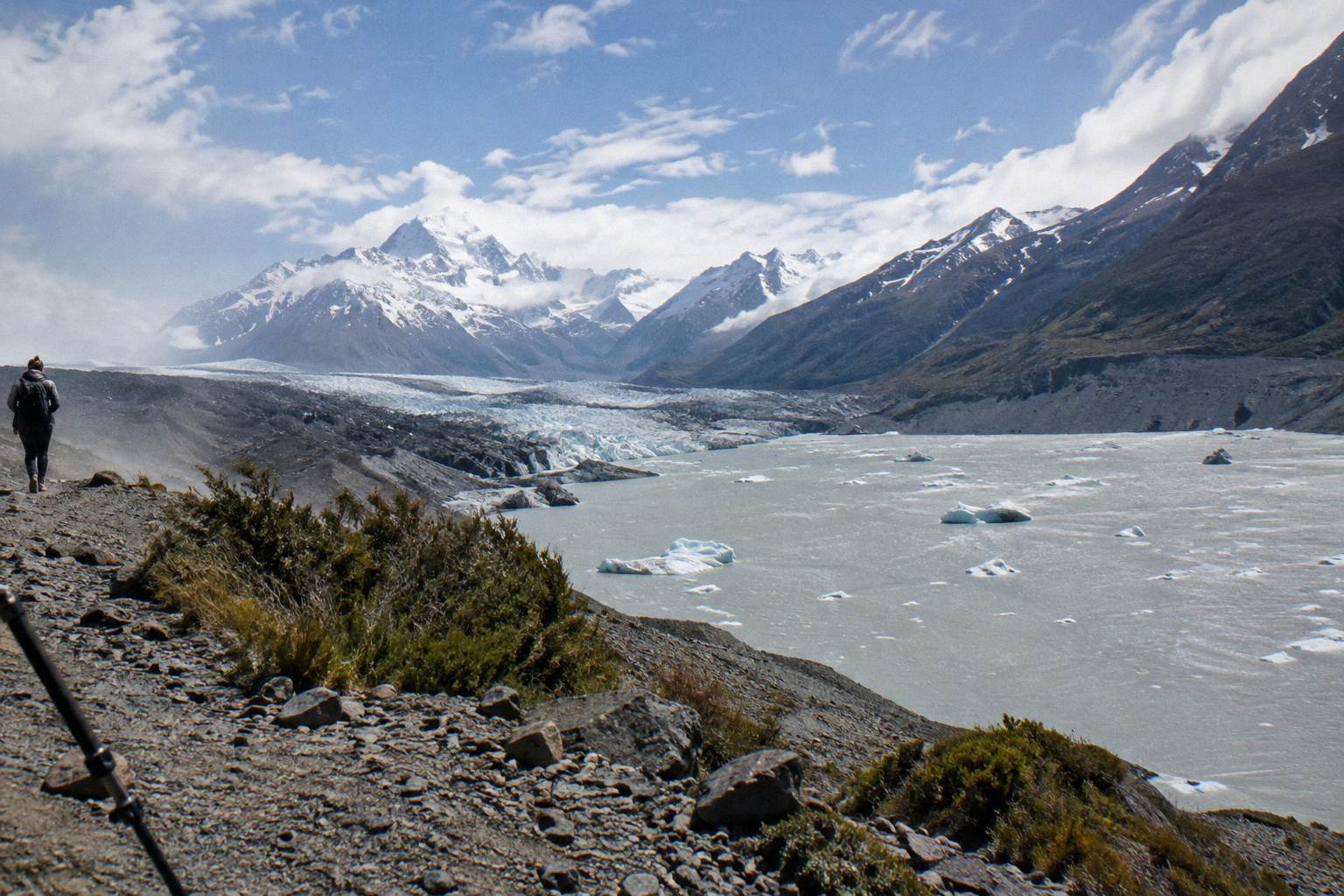
No, you cannot walk onto the ice of the Tasman Glacier on foot. The Department of Conservation provides no track onto the ice, the lower reaches of the glacier are buried under rock, and the department explicitly warns of hazards around the glacier lake and moraine, including unstable icebergs and very cold water. What you can do on foot is walk the Tasman Glacier View Track, a 1.5 km return climb of about 30 minutes to a viewpoint on the moraine wall overlooking Tasman Lake and the ice beyond it.
That is the short version, and it is worth being blunt about it because a lot of vague travel copy implies otherwise. The Tasman Glacier is New Zealand's largest and longest glacier, 23 km long and up to three km wide according to the Department of Conservation, yet almost none of it is reachable in boots from a trailhead. The lower tongue is covered in rock. The upper glacier sits behind crevassed, hazardous terrain that only guided parties with aircraft access enter. The scenic flights, the guided hikes on the ice, and the lake boat are the three ways people genuinely get close.
The question behind the question is usually value. Readers asking this are weighing whether the walk gives them enough of the glacier to skip a flight, or whether they should pay for the guided ice time. Both answers are legitimate, and the on-foot options are worked through in full below before being compared with what a helicopter trip actually buys. Along the way it covers the viewpoint walk itself, why the visible part of the glacier looks nothing like the postcard ice, the boat alternative, and how to build a single day around whichever option you choose.
What The Walk To The Glacier Viewpoint Actually Involves
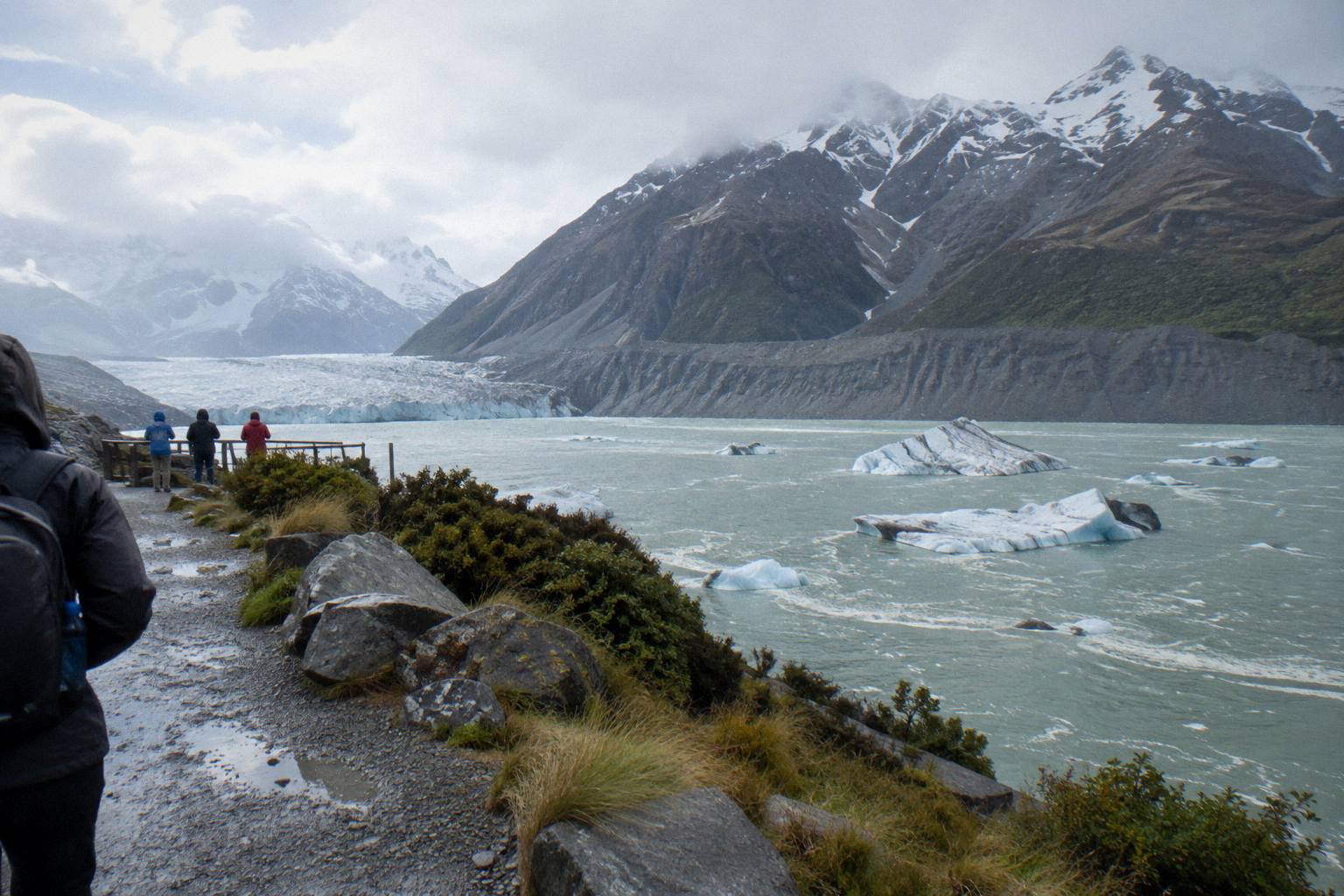
The Tasman Glacier View Track is a 1.5 km return walk of about 30 minutes, and it is far from a flat stroll: the track climbs more than 300 steps up the moraine wall to reach a viewpoint perched above Tasman Lake. The track starts from the Tasman Valley car park, which is free to park in and about 10 minutes' drive from Aoraki / Mount Cook village. From the viewpoint you look down over the grey lake, icebergs in summer and lake ice in winter, and up the full rock-covered length of the glacier toward the high peaks, a panorama that takes in most of the glacier's lower half in a single frame.
It is a short walk with a real payoff, but it is a lookout, not access. You finish on a mound of rubble, the moraine wall, with the lake between you and the ice face, and the distance is close enough to read the scale of the ice cliff yet far enough that no part of the glacier is within touching distance. The Department of Conservation notes the Blue Lakes sit five minutes one way off the same access road, once blue, now fed by rainwater and looking green. Most visitors combine the two in under an hour and drive on, and on a clear day that hour delivers one of the better free views in the park.
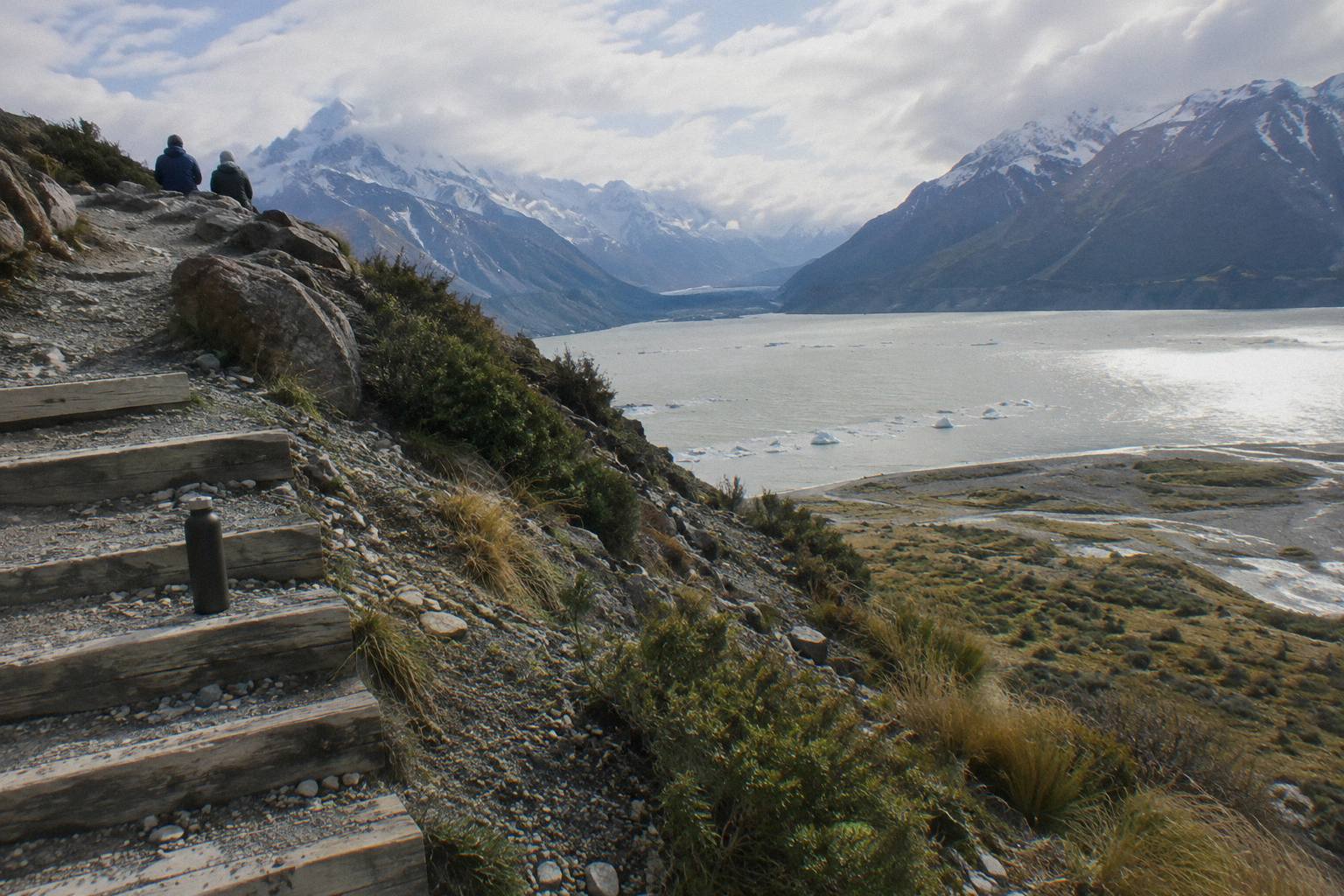
The Department of Conservation's own description of the glacier's retreat frames what you are looking at: "Like glaciers worldwide, Tasman Glacier is retreating as the climate changes. Tasman Lake did not exist until 1974. It is growing rapidly as the glacier melts." The lake you are photographing is younger than most of the people photographing it, and it exists because the ice is pulling back up the valley. Standing on the moraine, you are standing on the line the glacier once pushed past.
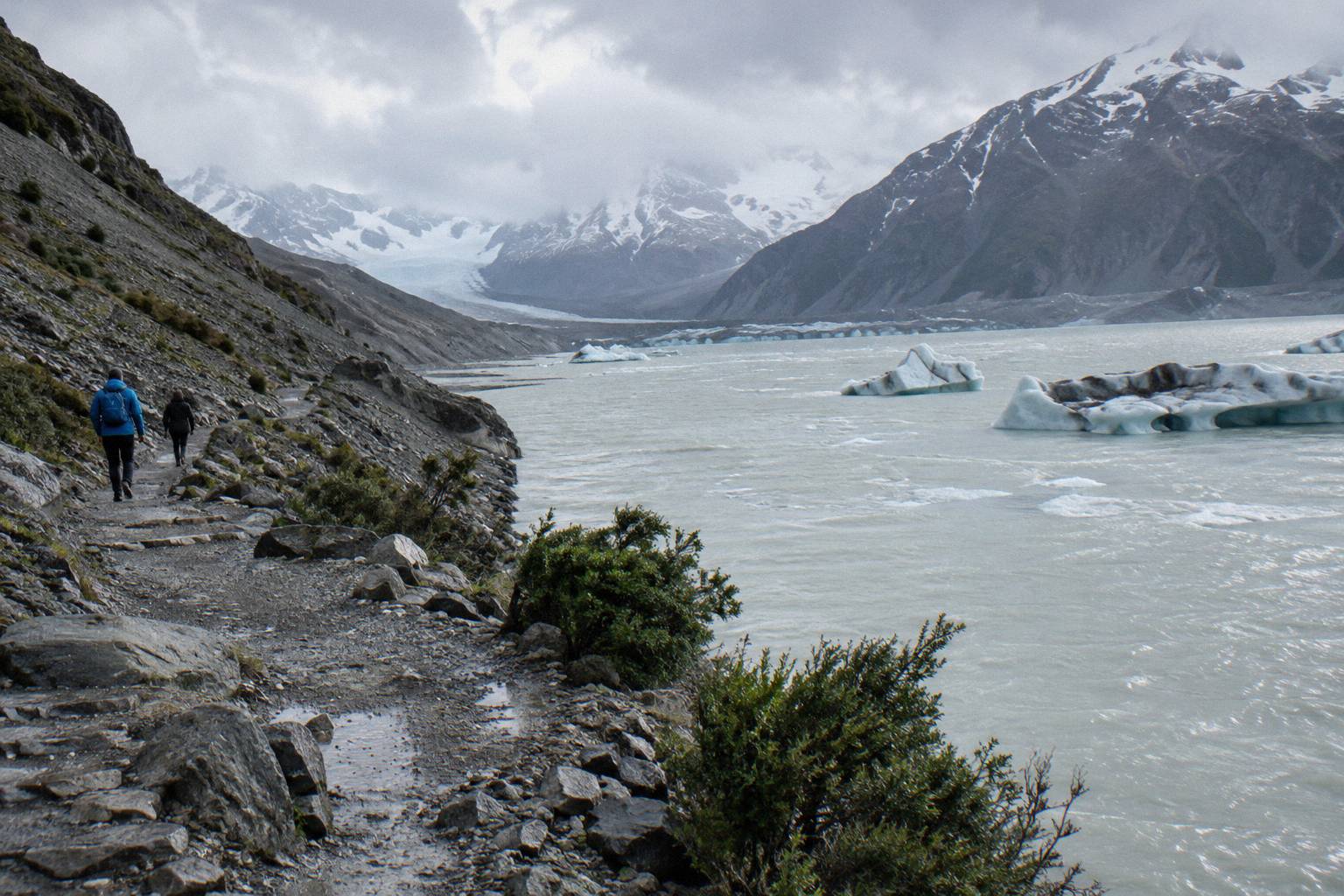
Hazard warnings on the same department pages matter here. The lake shore and moraine carry risks from calving ice, unstable icebergs and very cold water, and the department's safety notes list glacier lake and moraine hazards explicitly. That is part of why there is no track down to the shore, and no path along or onto the ice. The viewpoint is where the maintained access ends, and the barriers between it and the water are there for reasons the department takes seriously.
Why The Lower Glacier Is Rock, Not Blue Ice
The lower reaches of the Tasman Glacier are covered in rock, so even where ice is the ground beneath your boots, the terrain you can actually see is a grey rubble field rather than blue ice. The glacier is still there under the debris; it simply hides its frozen bulk beneath a grey layer of stone, which is why the lower section looks nothing like the blue ice most people picture. The Department of Conservation describes the lower glacier this way plainly, and it is visible from the main highway at the park entrance, which surprises many first-time visitors: a wide grey tongue filling the valley floor, read as a landslide until someone tells you it is ice underneath. The blue ice of the brochures is real, but it sits kilometres upstream from anything a road or track touches.
This rock cover, technically a supraglacial moraine, is one of the reasons walking on the glacier is not simply discouraged but effectively not offered. The debris layer insulates the ice, hides crevasses, and sheds stones continuously, so the surface is unstable underfoot in ways that are invisible from above. The attractive blue ice people picture sits much higher up the glacier, around and above the landing zones the flight operators use, and the only practical way there is by air, which is the entire commercial logic of the heli hikes and snow-landing flights.
- Glacier Guiding 3-Hour Heli HikeNZ$1,021
- Helicopter Line 3-Hour Heli HikeNZ$1,021
- 12-Hour Bus Combo, Heli HikeNZ$1,210
- 7-Hour Fly-In Heli HikeNZ$2,149
The retreat itself is documented year by year. The 2026 end-of-summer snowline survey by Earth Sciences NZ, formerly NIWA, found retained snow on some glaciers but described it as "only a stay of execution and not a reversal in the long-term decline of ice coverage". In other words, one good snow year does not rebuild a glacier that has been thinning for decades, and the lake keeps growing as the terminus melts back. Any walk, flight or boat ride you take here is a snapshot of a landscape still in motion.
For trip planning this reframes the choice. The walk and the flight are not two versions of the same experience at different prices. The walk shows you the geography of a retreating glacier from its safest vantage point. The flights land you in terrain that has no walking equivalent at all, and the guided hikes put crampons on your feet on ice that never appears from the viewpoint. Choosing between them is really choosing which version of the glacier you want to remember.
Is The View Track Worth Doing If You Are Also Flying?
Yes, the view track is still worth doing even if you are also flying that day, because the two experiences show you different things. The walk starts from a free car park and takes under an hour, so it is easy to fit into the same day as your flight. The flight gives scale from above and the ice itself; the moraine viewpoint gives the long read of the valley, the lake, and the rock tongue that no aircraft window frames properly. Plenty of visitors do the viewpoint walk first, then fly, and say the walk made the flight make sense, because they could finally see where the grey tongue ended and the white upper glacier began.
The order matters less than the spacing. The heli hikes run to tight schedules from Mount Cook Airport, and operators ask for punctual check-in, 15 minutes before departure on The Helicopter Line's trip, so the safe pattern is the walk either well before your flight time or after you are back on the ground. Our guide to planning a Mount Cook day around a heli hike works through the timing in detail, including where meals and the drive back to Twizel or Tekapo fit.
One practical note from the Department of Conservation: White Horse Hill and other DOC car parks charge for parking with only a short free window, while the Tasman Valley car park for the view track is free. If you are stringing together walks, the Hooker Valley Track, 10 km return through three swing bridges, is the other big on-foot draw in the park, and the comparison is worth a separate look at heli hike or Hooker Valley Track. Between the two walks and a flight, a very full day at Mount Cook costs nothing beyond the flight and petrol.
Getting Closer Without Flying: The Lake Option
Yes, you can get close to the glacier without a helicopter: the lake option is the one way to approach the glacier front on the water. A boat tour operates on Tasman Lake, taking visitors right up to the glacier face and the icebergs, so you can see the ice at close range without ever taking to the sky. That is a separate product with its own operators and its own booking, and it sits between the viewpoint walk and the flights in both price and proximity. You still never stand on the ice, but you are at water level beside it, close enough to read the banding in the ice cliff and the size of the bergs drifting past the hull.
The lake option suits visitors who cannot or would rather not fly, and families whose youngest is under the heli hike minimum ages, which are 9 on the Mt Cook Glacier Guiding trip and 10 on The Helicopter Line's. It also dovetails with the view track, since both run from the Tasman Valley side of the park and share the same road, so a half day covers the lookout above the lake and the lake itself. For a fuller write-up of that product, see the specialist site dedicated to the Tasman Lake boat tour.
What none of the on-foot or on-water options deliver is time on the ice. That single distinction is what the guided flights sell, and it is why the three products coexist rather than compete: walk, float or fly are three different distances from the same glacier, and each has an audience that finds the others pointless. Knowing which audience you are in is the whole decision. More of these guides are collected on Mount Cook Helicopter Hike.
How The Walk Compares With A Heli Hike
The walk is free, takes about 30 minutes, and ends at a lookout; the heli hikes cost from NZ$1,021 per person, run about 3 hours in total, and put you on the ice for up to 2 hours. Those numbers are not in the same category, and pretending they are alternatives at different prices misreads both. One is a viewpoint, the other is a guided landing on a glacier, all prices here in New Zealand dollars.
| Tasman Glacier View Track | Guided heli hike | |
|---|---|---|
| Cost | Free (free car park) | From NZ$1,021 per person |
| Time | About 30 minutes, 1.5 km return | About 3 hours total, up to 2 on the ice |
| Effort | 300+ steps, moderate climb | Moderate fitness, walking on ice with crampons |
| Minimum age | None stated | 9 or 10 depending on the operator |
| What you get | Viewpoint above Tasman Lake | Two scenic flights and guided time on the glacier |
| Weather dependency | Walk in almost any conditions | Flights weather permitting, refund or rebook if cancelled |
If budget is the constraint, the walk plus the lake boat plus a shorter scenic flight can build a very good glacier day for less than a heli hike. If standing on the ice is the goal, no combination of walking substitutes for it, and the money buys something the free options cannot. Neither answer is wrong; the mistake is expecting the walk to do the flight's job, or resenting the flight's price for not being free like the walk.
The middle path is worth naming: The Helicopter Line's 40-Minute Tasman Landing on its 40-Minute Tasman Landing puts you on the snow for 5 to 10 minutes from NZ$713 per person, from Glentanner Park. No hiking, no crampons, a fraction of the time on snow. Some travellers combine exactly that with the free view walk and feel they saw the glacier from every angle that matters.
What The Guided Trips Actually Fly You To
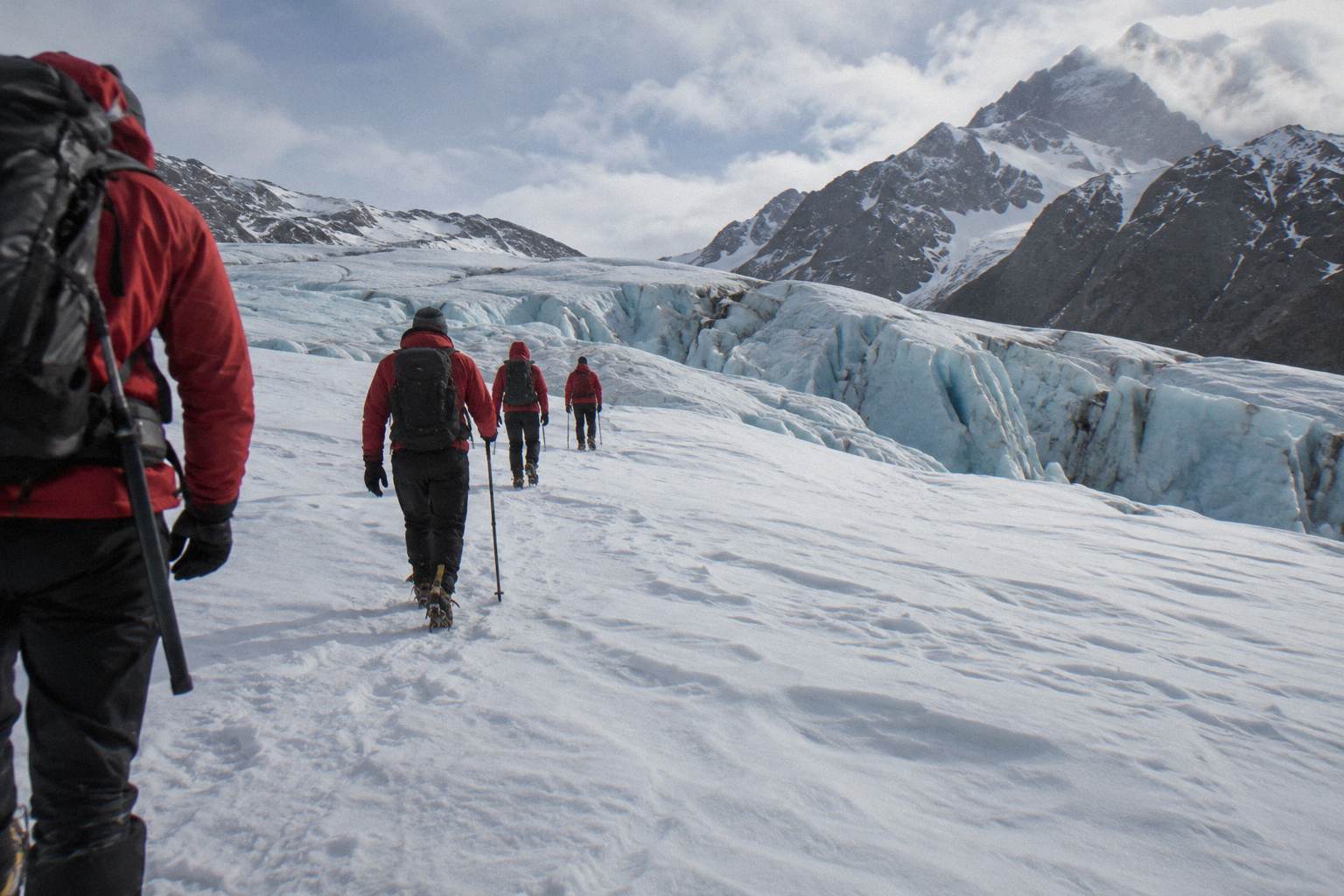
The guided heli hikes fly you to the upper Tasman Glacier, where you land on the ice, get fitted with crampons, and spend up to 2 hours walking across the glacier with a guide. The whole experience runs about 3 hours door to door. The landing zones sit well above the rock-covered tongue, in the white and blue terrain the viewpoint only hints at, and every operator's description of the ice time carries the same caveat: weather permitting, never guaranteed. The flights in and out are scenic in their own right, tracking the glacier's length before you even land.
The same core experience is sold under more than one brand from Mount Cook Airport. Mt Cook Glacier Guiding runs its guides on Mount Cook Ski Planes and Helicopters aircraft, detailed on the operator's own trip page, and The Helicopter Line flies with Alpine Guides guiding, also described on The Helicopter Line's page. A third brand, Southern Alps Guiding, sells a similar trip with a 9:00 AM start and describes itself as an approved DOC concession holder. These are different companies with a very similar day out, not rivals to be ranked, and their details differ in ways that matter.
| Trip | Total time | On the ice | Minimum age | Max group |
|---|---|---|---|---|
| Glacier Guiding 3-Hour Heli Hike | 3 hours | Up to 2 hours, weather permitting | 9 | 11 |
| Helicopter Line 3-Hour Heli Hike | About 3 hours | 2 hour guided hike | 10 | 20 |
| 40-Minute Tasman Landing (snow landing, no hike) | 40 minutes | 5 to 10 minutes on snow | Check when booking | 6 |
The gear is included on the hikes: boots, crampons or snowshoes depending on season, poles, and waterproofs if required, so the only packing that falls to you is warm layers, sunglasses and a camera. Ages, weight rules and cancellation terms belong to each operator and are covered properly in our guide to how to book a glacier heli hike, including the free cancellation up to 24 hours before departure that both core heli hikes offer.
Whether the ice time justifies the price is a personal call, and the question is weighed out on our page asking is the glacier heli hike worth it. What is not debatable is the access point: no track, boat or road delivers what the helicopter delivers, and no amount of determination at the viewpoint changes that.
The Glacier Guiding 3-Hour Heli Hike is rated 4.9 from 340+ reviews and carries the smallest maximum group at 11. Check availability if the guided ice time is the version of the glacier you came for.
Combining The Walk And A Flight In One Day
Yes, you can comfortably do both in a single day. The view track takes about 30 minutes to walk, the flight trips run about 3 hours from start to finish, and the departure airport is only a short drive away, so combining the two leaves plenty of room in your schedule. The practical constraints are check-in times, weather call timing, and the fact that both operators make the weather decision on the day, sometimes with little notice, so the walk is the ideal flexible filler around a fixed flight slot rather than something you schedule tightly.
A sensible shape: morning view track and Blue Lakes walk, early afternoon heli hike, evening drive out to Twizel or Tekapo, the nearest supermarket towns at one hour and 1.5 hours away. Winter complicates driving, as the Department of Conservation warns access may be limited from June to September by snow, but the glacier season itself runs year round. If one day at Mount Cook is all you have, our piece on doing the heli hike and Hooker Valley Track in one day maps a tighter schedule that squeezes the park's two headline experiences into a single visit.
Whatever you choose, book the flight with flexibility in mind rather than certainty. Free cancellation up to 24 hours before departure applies on the core heli hikes, and a weather cancellation gets you a rebooked date or a full refund rather than an argument. The free walk, meanwhile, never cancels at all, which is its own quiet advantage, and the viewpoint will still be there to fill any gap the weather opens in your plans.
Common Questions About Walking To The Tasman Glacier
Can You Walk To The Tasman Glacier Without A Heli Hike?
No. There is no track onto the ice, the lower glacier is rock-covered, and the Department of Conservation warns of hazards at the lake and moraine. You can walk to a viewpoint above Tasman Lake on the 1.5 km return Tasman Glacier View Track in about 30 minutes.
Can You See The Tasman Glacier Without Walking Anywhere?
Yes. The Department of Conservation notes the glacier is visible from the main highway at the park entrance, appearing as a wide rock-covered tongue in the valley floor.
How Hard Is The Tasman Glacier View Track?
It is a short but steady climb: 1.5 km return, about 30 minutes, with more than 300 steps up the moraine wall to the viewpoint. Most people of average fitness manage it easily.
Is Tasman Lake Worth Seeing?
Yes, and it is geologically remarkable: the lake did not exist until 1974 and is growing rapidly as the glacier melts. Icebergs float in it in summer and it holds lake ice in winter.
Can You Get Onto The Glacier Ice Without A Helicopter?
Not on foot. The closest approach without flying is the boat trip on Tasman Lake, which runs to the glacier face and icebergs from the water, a separate product from the guided hikes.
Do The Heli Hikes Guarantee Time On The Ice?
No. Every operator states the glacier landing and time on the ice are weather permitting, and if the operator cancels for weather you get an alternative date or a full refund.