Do You Need Mountaineering Experience For A Mount Cook Glacier Heli Hike?
No mountaineering experience is listed as a requirement on any Tasman Glacier heli hike booking page. Here is what the operators actually ask for, brand by brand.
No. No booking page for the Tasman Glacier heli hike lists mountaineering experience as a requirement, from any of the brands selling it. The trip is described as a guided walk on the glacier, not a climb: the guide fits your crampons, the group stays on walking terrain, and the stated demands are things like moderate fitness and confident walking on uneven ground. Ropes, harnesses and ice climbing belong to different products entirely. If you're unsure how your own fitness stacks up against those demands, the guide to heli hike fitness and difficulty compares the requirements each Tasman operator publishes.
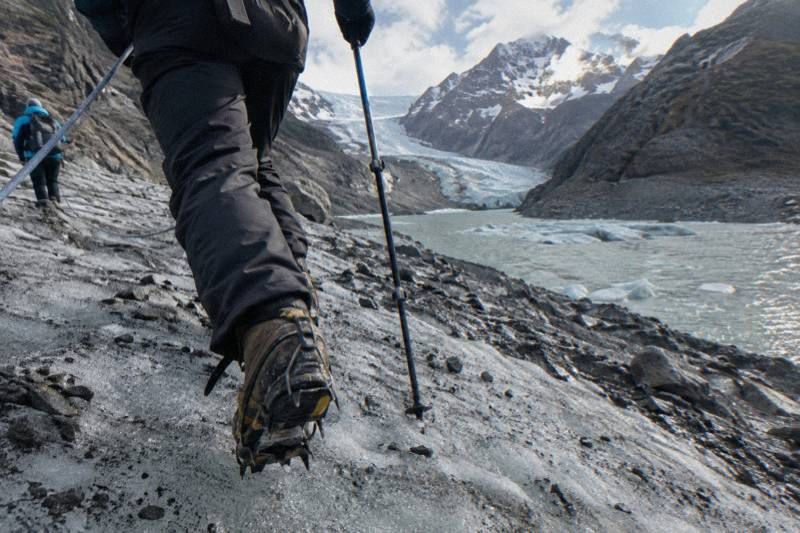
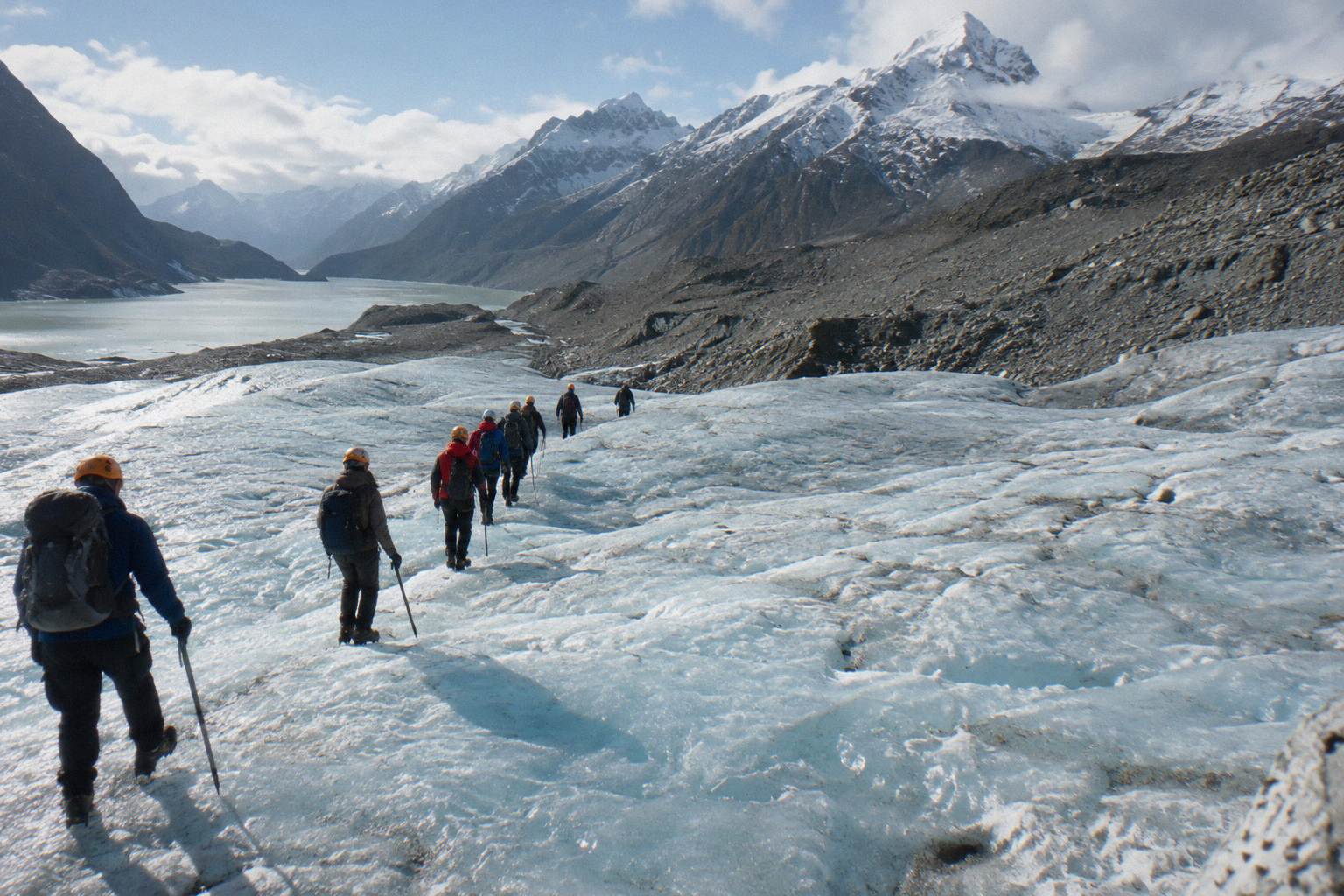
That one-line answer surprises people who have seen photographs of the trip. The images show small groups in bright jackets standing on rippled blue ice, and blue ice reads as high country, the kind of surface that looks like it belongs to climbers with helmets and ropes. The reality on the standard heli hike is closer to a very well-equipped guided walk. You land, the guide hands out boots and socks, straps crampons onto those boots, gives you a pole, and leads the group across a section of the glacier chosen for that day's conditions. Nothing in the listed requirements asks you to know how to use an ice axe, self-arrest, read a crevasse field or tie a knot.
"Hike" is the accurate word in the product name. Alpine Guides, which supplies the guides for the version sold with The Helicopter Line's aircraft, calls it "not a strenuous hike" and "suitable for people of average fitness" on its own trip page. The Helicopter Line asks for "moderate fitness and hiking ability" and the ability to walk at least 1 kilometre and climb or descend stairs easily. Those are walk-to-the-shops demands, not mountain demands. If stairs and a flat kilometre are fine for you, the fitness box is ticked.
What the booking pages do take seriously is the terrain and your own body. The ice is uneven, the weather can turn, and the operators ask you to disclose medical conditions, tell them about mobility limits, and arrive dressed for cold. Those practical points, brand by brand, are covered below, because they differ more between the companies than you might expect for what is essentially the same day out.
If you have read this far and the answer has settled the main worry, the practical question becomes which listing to book.
What The Operators Actually Require You To Be Able To Do
The stated requirements are walking-based: The Helicopter Line wants moderate fitness, the ability to walk at least 1 km and manage stairs, and children who are confident on uneven terrain. Mt Cook Glacier Guiding's booking page asks for a moderate fitness level and rules out heart problems and other serious medical conditions. Alpine Guides calls the hike suitable for average fitness. No page mentions climbing skills, prior glacier travel or instruction of any kind.
Read as a list, the requirements look like a gentle health questionnaire rather than a mountain resume. That is deliberate. The Tasman Glacier heli hike is designed for first-timers: the operators know most customers have never worn crampons, and the whole format, a short flight, a gear fitting, a guided 2-hour walk, assumes zero previous ice time. The guide handles every judgement call, from where the group walks to how fast it moves. If the flight rather than the ice is what gives you pause, the guide to motion sickness on the Mount Cook heli flight explains what the short helicopter ride actually involves.
- Glacier Guiding 3-Hour Heli HikeNZ$1,021
- Helicopter Line 3-Hour Heli HikeNZ$1,021
- 12-Hour Bus Combo, Heli HikeNZ$1,210
- 7-Hour Fly-In Heli HikeNZ$2,149
Three brands sell essentially the same day out from Mount Cook Airport, and it helps to know their names before you read any listing. Mt Cook Glacier Guiding is the guiding brand that flies with aircraft from Mount Cook Ski Planes and Helicopters, and it has no website of its own. The Helicopter Line supplies the aircraft and pairs with Alpine Guides for the guiding. Southern Alps Guiding is a third brand selling a similar trip. They are different companies offering a very similar product, not rivals with different difficulty levels.
The terrain facts behind the fitness wording are worth knowing. The landing site sits around 1,200 metres above sea level on the Tasman Glacier, according to Alpine Guides, and the walk covers gently rolling ice rather than steep ground. The glacier itself is New Zealand's largest and longest at 23 km, up to three km wide, so there is no shortage of flat-ish walking room for a guide to choose from. You are not being asked to climb anything; you are being asked to walk on a surface that is bumpy, sometimes slushy and sometimes hard.
| Requirement area | The Helicopter Line (with Alpine Guides) | Mt Cook Glacier Guiding | What it means in practice |
|---|---|---|---|
| Prior experience | None listed | None listed | First-timers are the norm, not the exception |
| Fitness wording | "Moderate fitness and hiking ability", 1 km walk, stairs easily | Moderate fitness level | "Not a strenuous hike" per Alpine Guides |
| Terrain confidence | Children must be "confident walking on uneven terrain" | Check this on the booking page | Expect lumpy ice, not a paved track |
| Medical limits | Heart conditions excluded; mobility, knee, hip or back injuries, vertigo flagged by Alpine Guides | No heart problems or serious medical conditions | Disclose conditions when booking |
| Wheelchair access | Not wheelchair accessible | Not wheelchair accessible | Both booking pages state this plainly |
One requirement nobody prints but every operator implies: tell the truth on the day. If a knee struggles on stairs, say so at check-in, because the guide can adjust pace and route within the group. If a heart condition exists, the booking pages ask you not to book this trip at all, and a doctor's advice beats any article, including this one.
The Fitness Lines, Brand By Brand, In The Operators' Own Words
The Helicopter Line says moderate fitness and hiking ability, the ability to walk at least 1 kilometre and to climb or descend stairs easily. Alpine Guides says the hike is not strenuous and suits people of average fitness, but lists mobility problems, knee, hip or back injuries, heart conditions and vertigo as reasons not to come. Mt Cook Glacier Guiding's page says moderate fitness, no heart problems or other serious medical conditions.
The differences between those wordings are small but real, and they mostly concern who should not book rather than who should. Alpine Guides is the most explicit about exclusions, naming vertigo and joint injuries directly. The Helicopter Line frames its line positively, as things you should be able to do. Mt Cook Glacier Guiding keeps it shortest. All three agree on the essentials: this is a walking trip, your own legs do the work, and the guide does everything technical.
The Queenstown packages carry sterner wording, and it matters if you are considering one. The 12-hour bus combo from Cheeky Kiwi Travel states a strong physical fitness level and "a large amount of hiking" on its booking page, and it rules out walking disabilities, back problems, heart conditions, serious medical conditions and pregnancy. That is not because the glacier section is harder; it is because the day around it is long, from a 6:30 am start at The Station in Queenstown to a roughly 12-hour round trip. The 7-hour fly-in version with True South Flights asks only for moderate physical fitness and no heart problems, and it is not recommended for pregnant travellers.
Neither experience nor extreme fitness is the real filter here. The real filter is whether you can be on your feet, on uneven ground, in cold wind, for roughly two hours, and whether your doctor is comfortable with the heart-and-effort side of that. A walker who manages a hilly 5 km at home comfortably is above the bar every brand sets. Someone who finds a flight of stairs genuinely hard will not enjoy the ice, whatever the guide does.
Could the walk be skipped entirely if the legs are doubtful? Yes, in a different way: the snow-landing flights, like the 25-Minute Alpine Landing from Mount Cook Airport, put you on the snow for a photo stop with no walking requirement listed at all. They are different products, flights rather than hikes, but they exist precisely for travellers whose knees have opinions.
Who Does What: The Guide's Job Versus Your Job On The Ice
Your job is to walk, listen and stay with the group. The guide's job is everything technical: choosing the landing site, reading the ice, fitting your crampons, setting the pace, carrying the rope knowledge and making the weather-delay calls. You never tie in, never navigate and never judge the terrain on the standard heli hike; the harness mentioned in the gear list is issued only if the day's route requires it, not as routine climbing kit.
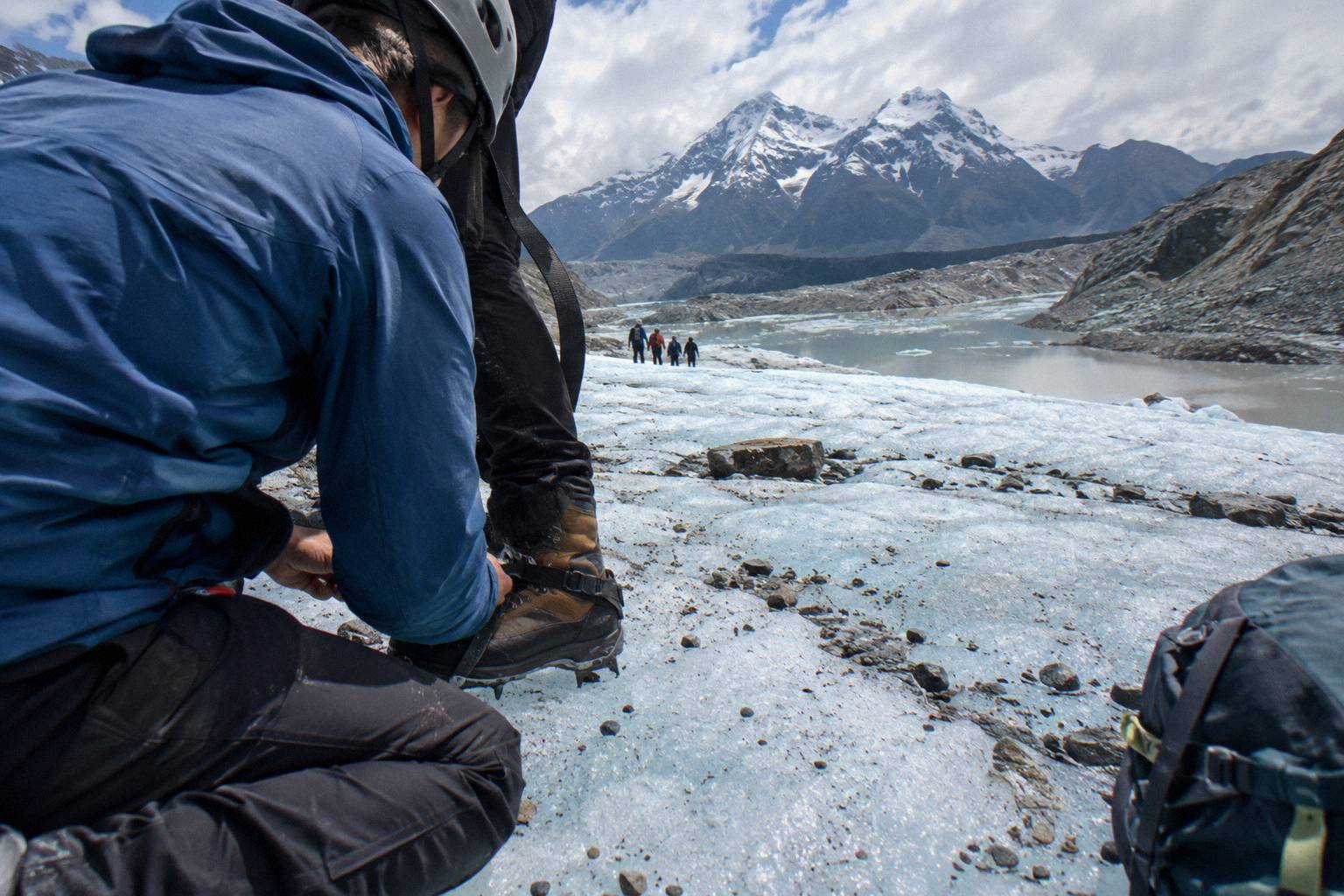
Splitting the day into roles makes the experience question evaporate. On arrival at Mount Cook Airport, you check in, get sized for boots and woollen socks, and fly. On the ice, the guide demonstrates how to walk in crampons, which takes about thirty seconds of coaching: keep your feet a little wider than usual, plant deliberately, go flat-footed on slopes. Walking poles are handed out for balance. Then the group sets off at guide's pace, stopping for photos and short explanations of the ice. The rest of the planning pages sit on Mount Cook Helicopter Hike.
What you bring to that is attention. The risks the Helicopter Line page names for the glacier, falling rocks, ice cliffs, crevasses, changing snow conditions and icy surfaces, are managed by the guide's route choices and the group's spacing, not by your skills. You follow footsteps. If the guide says walk here and not there, that instruction is the entire safety system from your side, which is why the operators care more about listeners than athletes.
The aircraft side is likewise out of your hands. The Helicopter Line notes its aircraft are inspected and maintained to Civil Aviation Authority standards, and the pilot handles the flying, the commentary and the landing on the glacier. Your only aviation duties are arriving on time, since Mt Cook Glacier Guiding warns of strict fly times, and fitting within the helicopter's seating rules, where The Helicopter Line sets a 150 kg maximum for a rear seat on its trips.
Gear: What Is Provided And What You Actually Bring
Boots, woollen socks, crampons (or snowshoes in winter), walking poles and a waterproof jacket are provided on both main heli hike listings, fitted by the guide. You bring warm clothing: three to four upper layers, warm trousers that are not jeans, sunglasses, sun protection, a warm hat and gloves, a small pack with drink and snacks. Nobody expects you to own a single piece of glacier equipment.
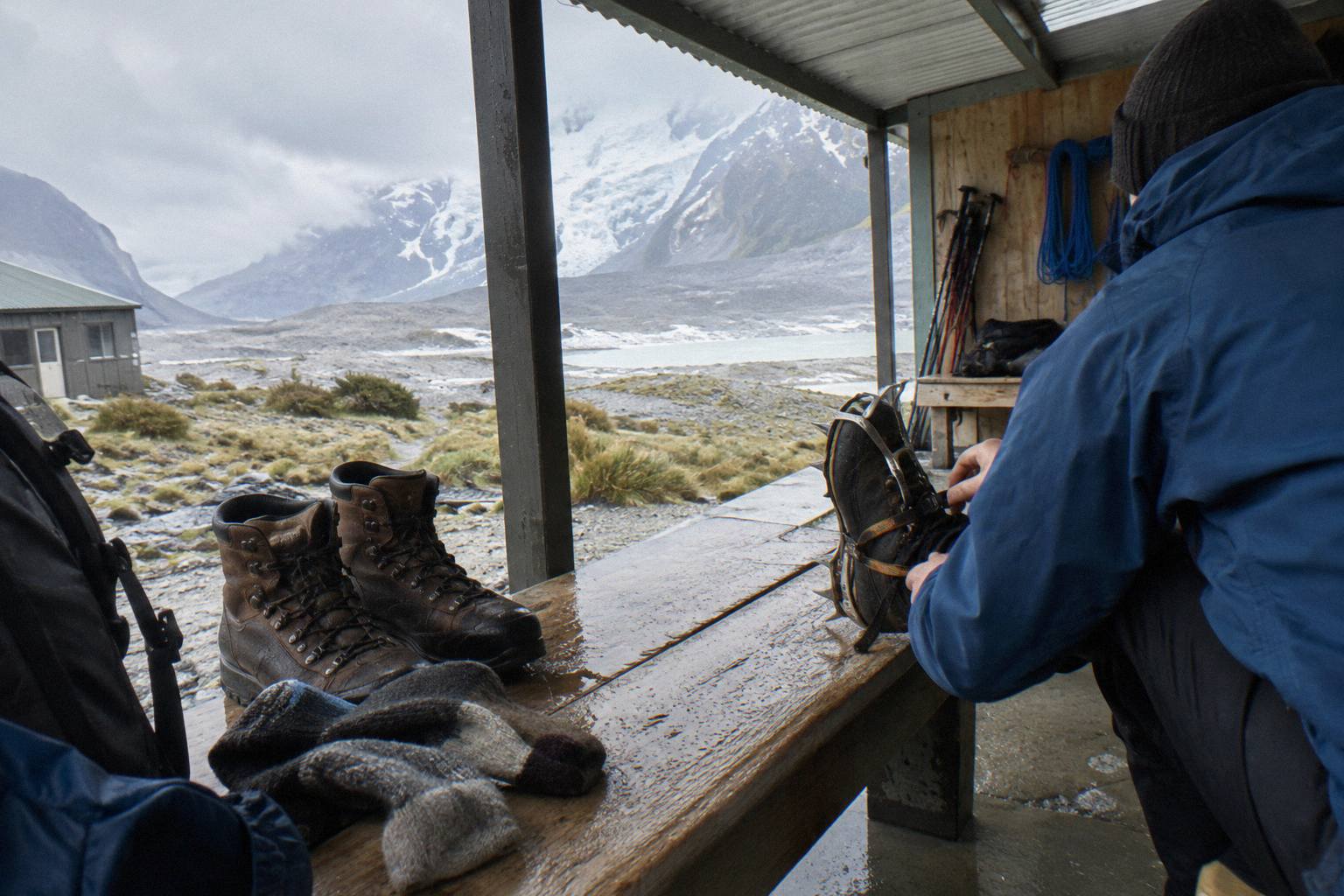
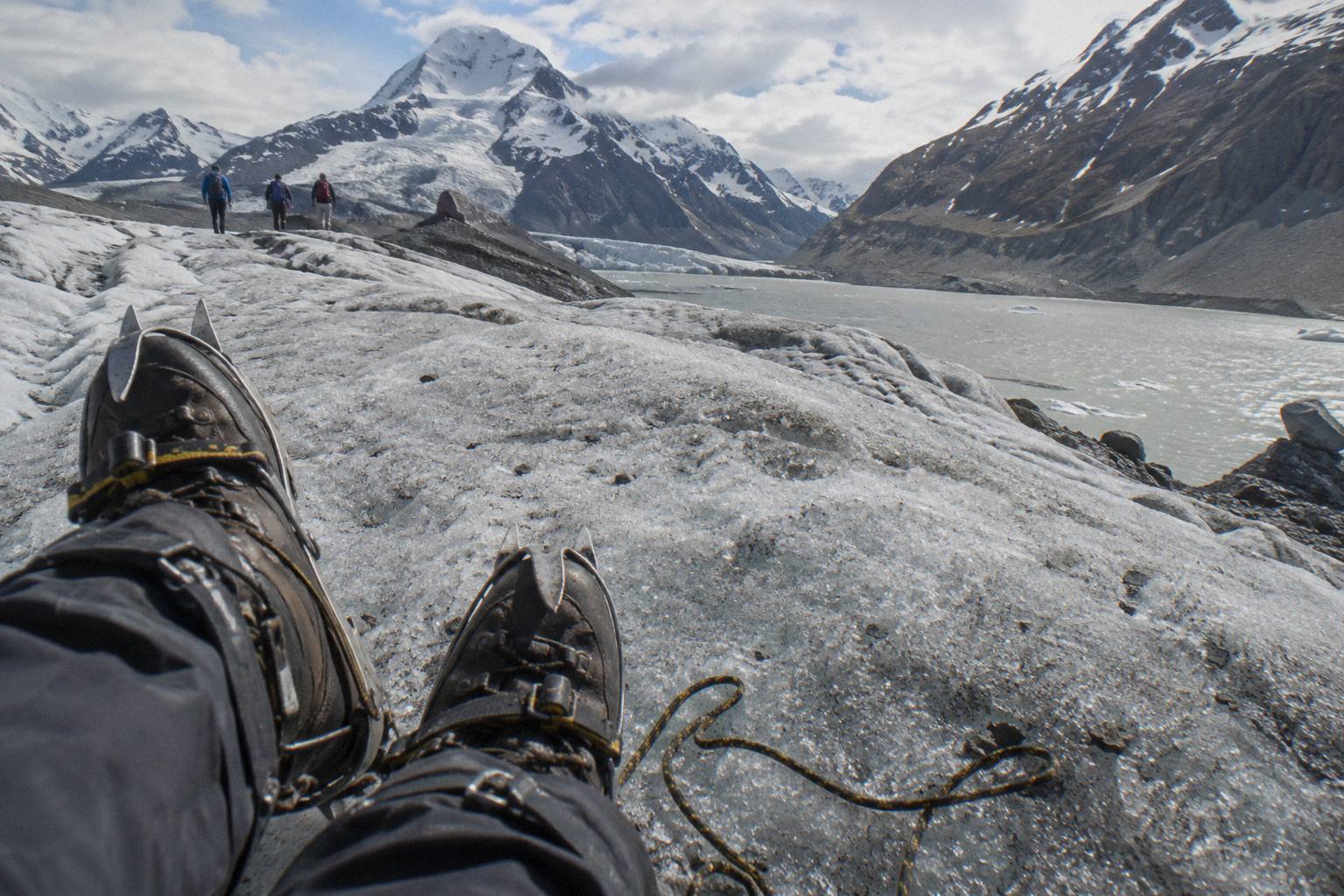
The provided-gear list is the strongest evidence that no experience is assumed. Mt Cook Glacier Guiding's listing includes quality leather boots, woollen socks, crampons and snow shoes in winter, adjustable walking poles, a waterproof jacket and over-trousers, and a harness if required. The Helicopter Line's listing matches it: glacier boots, crampons or snowshoes, poles, socks and a waterproof jacket if required. Alpine Guides goes further and lends hats, gloves, socks, backpacks and jackets if you turn up under-dressed, though turning up under-dressed is a poor plan at 1,200 metres.
| Item | Provided on the hike | You bring | Notes |
|---|---|---|---|
| Footwear | Leather glacier boots, woollen socks | Nothing, wear comfortable socks to travel in | Guide fits and checks |
| Traction | Crampons, snowshoes in winter | Nothing | Strapped on by the guide, coach on walking |
| Balance | Adjustable walking poles | Nothing | Optional to use |
| Weather shell | Waterproof jacket, over-trousers | Windproof jacket as backup | Alpine Guides lends extras |
| Warm layers | Loan hats, gloves (Alpine Guides) | 3-4 upper layers, warm hat, gloves | No jeans, no shorts or skirts |
| Sun and eyes | Nothing | Sunglasses, sun block, lip balm | Glare off snow is fierce |
| Sustenance | Snacks and water on the bus combo only | Drink and snacks, small daypack | Lunch not included on the Queenstown trips |
The leave-behind list matters as much: The Helicopter Line asks you to leave bags, jeans, drones, power banks, iPads, loose clothing, scarves and large cameras on a strap. Drones are doubly excluded, since the Department of Conservation does not allow recreational drones anywhere in the national park. A phone or a compact camera in a zipped pocket is the standard kit, and our photography guide for the heli hike covers what actually works on the ice.
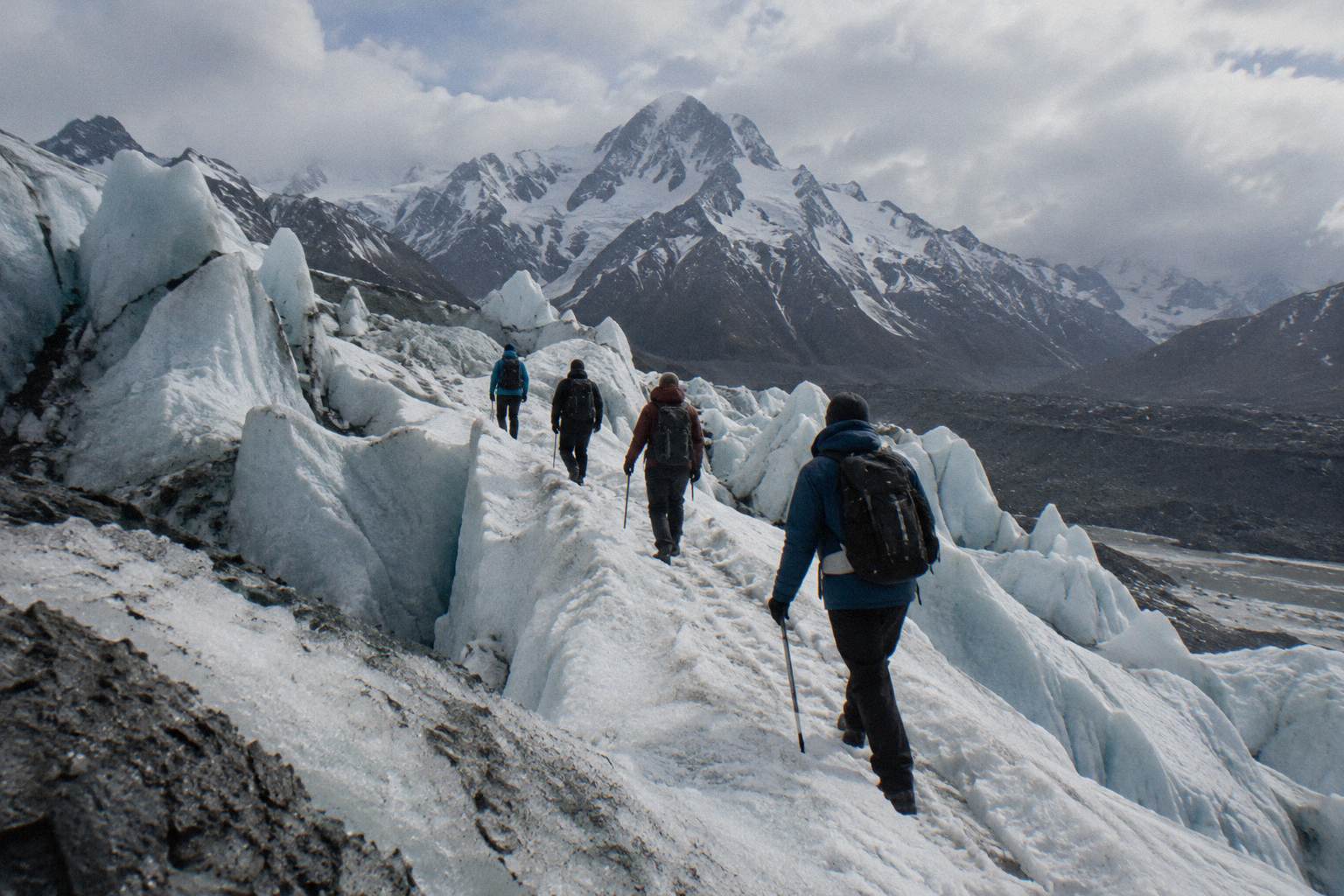
Winter changes one word in the gear story, not the experience story. Mt Cook Glacier Guiding uses crampons in summer and crampons or snowshoes in winter depending on snow cover, again fitted and chosen by the guide. You do not need to know which the day calls for, because you are not the one deciding. More on dressing for the cold in what to wear on a glacier heli hike.
Ages, Mobility And Other Cut-Offs That Do Matter
While experience is never required, age is: minimum 10 with The Helicopter Line, minimum 9 with Mt Cook Glacier Guiding, where under-18s also need parental or guardian consent. Neither trip is wheelchair accessible. Pregnancy is specifically not recommended on The Helicopter Line's listing, and Alpine Guides adds mobility, knee, hip or back injuries and vertigo to its caution list. Group sizes are capped at 20 for The Helicopter Line trip and 11 for the Mt Cook Glacier Guiding trip.
The age numbers are the clearest signal of how gentle the demand really is. A product that welcomes a supervised nine-year-old is not a mountaineering school, and the guide ratio on the Helicopter Line side is one guide to twelve walkers. Brands state different minimums for what is nearly the same walk, so check the booking page you are actually using rather than averaging the numbers, a point our minimum age post unpacks in full.
Weight rules likewise belong to each operator and each aircraft, never to the activity. The Helicopter Line sets 150 kg as the maximum for a rear helicopter seat on its heli hike, and the same figure appears on the True South fly-in package. The bus combo from Queenstown handles it differently again, with passengers 116 kg and over flying only depending on other passengers' weights on the day at check-in. Mt Cook Glacier Guiding publishes no weight limit for its hike, so say nothing about one there, and the snow-landing flights carry their own figures, up to 165 kg per passenger on the 55-minute flight. Pregnancy is another case where the rules sit with each operator rather than the activity itself, and the guide to heli hiking while pregnant covers exactly what each company says.
Mobility deserves a straight answer, because "not wheelchair accessible" is doing quiet work on every listing. The surface is uneven ice, you walk roughly the tour's two hours with stops, and there is no vehicle or chair option once landed. Alpine Guides' exclusion of knee, hip and back injuries is the operator telling you the ice will find those joints. If that description sounds like your situation, the snow-landing flights, with their minutes-long photo stops and no walking requirement listed, are the natural alternative, and our piece on the heli hike versus the Hooker Valley track weighs a third option.
If You Are Still Unsure, The Two Steps The Operators Themselves Suggest
Tell the operator when you book, and check with your doctor. Every booking page funnels uncertain readers to the same two moves: disclose the condition or doubt in advance so the operator can advise, and get medical clearance for anything heart-related, pregnancy-related or joint-related. Neither step involves training, practice hikes or learning any skill; the trip assumes none, and the operators prefer a question over a surprise on the ice.
The tell-the-operator step is easier than people expect, because weather calls already force a phone culture around this trip. The Helicopter Line asks you to call 24 hours before departure for a weather check and to reconfirm, and that same call is the natural moment to mention a knee, a worry about pace, or a first-timer's nerves about the helicopter. The minimum group is four per load on the glacier walk, so you will rarely be alone with your question; someone else almost always asked it first.
The doctor step is not a disclaimer blob. The exclusions are specific: heart problems and other serious medical conditions on both main listings, pregnancy on The Helicopter Line listing and both Queenstown packages, back problems on the bus combo. A quick appointment framed as "a two-hour guided walk at altitude in cold conditions" gives a clinician everything needed to say yes or no. Nobody on the ice will quiz you on knots, weather theory or alpine history; a clinician's yes is the only sign-off the day requires.
That is the whole gap between the question and the booking page. Mountaineering experience appears nowhere in the requirements because nothing on the standard trip asks you to mountaineer; the guide brings the technical half, you bring the walking half and warm socks of your own. For a fuller picture of the whole flight-and-walk sequence, our guide from landing to lift-off walks through the day in order.
Before the common questions, the three options worth a final look: the two heli hikes above and, for anyone in your group who would rather not walk at all, a 40-minute Tasman landing flight that still puts boots on snow.
Common Questions About Glacier Heli Hike Experience
Do You Need Mountaineering Experience For A Glacier Heli Hike?
No. None of the Tasman Glacier heli hike booking pages list mountaineering experience as a requirement. The trip is a guided walk: the guide fits your crampons, chooses the route and sets the pace, and the stated requirements are walking-based, such as moderate fitness and confident movement on uneven terrain.
Do You Need To Be Fit To Do A Heli Hike?
Moderately, yes. The Helicopter Line asks for moderate fitness and hiking ability, the ability to walk at least 1 km and to manage stairs. Alpine Guides calls the same walk not strenuous and suitable for average fitness. The 12-hour bus combo from Queenstown is the exception, stating strong fitness and a large amount of hiking.
Are Crampons Hard To Walk In?
Not for a guided walk. The guide straps them onto the provided leather boots, demonstrates a slightly wider, flatter-footed stride, and hands out poles. First-timers are the expected customer, and coaching takes moments. In winter the guide may swap crampons for snowshoes depending on snow cover.
Can Beginners Do The Glacier Heli Hike?
Yes, beginners are the core market. Minimum ages are 10 with The Helicopter Line and 9 with Mt Cook Glacier Guiding, with guide ratios around one to twelve on the Helicopter Line side, so the format assumes no prior ice or glacier experience at all.
Who Cannot Do The Heli Hike?
The booking pages exclude wheelchair users on all trips, and flag heart problems and serious medical conditions on the main listings. Alpine Guides adds mobility, knee, hip or back injuries and vertigo; pregnancy is not recommended on The Helicopter Line trip and the Queenstown packages. Snow-landing flights are the no-walking alternative.
Do I Need To Bring Any Special Equipment?
No. Boots, socks, crampons or snowshoes, poles and a waterproof jacket are provided. Bring three to four warm upper layers, warm trousers that are not jeans, sunglasses, sun protection, a warm hat and gloves, and a small pack with drink and snacks.