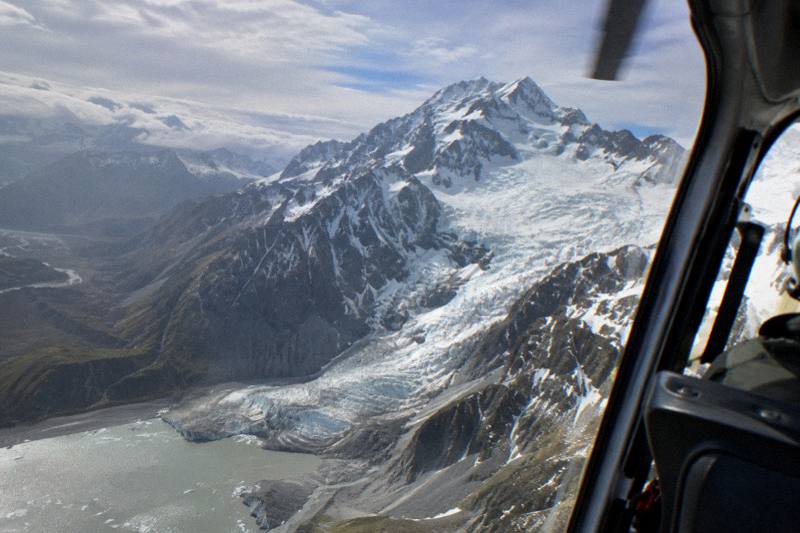
Is There A Weight Limit For The Heli Hike Helicopter?
The published weight rules for every Tasman Glacier heli hike option and the snow-landing flights, per operator, with what happens at check-in.
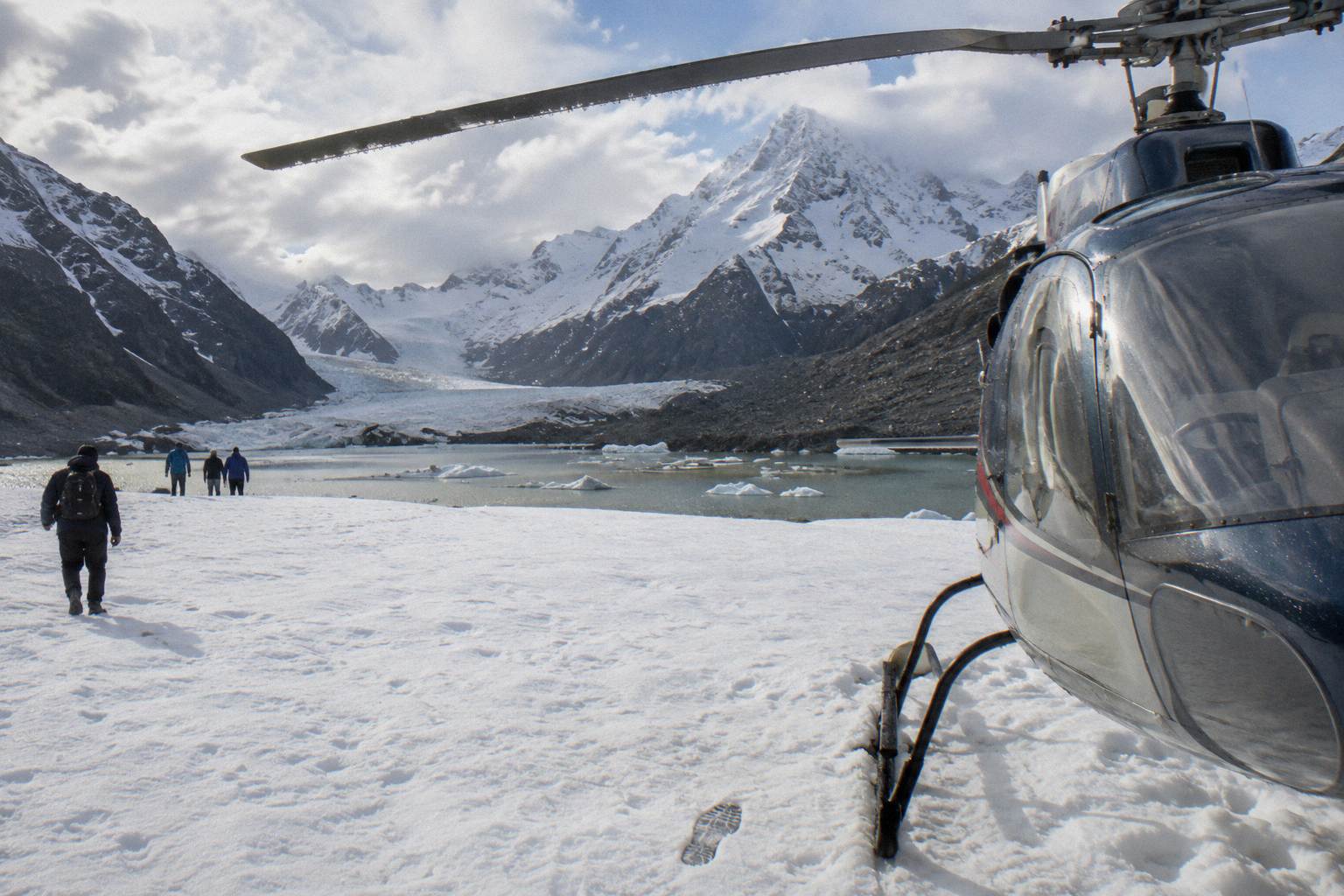
Yes, some operators publish a weight limit and others publish none at all. The Helicopter Line states 150 kg as the maximum for a rear helicopter seat on its 3-hour heli hike. True South Flights states 150 kg total weight per passenger on its fly-in version from Queenstown. Mt Cook Glacier Guiding publishes no weight figure for its hike. Each rule belongs to its own operator and its own trip, so the answer depends entirely on which trip you book.
Where a brand says nothing about weight, we say nothing too, because inventing a shared limit would be the single most misleading thing a planning page could do here. The same Tasman Glacier heli hike is sold under different brands with different aircraft partners, different minimum ages and different weight rules, so the number attached to one listing never transfers to another.
The practical point is simple: if your weight is anywhere near a published figure, read that trip's booking page before you go and, where the operator asks, call ahead. Weight and balance rules on helicopters are not fine print invented to exclude people, they are physics. A helicopter flying at altitude onto a glacier has a strict total load it can carry, and passenger weights are part of that calculation along with fuel, guides and equipment.
What The Helicopter Line States About Weight On The Hike
The Helicopter Line states that the maximum allowable weight for a person on a rear helicopter seat is 150 kg. According to the operator, this figure applies to this operator and this trip only, meaning it is a limit specific to this particular helicopter journey rather than a universal industry standard. It is the sole published weight rule among the Mount Cook Airport heli hike brands we cover, it appears on both the operator's own page and the booking page, and it is worded around the rear seat rather than as a blanket number for every seat on the aircraft, which matters more than it first sounds.
The trip it belongs to is the Helicopter Line 3-Hour Heli Hike, rated 4.8 from 270+ reviews, from NZ$1,021 per person, about 3 hours for the whole experience including flights and check-in. The flights are flown by The Helicopter Line with guiding by Alpine Guides, and the landing is around 1,200 metres above sea level on the Tasman Glacier. Check-in is upstairs at Mount Cook Airport 15 minutes before departure, and the operator asks for a call 24 hours ahead to reconfirm and check the weather.
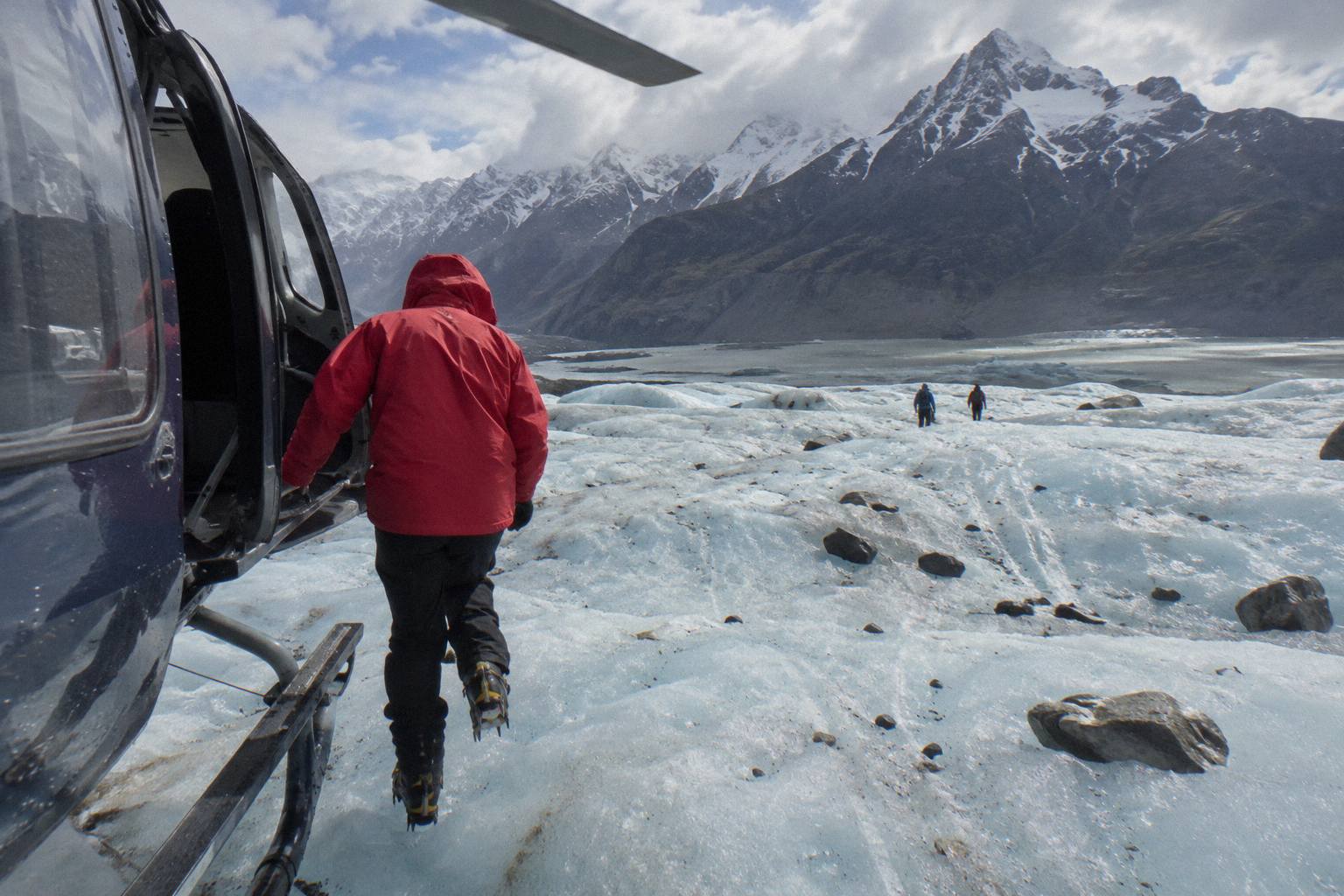
Why a rear seat specifically? In a helicopter, where each person sits changes how the aircraft balances. Rear-seat passengers act on a longer arm from the rotor mast, so a heavy passenger at the back affects the centre of gravity differently than the same passenger up front. That is why the rule is written the way it is on the operator's own heli hike page, and why crew may seat people in a particular order on the day. If your weight is close to 150 kg, say so at booking rather than at check-in, because seating and load planning happen before the aircraft is fuelled.
The rest of the trip's stated terms are worth knowing alongside the weight rule, since they shape the same load calculation. The hike takes up to 20 people per departure, the minimum age is 10 with the booking account holder 18 or over, and Alpine Guides runs a guide ratio of 1:12 with a minimum of 4 per helicopter load. Cancellation is free up to 24 hours before start, and a weather or operator cancellation brings a full refund or credit.
Does Mt Cook Glacier Guiding Publish A Weight Limit?
No, Mt Cook Glacier Guiding does not publish a weight limit. Neither the operator's page nor the booking page for its 3-hour heli hike states any weight figure, so no number can be given here with any support in the operator's own materials. The brand, whose hike is called The Adventurer, flies with aircraft from Mount Cook Ski Planes and Helicopters and has no website of its own, so everything known about the trip comes from those sources. Neither states a per-passenger weight limit, so any operational number simply is not published in advance.
That does not mean weight is irrelevant on this trip. Every helicopter operator weighs load as part of routine flight planning, and passengers are often asked their weight at booking or check-in on glacier flights everywhere. What it means is that there is no stated cut-off you can read in advance and measure yourself against. If your weight is a consideration for you, the practical move is to contact the operator before booking and ask directly, rather than assuming the 150 kg figure from a different company applies. It does not transfer.
- Glacier Guiding 3-Hour Heli HikeNZ$1,021
- Helicopter Line 3-Hour Heli HikeNZ$1,021
- 12-Hour Bus Combo, Heli HikeNZ$1,210
- 7-Hour Fly-In Heli HikeNZ$2,149
The trip itself runs about 3 hours total with up to 2 hours on the glacier, weather permitting, from NZ$1,021 per person, rated 4.9 from 340+ reviews, the deepest review pool of the trips covered here. Minimum age is 9, under-18s need parental or guardian consent, and the group size is up to 11. Gear including boots, crampons or snowshoes and waterproofs is provided and fitted by the guide. For a fuller picture of how this brand's day works, the guide to the Mt Cook Glacier Guiding heli hike covers the whole experience.
One trap worth naming: the Mount Cook Ski Planes scenic-flight pages carry their own weight and check-in figures, but those apply to scenic flights, not to the hike. Those scenic-flight rules are not confirmed for the heli hike and must never be applied to it. So if you read a 116 kg figure somewhere relating to Mount Cook Ski Planes, that is a scenic-flight rule, and it is not the heli hike's rule.
Weight Rules On The Queenstown Heli Hike Packages
The two Queenstown options each state their own rule: True South Flights prints 150 kg total weight per passenger, and the Cheeky Kiwi bus package notes that passengers of 116 kg and over fly only depending on other passengers' weights on the day. These are different trips with different aircraft, and the wording matters, because one is a firm per-person figure and the other is a conditional statement decided at check-in.
The 7-Hour Fly-In Heli Hike by True South Flights, rated 4.9 from 80+ reviews and from NZ$2,149 per person, includes a scenic round-trip fixed-wing flight between Queenstown and Mount Cook, a helicopter flight to the Tasman Glacier landing site, and a guided hike of about 2 hours. The 150 kg limit on its booking page is a total weight per passenger, which typically means you plus whatever you carry. The 12-Hour Bus Combo by Cheeky Kiwi Travel, from NZ$1,210 per person with 68 reviews on the booking page, is a different animal: a guided small-group bus day from Queenstown with the heli hike built in, and its booking page states plainly that passengers of 116 kg and over fly only depending on other passengers' weights on the day, decided at check-in.
| Trip | Operator | Stated weight rule | Price shown |
|---|---|---|---|
| 3-Hour Heli Hike | The Helicopter Line | 150 kg maximum for a rear helicopter seat | from NZ$1,021 |
| 7-Hour Fly-In Heli Hike | True South Flights | 150 kg total weight per passenger | from NZ$2,149 |
| 12-Hour Bus Combo, Heli Hike | Cheeky Kiwi Travel | 116 kg and over fly depending on other passengers' weights, at check-in | from NZ$1,210 |
| 3-Hour Heli Hike | Mt Cook Glacier Guiding | No figure published | from NZ$1,021 |
All prices are per person in New Zealand dollars. Read the bus-combo wording carefully if it applies to you: passengers over a weight are not refused outright, but whether they fly depends on the day's load mix, which the flight partner assesses at check-in. Someone booking that package near or above 116 kg faces genuine day-of uncertainty, and the fair advice is to raise it with the operator before paying rather than discovering it at the airport. The guide to heli hike options from Queenstown unpacks both packages in full.
When comparing these four trips, look past the headline numbers to what each one governs. The Helicopter Line's 150 kg is tied to the rear helicopter seat specifically, True South's 150 kg is a total per-passenger figure, Cheeky Kiwi's 116 kg hinges on the day's load, and Mt Cook Glacier Guiding offers no published figure at all. Two matching 150s on paper are therefore not the same rule in practice, and a missing figure is its own kind of answer: an open question rather than a green light.
The 116 kg figure deserves particular care because it appears in two separate places with different meanings. One is Cheeky Kiwi's booking page, where it sets the threshold for the bus-combo rule. The other comes from Mount Cook Ski Planes, and that version applies to scenic flights only, with nothing confirming it for heli hikes. If the bus combo is your pick, the statement on Cheeky Kiwi's own page is the one that governs your booking, and treating the scenic-flight limit as the underlying policy would be a mistake, since the link between the two is unverified.
A few practical points follow from all this. On True South's trip the figure is a total, and with roughly two hours of guided hiking you will not be walking empty-handed, so weigh yourself dressed as you would for the glacier, pack included, before assuming you clear 150 kg. The
Weight Limits On The Snow-Landing Flights
Each snow-landing flight carries its own weight rule, and they differ even within one operator: 165 kg per passenger on the 55-minute flight, 150 kg on the 40-minute flight, and 200 kg on the Glacier Helicopters 30-minute landing. These flights are alternatives to a hike, not versions of it: there is no guided walk, no crampons and no time walking on the ice, just a scenic flight with a short snow landing where conditions allow. The 40-minute flight states a 5 to 10 minute snow landing.
The spread between those three numbers shows why no single figure can be generalised across flights. The Helicopter Line flies both the 55-minute Glacier Flight (from NZ$949, 140+ reviews on the booking page, max 6 per flight) and the 40-minute Tasman Landing (from NZ$713, 60+ reviews, also max 6), and the same company states two different per-passenger figures for them, 165 kg and 150 kg, because the aircraft and route differ. Glacier Helicopters, departing from Bowen Drive with check-in closing 30 minutes before, states 200 kg for its 30-minute landing. The 25-Minute Alpine Landing by Mount Cook Ski Planes and Helicopters, from NZ$379 with 54 reviews, publishes no weight figure; what it does state is a minimum of 4 people per flight before the flight operates.
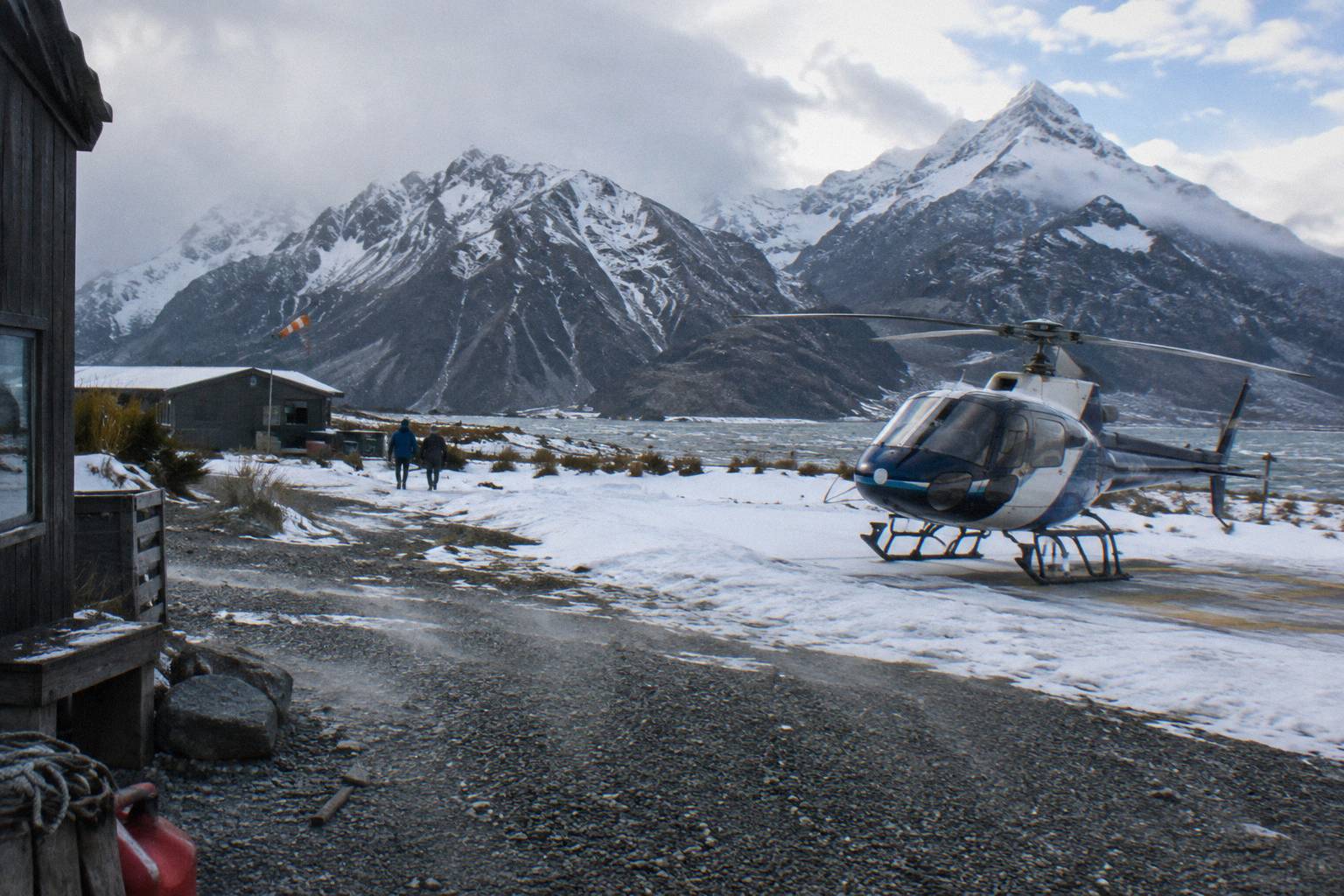
If the weight rules or the fitness demands of a hike are the sticking point, a snow-landing flight is the natural fallback: you still get onto the glacier environment by air, with the pilot's commentary, but there is no walking requirement and no moderate-fitness bar. Whether that trade sits well with you is covered in the comparison of the heli hike versus a glacier snow landing.
Why Helicopters Weigh Passengers At All
Every helicopter flight operates under a maximum total load set by the manufacturer and spelled out in the operator's manual, and each passenger's weight counts toward that limit alongside the fuel on board, the guide, the equipment carried, and the allowances made for weather conditions, so knowing what every passenger weighs is the only way to know the flight stays within its limit. On a glacier landing the calculation is tighter than on a valley scenic flight, because the aircraft lands and takes off at altitude, where the air is thinner and performance margins shrink. Nobody is being singled out when a crew asks weights; they are completing a load sheet the flight legally cannot skip.
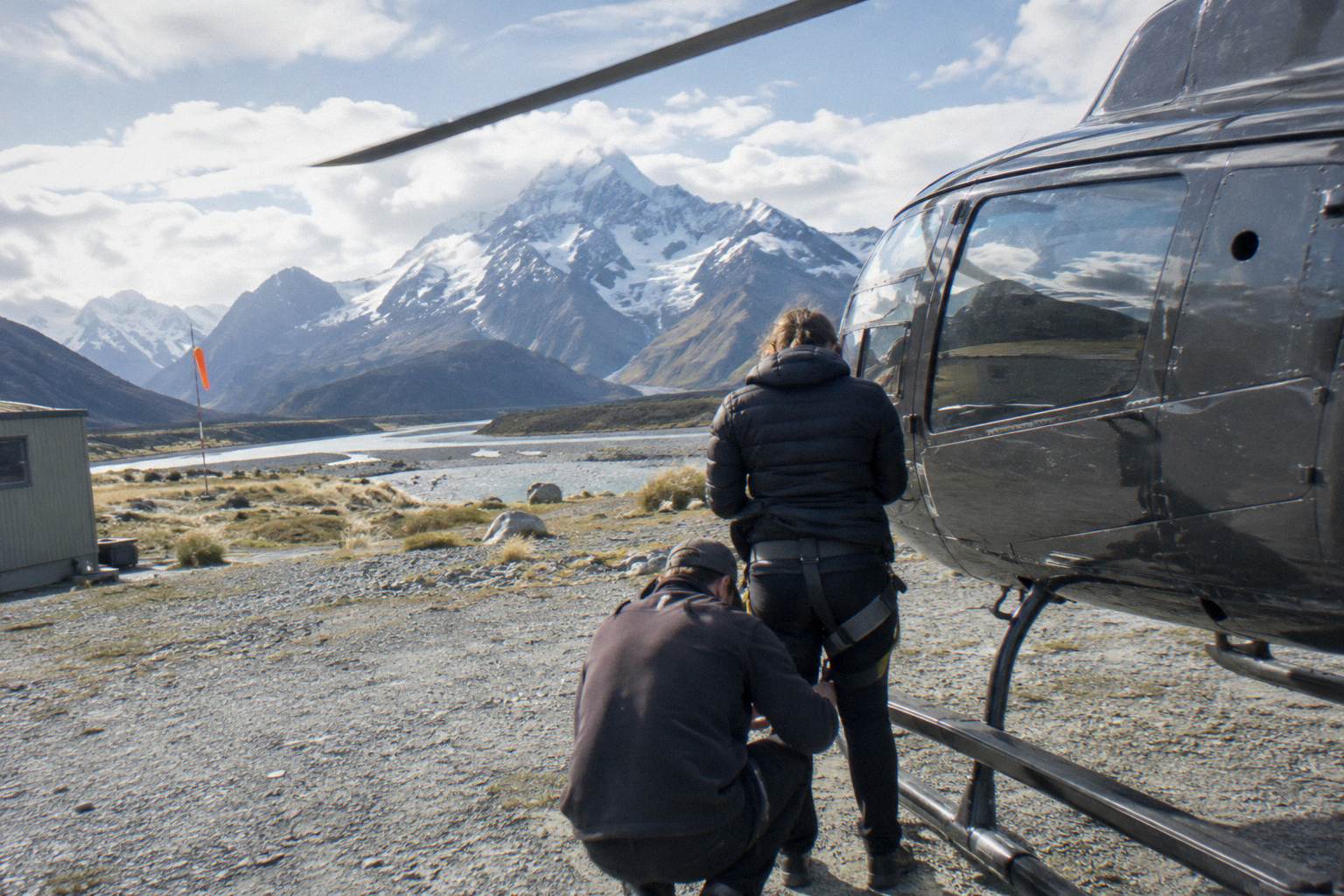
The Mount Cook Ski Planes page for its heli hike gives a sense of how much kit a glacier trip carries beyond the passengers: leather boots, wool socks, crampons or snowshoes, adjustable poles, waterproof jackets and over-trousers, and a harness where required. All of that has mass, and the guide is a person too. This is also why several operators state a minimum number of passengers before a flight runs, with minimums of 4 appearing across heli hike departures: the load has to balance in both directions, not merely stay under a ceiling.
Weight interacts with the day's other constraints in ways people rarely anticipate. The Helicopter Line's partner Alpine Guides runs a guide ratio of 1:12 and a minimum of 4 per helicopter load, so the mix of people on your departure affects how loads are split. Weather decisions on these trips can come as late as 10 minutes before departure in the scenic-flight world, and while that specific timing is not confirmed for the hike, the general truth holds: glacier flights are weather aircraft, and load planning happens inside that same narrow window. Being upfront about your weight early gives the crew one less variable to solve at the last minute.
| Load factor | Why it counts toward the limit | Who controls it |
|---|---|---|
| Passenger weights | The largest variable in the load sheet, asked at booking or check-in | You |
| Fuel | Burned weight changes with route and weather reserves | Pilot |
| Guide and crew | One or more people carried on every departure | Operator |
| Glacier equipment | Boots, crampons or snowshoes, poles, waterproofs, harness | Operator, fitted by guide |
| Landing altitude | Thinner air at 1,200 m shrinks performance margins | Fixed by the route |
What Happens At Check-In If You Are Near A Limit
If you are near a limit, you will be asked your weight at check-in, and you should answer accurately rather than downplay it. Expect to be seated wherever the crew needs you, and if you have any concern about your weight, raise it with the operator before you pay rather than at the airport. Operators ask for accurate weights because understating one is a safety issue, not a courtesy issue. On the trips above, the stated consequences of a weight problem range from a seating reassignment to, on the bus-combo package, a same-day decision about whether you fly at all.
Practically, the sequence looks like this. At booking, give a truthful weight if the form asks. In the days before, if you are near a published figure, call the operator: The Helicopter Line asks for a call 24 hours before departure anyway, to reconfirm and check the weather, and that call is the natural moment to ask about seating. At check-in, 15 minutes before departure upstairs at Mount Cook Airport for The Helicopter Line's hike, follow the crew's direction on where to sit and what to carry. None of this is adversarial; it is how every commercial helicopter operation in the country works.
One reassurance worth holding onto: every trip we cover offers free cancellation up to 24 hours before start, and a weather cancellation by the operator brings a refund or an alternative date. So the worst cases around weight are annoying, not financial disasters, provided you act inside the 24-hour window. If a booking-page conversation about weight leaves you unsure, cancelling and rebooking on better information costs nothing.
A few questions come up again and again, so here they are with the direct answers.
Common Questions About Heli Hike Weight Limits
Is There A Weight Limit For The Heli Hike Helicopter?
Only some operators publish one. The Helicopter Line states 150 kg for a rear helicopter seat on its 3-hour heli hike, and True South Flights states 150 kg total weight per passenger on its 7-hour fly-in version. Mt Cook Glacier Guiding publishes no weight figure for its hike.
Does The 150 Kg Limit Apply To Every Heli Hike?
No. Each figure belongs to one operator and one trip. The Helicopter Line's 150 kg rule covers a rear helicopter seat on its hike only, and it does not transfer to Mt Cook Glacier Guiding's hike or to any snow-landing flight.
Is There A Weight Rule On The Queenstown Bus Package?
Yes, and it is conditional. The booking page for the 12-hour bus combo notes that passengers of 116 kg and over fly only depending on other passengers' weights on the day, decided at check-in by the flight partner.
What Is The Weight Limit On The Snow-Landing Flights?
It varies by flight: 165 kg per passenger on the 55-minute glacier flight, 150 kg on the 40-minute Tasman landing, both with The Helicopter Line, and 200 kg on the Glacier Helicopters 30-minute landing.
Will I Be Weighed At Check-In?
Operators routinely ask passenger weights as part of helicopter load planning, and you should answer accurately. Exact procedures differ by operator, so treat any weight near a published limit as something to raise with the operator before booking.
What If My Weight Is Over The Stated Limit?
Contact the operator before booking. Depending on the trip, options can include seating placement, a different departure or a snow-landing flight, which carry limits up to 200 kg on the Glacier Helicopters 30-minute landing.
Deciding between the hike and the lighter-commitment flights, or between the two Mount Cook brands, is easier once the weight question is settled. The pages behind this Mount Cook Helicopter Hike site break each of those choices down trip by trip, with the same rule applied throughout: a figure is printed only where the operator states it.