Best Time Of Year For A Glacier Heli Hike At Mount Cook
No operator publishes a best month for the Tasman Glacier heli hike, so there is no single answer to invent. What the operators and the Department of Conservation do publish is enough to build a season choice: the hike runs all year, gear changes with the snow, winter can close the road, and the weather call is made on the day.
Short answer
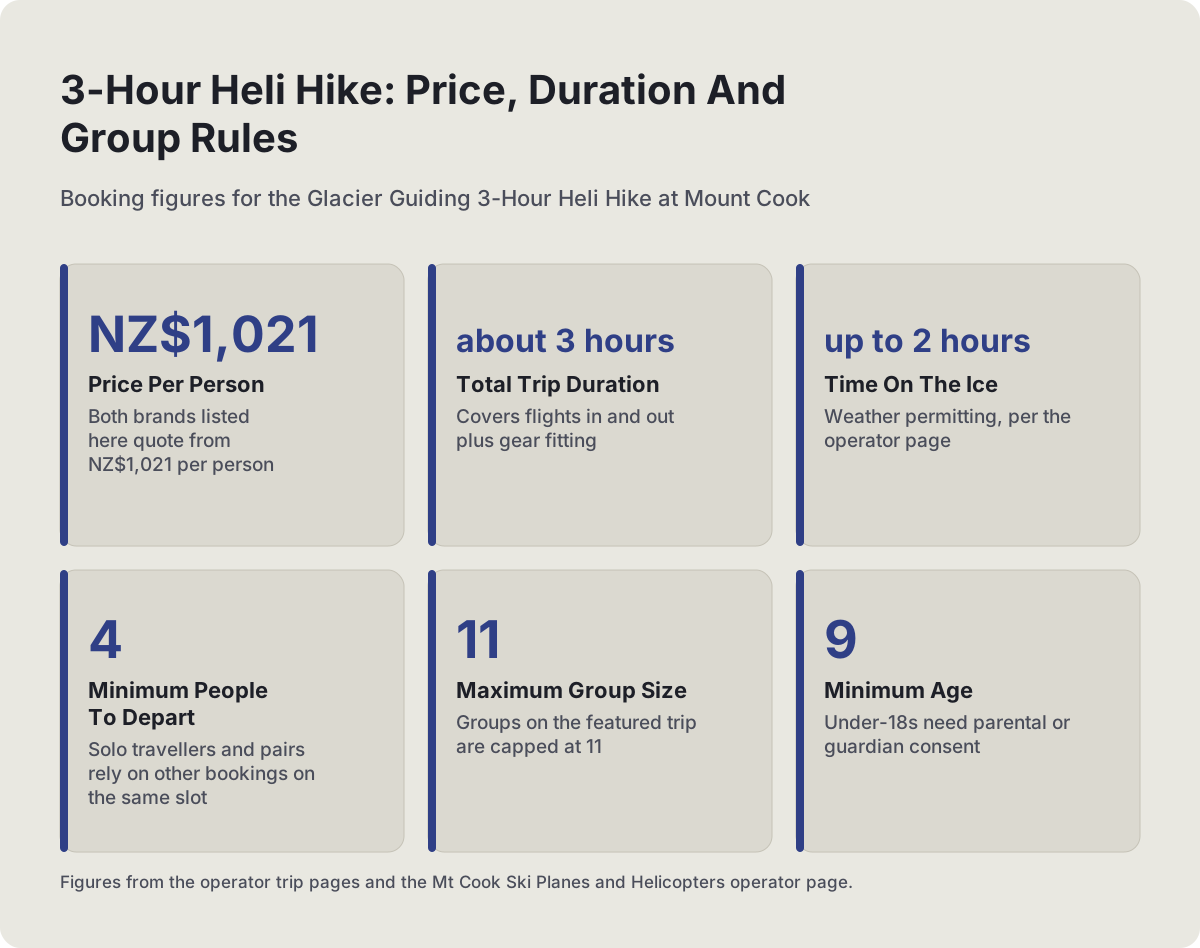
The Tasman Glacier heli hike runs all year round, so the season question is really about snow, access and daylight. Summer means mild airport days and crampons on ice; winter means cold nights, snowshoes and a road that snow can close from June to September. Every trip is decided by the weather on the day, with a full refund or a new date if the operator cancels.
Does The Glacier Heli Hike Run All Year Round?
Yes. Alpine Guides states plainly that the Tasman Glacier heli hike operates all year round, and Mt Cook Glacier Guiding adjusts its equipment across the seasons rather than pausing the trip. That means there is no closed season to avoid and no booking window you have to hit. The real seasonal choices are about snow underfoot, road access to the park, temperature at the airport, and how much daylight you want around your flight time.
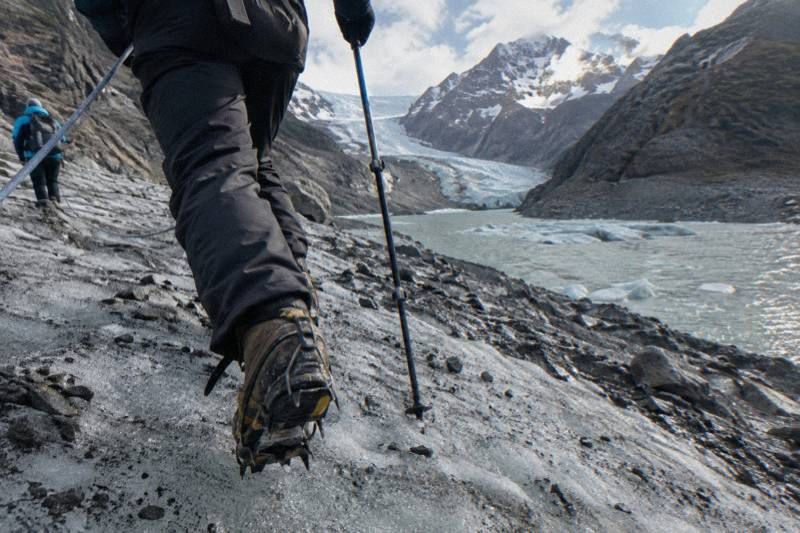
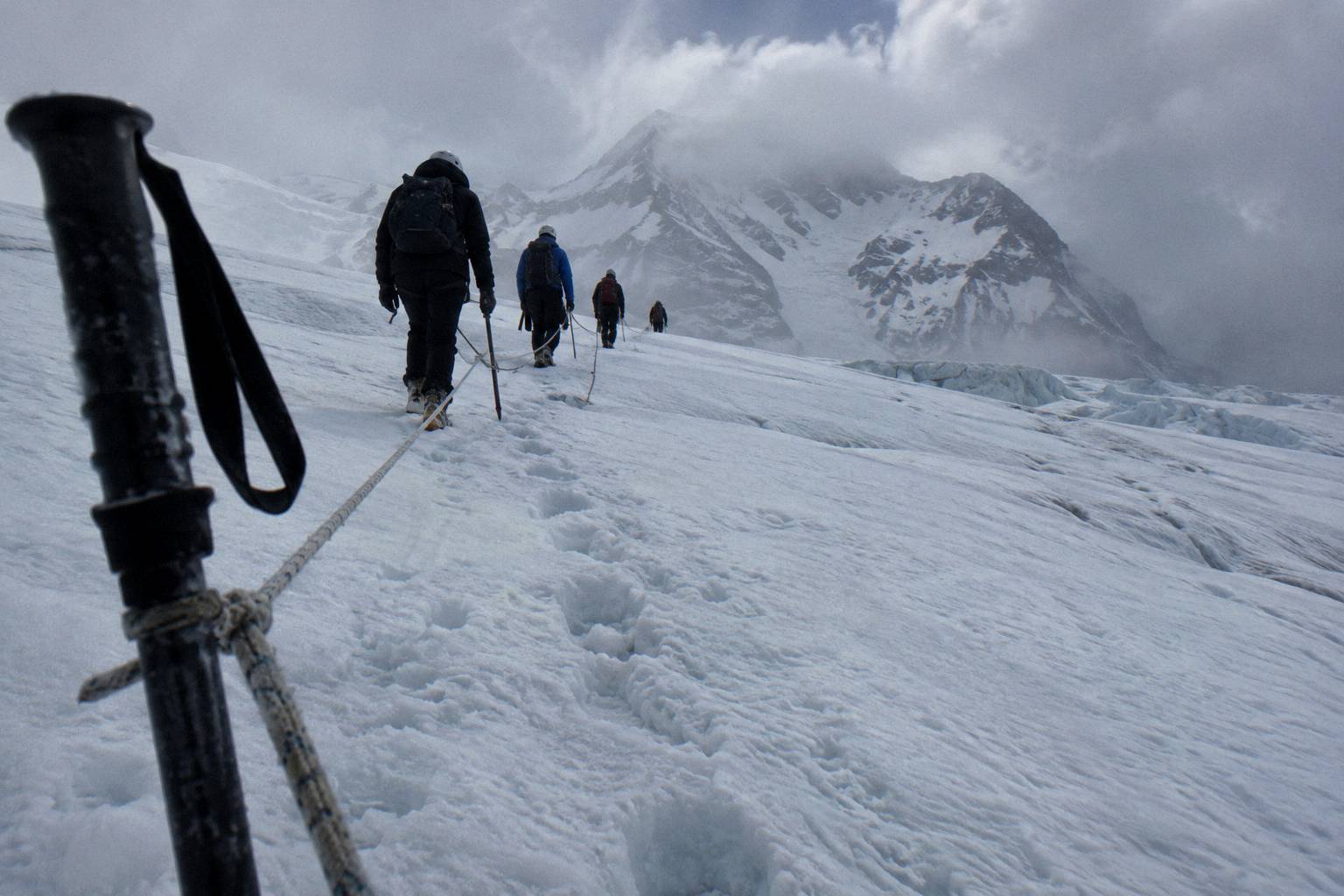
The hike sold as the Glacier Guiding 3-Hour Heli Hike, from NZ$1,021 per person, uses crampons in summer and crampons and/or snowshoes in winter, per the operator's own trip page. The Helicopter Line 3-Hour Heli Hike, also from NZ$1,021 per person, carries the same either-or wording, crampons or snowshoes, in its gear list. In other words, the operators have already solved the underfoot problem for you; both bare ice and deep snow are walkable with the gear handed out on the day, and the guide fits it after landing so you never have to guess in advance which you will get.
What no operator will do is promise you a landing. Every booking carries weather-permitting language, and The Helicopter Line's own risk disclosure notes that mountain weather changes rapidly, naming falling rocks, ice cliffs, crevasses, changing snow conditions and icy surfaces among the terrain hazards its guides manage. That is not a winter caveat, it is an any-day-of-the-year caveat, and it is why the heli hike weather and cancellation rules are covered in depth.
The answer to "when should I go" is built from four pieces: what each season feels like on the ice, how cold the airport actually gets, what snow does to the road between June and September, and how the day-of weather decision works. Those are the next four sections, and every figure in them comes from an operator page, a booking page or the Department of Conservation, never from a forecast or a forum thread.
What Each Season Is Actually Like On The Tasman Glacier
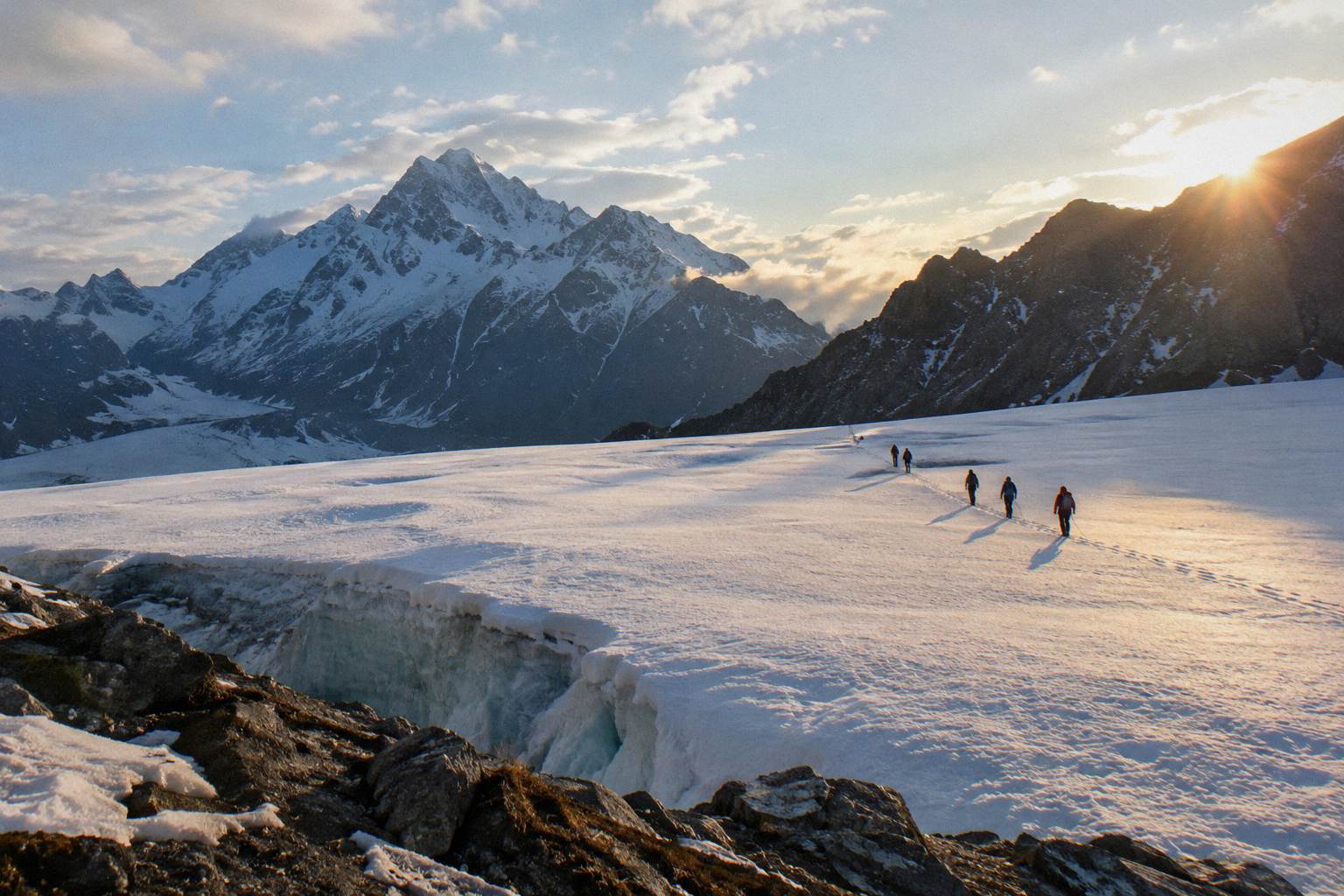
Each season changes the hike, but none of them cancels it. Summer gives mild days at the airport, around a 22 °C mean daily maximum in January, with crampons on bare glacier ice. Winter swaps that for snowshoes or crampons over snow, cold nights well below freezing at the airport, and a smaller chance of clear flying windows. Shoulder seasons sit between the two, with gear decided on the day.
- Glacier Guiding 3-Hour Heli HikeNZ$1,021
- Helicopter Line 3-Hour Heli HikeNZ$1,021
- 12-Hour Bus Combo, Heli HikeNZ$1,210
- 7-Hour Fly-In Heli HikeNZ$2,149
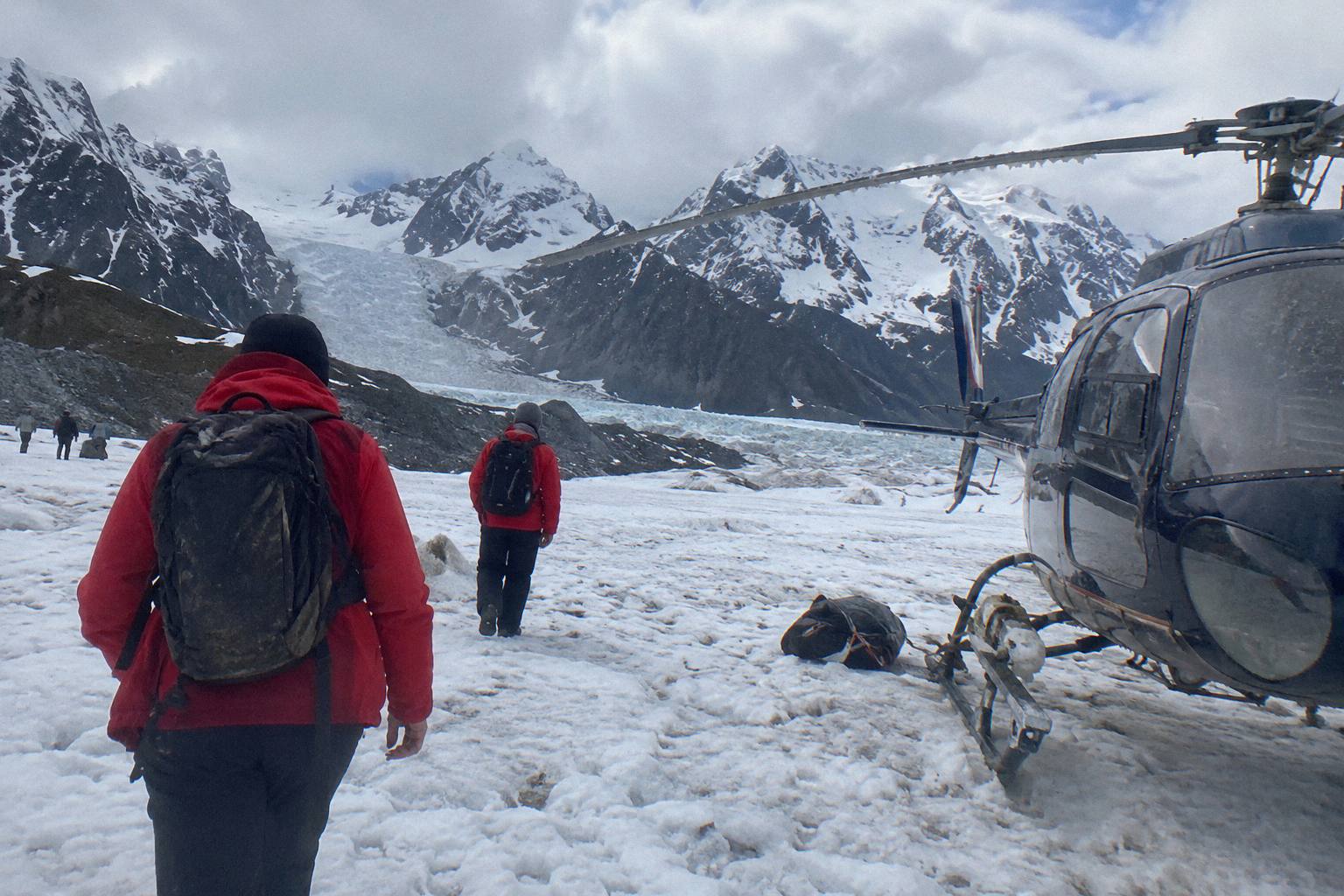
Two things distinguish the seasons more than temperature. The first is what is under your boots. Mt Cook Glacier Guiding's page describes crampons in summer and crampons and/or snowshoeing in winter; the guide fits the gear after landing, so you do not choose in advance. The second is the glacier itself. The Department of Conservation records that Tasman Glacier is 23 km long, up to three km wide and 101 square km, New Zealand's largest and longest glacier, and that Tasman Lake did not exist until 1974 and is growing rapidly as the glacier melts. Icebergs appear on the lake in summer and lake ice in winter, which changes what your scenic flight looks like on the way in: summer flights cross a lake dotted with calved ice, winter flights a frozen white sheet fringed by moraine.
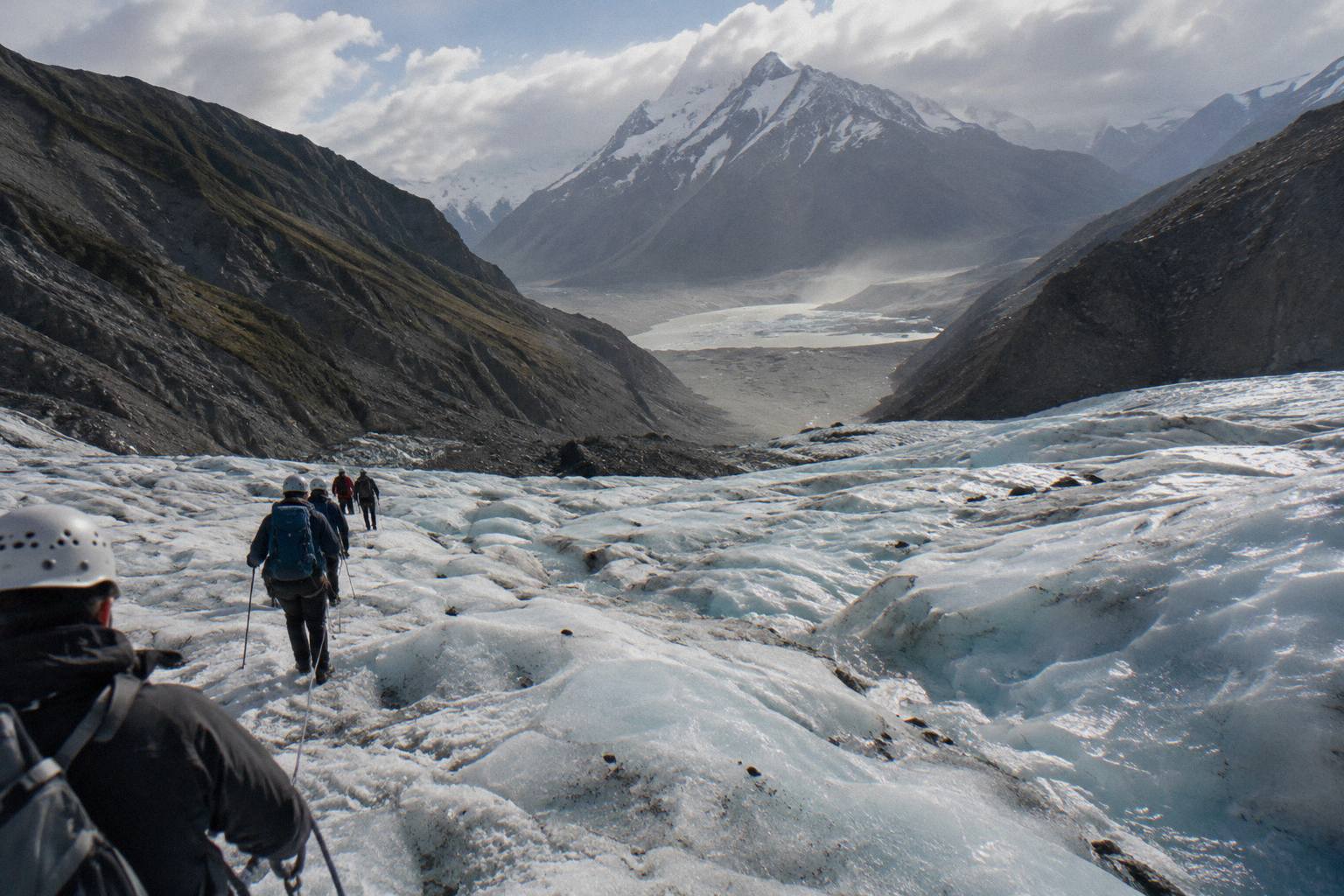
It helps to know that the same glacier hike is sold under more than one brand. Mt Cook Glacier Guiding provides the guides and flies with Mount Cook Ski Planes and Helicopters, whose operator page describes the trip as about 3 hours total with up to 2 hours on the ice, weather permitting, from a minimum of 4 people to depart. The Helicopter Line supplies aircraft and partners with Alpine Guides, whose trip page describes roughly the same day with a landing around 1,200 metres above sea level and a return flight close to the 1,000-metre-high Hochstetter Icefall. Southern Alps Guiding sells a third version with a 9:00 am start and a "Low to Moderate" fitness description. These are different companies selling a very similar day out, and their seasons do not differ: all of them run when the weather allows.
| Season | Underfoot gear (operator wording) | Airport feel (NIWA normals) | Access notes (DOC) |
|---|---|---|---|
| Summer | Crampons on ice | Mean daily max around 22 °C in January | White Horse Hill car park can be busy 10 am to 4 pm, November to March |
| Autumn | Crampons, snowshoes possible late season | Between summer and winter norms | Road generally clear; avalanches can occur in any season |
| Winter | Crampons and/or snowshoeing | Mean daily min minus 2.4 °C in July; max 7.9 °C | Access may be limited June to September by snow; snow can close SH80 |
| Spring | Crampons and/or snowshoes early, crampons later | Warming through the norms | Snow can still close SH80 early in the season |
If you are weighing this against other ideas for the same trip, the comparison between a heli hike or a glacier snow landing matters more in winter, when a shorter flight can be an easier weather window than a three-hour hike. The same logic applies to the free walks: in summer the Hooker Valley Track is a comfortable same-day add-on, while in winter it demands full winter gear of your own, a difference explored in is the heli hike better than the free walks at Mount Cook.
The featured trip, the Glacier Guiding 3-Hour Heli Hike, runs in every season from Mount Cook Airport, rated 4.9 from 340+ reviews, with a minimum age of 9, under-18s needing parental or guardian consent, and groups up to 11. If your dates are flexible, hold them loosely and book early in your stay so a weather shift can be retried, a tactic covered in how to book a glacier heli hike.
One way to choose a season is to choose the view from the flight in. Summer crossings pass over a lake dotted with calved ice; winter crossings pass over a frozen white sheet fringed by moraine. And because Tasman Lake did not exist until 1974 and is growing rapidly as the glacier melts, the view keeps changing, so photos and descriptions from even a few years ago may not match what you see. The lake is a recent feature of this landscape, not a permanent one.
A few operator details shape how you book. The day runs about three hours total with up to two on the ice, and the remainder covers the flights in and out plus gear fitting, so budget a half-day block rather than a quick excursion. Departures need a minimum of four people, so solo travellers and pairs rely on other bookings landing on the same slot. On the featured trip, groups are capped at 11, the minimum age is nine, and anyone under 18 needs parental or guardian consent sorted in advance.
Winter planning has three moving parts. Snow can close SH80 from June to September, and sometimes into early spring, so the drive deserves as much contingency as the flight. The airport's July figures, a 7.9 °C mean daily maximum and a minus 2.4 °C mean minimum, describe the valley rather than the ice at around 1,200 metres above sea level where you actually stand. None of that stops winter departures; it simply means the workable windows are narrower, and worth treating as provisional until you are on the ice.
How Cold Is Mount Cook In Winter?
At Mount Cook Airport, 656 metres above sea level, the NIWA normals for 2012 to 2024 show a mean daily maximum of 7.9 °C in July and a mean daily minimum of minus 2.4 °C in July, with June close behind at minus 1.8 °C. That reads as cold winter nights and mild summer days: 22 °C in January. No published figure exists for how cold the glacier surface is, and none should be invented.
Those airport numbers are the only temperature figures worth quoting, and they come with limits. They are a reference transcription of NIWA normals, they describe the air at the airport, not the ice, and they say nothing about wind or rainfall, for which no verified figure exists. On the glacier you will feel the altitude and the wind more than the thermometer, which is exactly why every operator publishes a layering list rather than a temperature promise. A calm July morning on snow can feel milder than a windy January one on ice, and the guide, not the calendar, decides what the day is like.
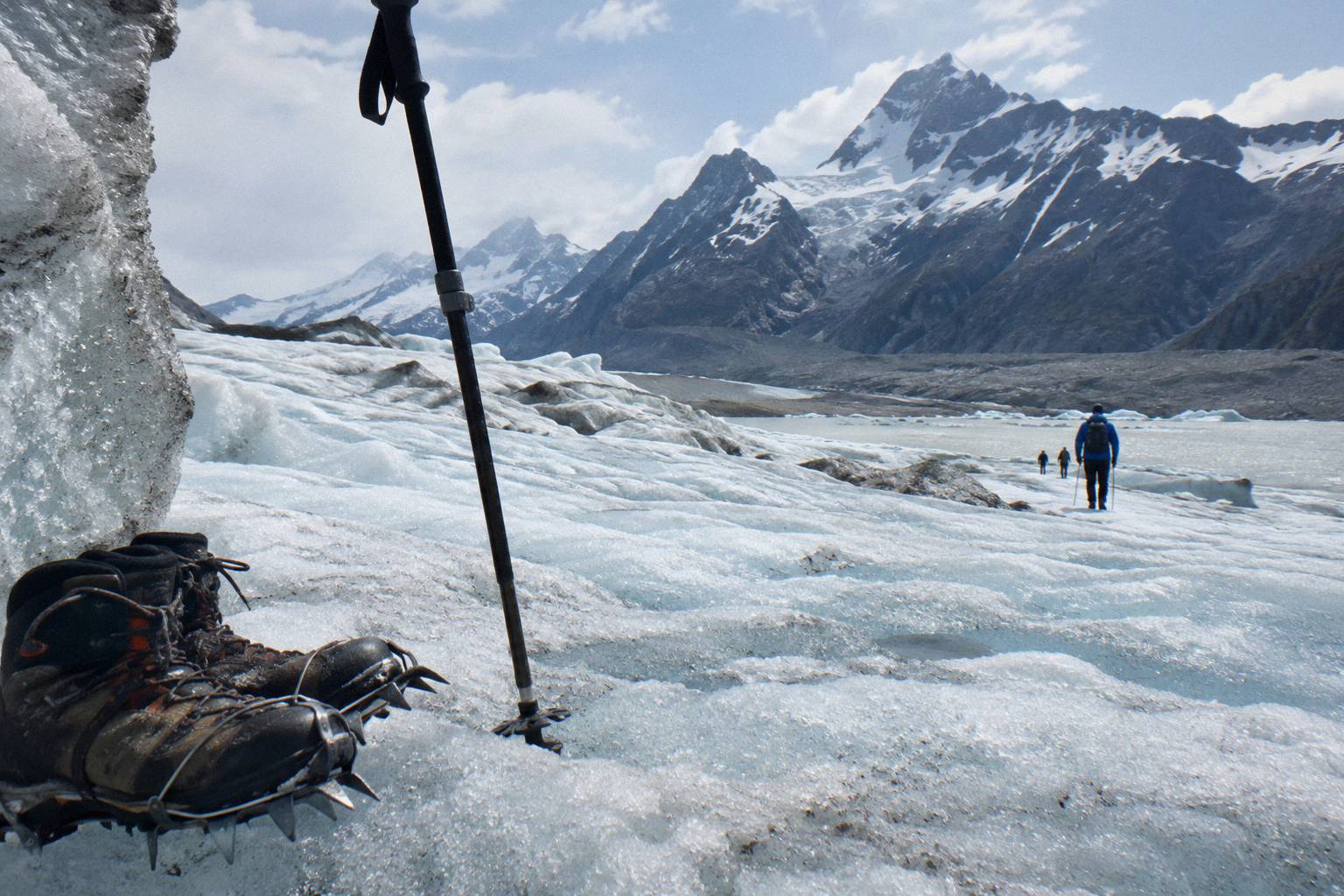
Mt Cook Glacier Guiding asks you to bring 3 to 4 warm upper layers, warm trousers, no jeans, sunglasses and sun protection, a daypack with drink and snacks, and a warm hat and gloves. The Helicopter Line's list is similar and adds a windproof jacket, long trousers, no shorts or skirts, and a leave-behind list: bags, jeans, drones, power banks, loose clothing, scarves and large cameras on a strap. The full clothing logic, including what is provided and what you carry, is in what to wear on a glacier heli hike.
Winter cold also changes who should be on the ice. The Helicopter Line describes the hike as moderate fitness and the ability to walk at least 1 km and climb stairs easily; Mt Cook Glacier Guiding excludes heart problems and other serious medical conditions, and The Helicopter Line adds that the trip is not recommended for pregnant travelers. Neither brand's fitness wording changes with the season, but cold adds load to the same walk, so budget more recovery time between the hike and anything else you planned for the day. If winter fitness worries you, the detail is in heli hike fitness and difficulty.
Winter Access, Roads And Getting There From June To September
The Department of Conservation warns that winter access to Aoraki / Mount Cook may be limited from June to September by snow, that snow can close SH80, the only road in, and that avalanches can occur in any season. Drive times when the road is open: 3.5 hours from Queenstown, 4.5 hours from Christchurch, 1 hour from Twizel and 1.5 hours from Lake Tekapo. No live road status belongs on a planning page; check it on the day.
That access fact is the strongest argument in the whole season debate. A summer booking carries almost no road risk; a July booking might reach the airport to find the day decided by snow on SH80 rather than cloud on the glacier. DOC also notes that Twizel and Tekapo hold the nearest supermarkets and that the village itself has a visitor centre, a day shelter, a petrol station and only limited cafe, restaurant and bar options, which matters more in winter when the margin for a missed meal is thinner. Fill the tank and buy lunch before the last stretch in any season; in winter it is not optional. Other pages covering the same trip are gathered on Mount Cook Helicopter Hike.
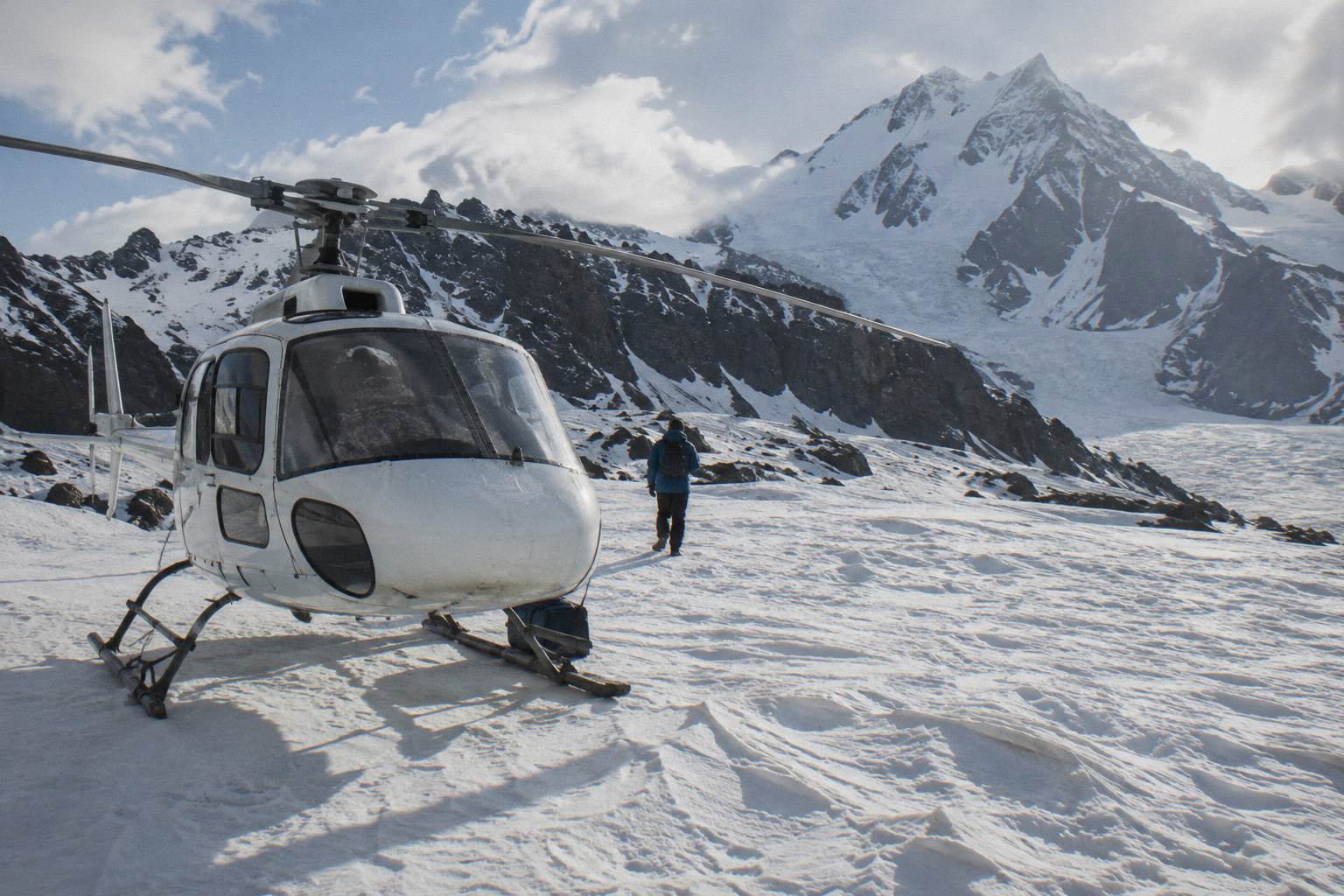
Where you sleep matters too. An early check-in at the airport is easier from the village than from Tekapo, and winter road timing makes that sharper; the trade-offs are laid out in where to stay for an early heli hike. The Helicopter Line asks hikers to check in upstairs at Mount Cook Airport 15 minutes before departure, and it offers complimentary transport from the village on request, a small thing that removes a frozen pre-dawn drive entirely.
If you are already committed to a winter trip out of Queenstown, two packaged options exist. The 12-Hour Bus Combo from Cheeky Kiwi Travel, from NZ$1,210 per person, collects from selectable Queenstown points or The Station at 6:30 am and takes the road decision off your plate, though its booking page notes the flight partner may cancel at the last minute and that a strong physical fitness level is expected, with passengers 116 kg and over flying only depending on other passengers' weights on the day. The 7-Hour Fly-In Heli Hike with True South Flights, 4.9 from 80+ reviews and from NZ$2,149 per person, flies you to Mount Cook by fixed-wing instead, sidestepping SH80 entirely, with pickup from central Queenstown accommodation starting 50 minutes before its 8:00 am departure.
Gear: What Changes Between Summer And Winter
The only seasonal gear change the operators publish is underfoot: crampons in summer, crampons and/or snowshoes in winter, decided by the guide on the day. Everything else, boots, woollen socks, walking poles, waterproofs and a harness if required, is provided year round. The season changes what you wear to the airport, not what the operator hands you at it.
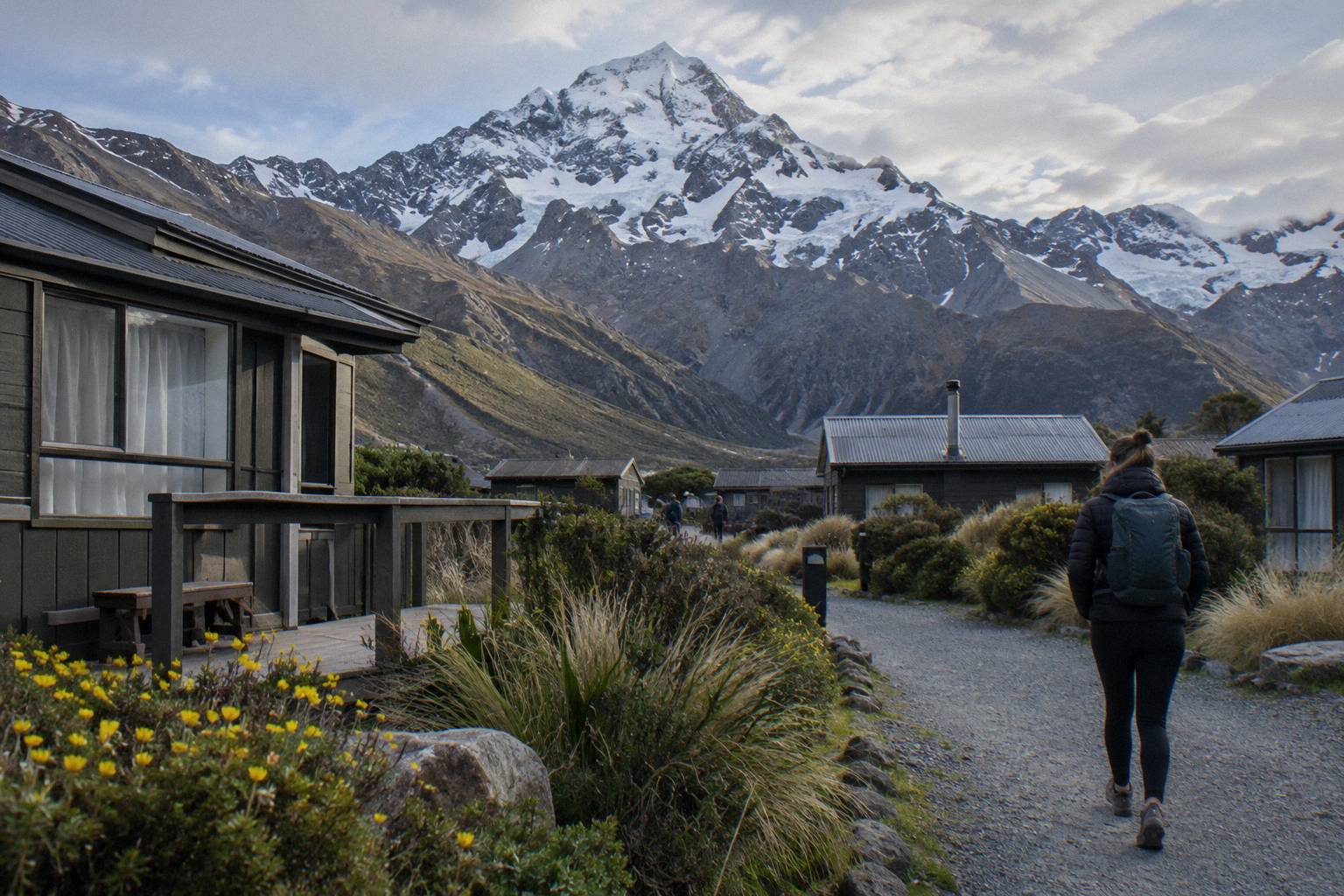
Both main brands list broadly the same kit. Mt Cook Glacier Guiding provides quality leather boots, woollen socks, a harness if required, crampons or snowshoes, adjustable walking poles and a waterproof jacket and over-trousers. The Helicopter Line provides glacier boots, crampons or snowshoes, a waterproof jacket if required, walking poles and socks, and Alpine Guides adds loan hats, gloves, socks, backpacks and jackets if needed. Your job in winter is the bring list: 3 to 4 warm upper layers, hat, gloves, sunglasses, sun protection, lip balm and a small daypack. Sun protection is not a summer-only item either; snow reflects glare hard in every month.
| Item | Summer | Winter |
|---|---|---|
| Boots and socks | Provided by operator | Provided by operator |
| Underfoot | Crampons on ice | Crampons and/or snowshoes over snow |
| Waterproofs | Provided if required | Provided if required |
| Your layers | Sun protection plus warm layers | 3 to 4 warm upper layers, hat, gloves |
| Walking poles | Provided | Provided |
One item that never changes: drones are banned. DOC states recreational drones are not allowed anywhere in the park, commercial use needs a permit, and The Helicopter Line puts drones on its leave-behind list, so the rules in can you take a drone or GoPro on the heli hike apply in every month of the year. Mt Cook Glacier Guiding's longer trips also name selfie sticks among the things to leave behind, a hint that anything loose and wand-like is unwelcome near a spinning rotor.
The Helicopter Line's brand of the hike carries a 150 kg maximum for a rear helicopter seat, which applies to that operator only, a minimum age of 10 and groups up to 20. Those limits do not change with the season either, and the details are in the weight limit for the heli hike helicopter. Group size, too, is fixed by the operator: 11 on the Glacier Guiding trip, 20 on The Helicopter Line's, 15 on the bus combo, so a winter crowd is never a reason a season feels busier or quieter, as how many people are on a glacier heli hike explains.
Weather Cancellations And The Day-Of Decision
Every trip here offers free cancellation up to 24 hours before the start, and every operator says a weather cancellation on their side brings another date or a full refund or credit. The helicopter and the guide decide on the day, and The Helicopter Line asks you to call 24 hours ahead to check the weather and reconfirm. No season guarantees a landing; every landing is weather permitting.
That structure is what makes an all-year hike bookable at all. You are not gambling the fare on a forecast months out; you are gambling only your schedule, because a cancelled flight returns your money or moves your date. The practical corollary: build a spare day into the trip. A reader with one night in the village and a 9 am flight has no retry; a reader with two nights usually does. The mechanics are covered fully in refund if the heli hike is cancelled for weather.
Weather risk also shapes the alternative worth having in your back pocket. If the hike is scrubbed but the sky partially clears, a snow-landing flight is a shorter weather window: the 25-Minute Alpine Landing from Mount Cook Ski Planes and Helicopters, from NZ$379 per person, needs only a minimum of 4 people per flight before it operates and includes live commentary on board. It is a landing, not a hike, but on a tight itinerary it converts a lost day into something, and in winter, when heli hike windows are scarcer, that conversion rate matters more.
Choosing Your Dates: A Decision Table
Pick by what you want from the day, not by a month. Long daylight and bare ice point to summer; quiet trails and snow scenes point to winter, with road risk accepted; fewer crowds with a chance of either underfoot condition point to the shoulders. Whatever you pick, keep a spare morning free for a weather retry and book with free cancellation intact.
| If you want... | Lean towards | Why | Watch out for |
|---|---|---|---|
| Mild airport days, crampons on blue ice | Summer | 22 °C mean January maximum; bare glacier ice | Peak-season crowds and car park pressure, November to March |
| Snow scenes and quiet trails | Winter | Snowshoeing terrain, smallest crowds | SH80 can close; July nights average minus 2.4 °C at the airport |
| A middle path | Autumn or spring | Either gear set possible, thinner crowds | Weather volatility; gear decided on the day |
| Maximum retry chances | Any season, with spare days | Free cancellation up to 24 hours; operator cancels bring refund or new date | You still need the spare day to use the retry |
Two final seasonal facts sharpen the picture. Earth Sciences NZ's end-of-summer snowline survey saw retained snow on some glaciers but called it "only a stay of execution and not a reversal in the long-term decline of ice coverage", which is the backdrop to any glacier visit in any year: the glacier you walk in five years will not be the glacier you walk this year. And on the ground, DOC opened a second swing bridge on the Hooker Valley Track in July 2026, 189 m and described as New Zealand's longest suspension bridge, so a winter visit pairs a possible heli hike with the park's best free walk, a combination sized up in can you do the heli hike and Hooker Valley Track in one day.
Common Questions About The Best Time Of Year
Does The Glacier Heli Hike Run All Year Round?
Yes. Alpine Guides states the hike runs all year round, and Mt Cook Glacier Guiding switches between crampons in summer and crampons and/or snowshoeing in winter rather than closing.
Is There A Best Month For The Glacier Heli Hike?
No operator publishes one, and no best month appears here. Summer offers mild airport days near a 22 °C January mean maximum and crampons on ice; winter offers snowshoeing and quiet trails but a road that snow can close from June to September.
How Cold Is Mount Cook In Winter?
At Mount Cook Airport the NIWA normals show a July mean daily maximum of 7.9 °C and a mean daily minimum of minus 2.4 °C. No published figure covers the temperature on the glacier itself; operators answer that with layering lists instead.
Can Snow Stop Me Reaching The Heli Hike In Winter?
Yes. DOC warns winter access may be limited from June to September and that snow can close SH80, the only road into the park. No live road status belongs on a planning page, so check conditions on the day.
What If The Weather Cancels My Hike?
Every trip allows free cancellation up to 24 hours before the start, and an operator weather cancellation brings another date or a full refund or credit. Build a spare morning into your itinerary to use the retry.
Do I Need Different Gear In Winter?
The operator provides boots, socks, poles, waterproofs and the underfoot gear in every season; only the crampons-versus-snowshoes choice changes, decided by the guide. In winter you bring more of your own layers: 3 to 4 warm upper layers, a hat and gloves.