Why Is Mount Cook So Famous, And Is It Worth A Heli Hike?
The DOC facts behind Aoraki / Mount Cook's fame, and a clear, no-verdict look at what the Tasman Glacier heli hike costs, includes and depends on.
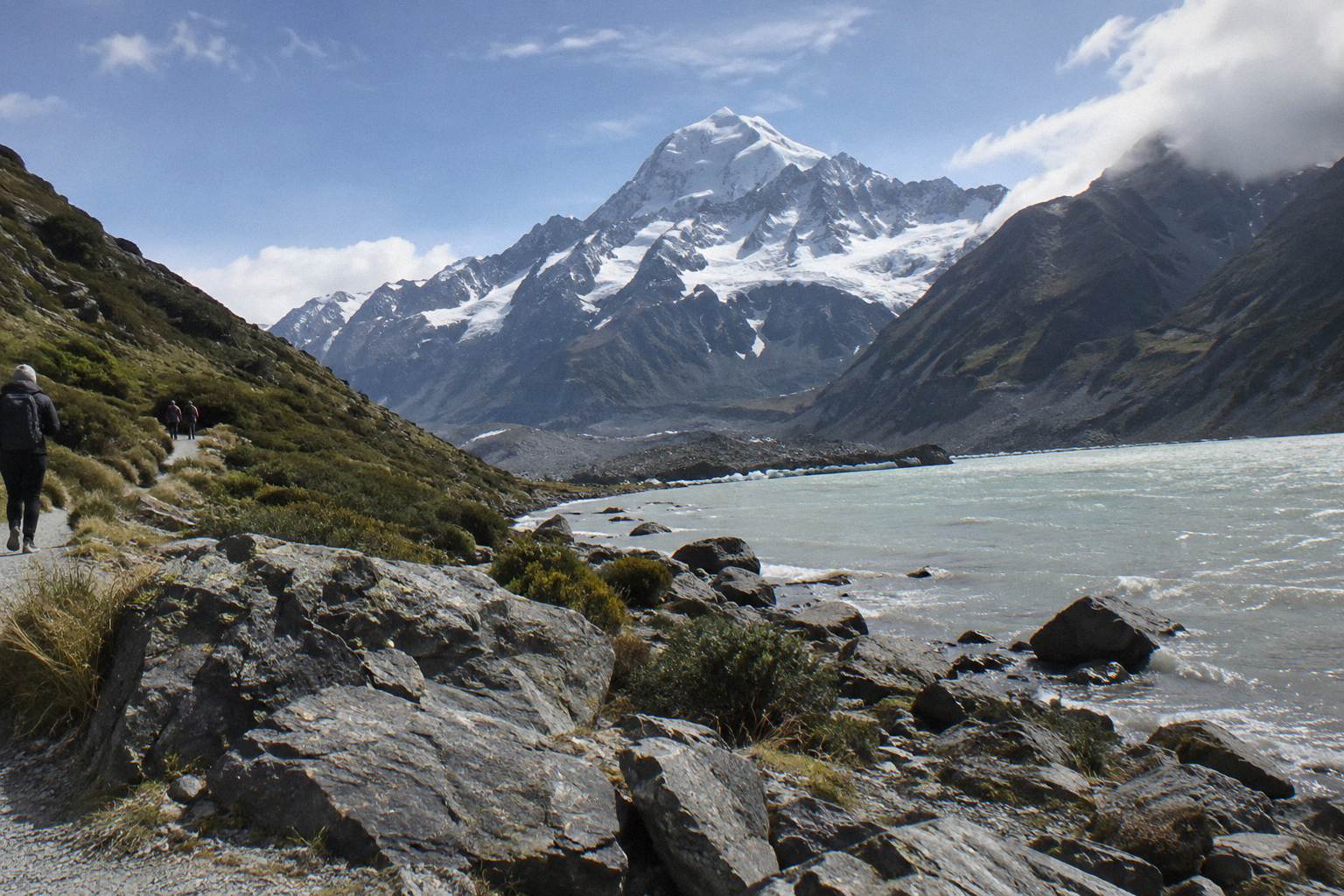
Aoraki / Mount Cook stands 3,724 metres above sea level, the tallest mountain in New Zealand, and it sits inside a national park where 19 peaks exceed 3,000 metres and glaciers cover 40 percent of the land. Those numbers, published by the Department of Conservation, are the backbone of the mountain's fame. But the question most visitors actually arrive with is narrower: given all that, is a helicopter hike onto the Tasman Glacier worth the money? The fame half is answered by the official record, and the hike half, prices, inclusions, ages, weights and weather rules, is laid out below without handing down a verdict. That call belongs to you. For a closer look at how the price stacks up, what the weather can change, and which travellers get the most from the day, the guide to weighing up the Tasman Glacier heli hike breaks it all down.
Mount Cook is famous because it is New Zealand's tallest peak at 3,724 metres, the anchor of a park holding 19 summits over 3,000 metres and the country's largest glacier, all inside a World Heritage area. Whether a heli hike is worth it depends on budget, fitness and weather appetite: the standard trip runs about 3 hours, costs from NZ$1,021 per person, and puts you on the ice up to 2 hours. If you plan to film the ice, the guide to drone and GoPro rules on the heli hike explains exactly what camera gear you can bring.
Start with the fame, because it is measurable. The Department of Conservation's park pages record that Aoraki / Mount Cook, at 3,724 metres, is New Zealand's tallest mountain, and that the park around it contains 19 peaks over 3,000 metres. Glaciers cover 40 percent of the park, spread across five major valley systems: the Godley, Murchison, Tasman, Hooker and Mueller. The whole area sits inside the Te Waipounamu South Westland World Heritage Area, which is UNESCO-level recognition of landscapes that exist nowhere else.
The Tasman Glacier is the single biggest draw within that set. DOC describes it as New Zealand's largest and longest glacier, 23 kilometres long, up to three kilometres wide and 101 square kilometres in extent, with its lower reaches covered in rock from the retreat. You can see it from the main highway at the park entrance, which is unusual for a glacier of this size anywhere in the world.
The worth-it half of the question is harder, and it deserves a straight answer rather than a cheerleading one. The heli hike costs from NZ$1,021 per person for the standard three-hour experience, in New Zealand dollars, and every operator states plainly that time on the ice is weather permitting. Some days the mountain gives you two hours on a glacier. Some days it cancels the flight.
What Makes Aoraki / Mount Cook Famous?
Aoraki / Mount Cook is 3,724 metres, New Zealand's tallest mountain, and the park around it holds 19 peaks above 3,000 metres with glaciers across 40 percent of its area. It is part of the Te Waipounamu South West New Zealand World Heritage Area, and it contains the country's largest and longest glacier, the 23 km Tasman.
The height is the headline, but the density of high peaks is what strikes most visitors. Nineteen summits over 3,000 metres pack into a single park, and the glacier coverage, 40 percent of the entire protected area, means the landscape reads as ice country rather than ordinary alpine country. Five glacier valley systems drain the park: Godley, Murchison, Tasman, Hooker and Mueller. This is the official Department of Conservation record, not tourism-brochure language.
The World Heritage listing matters too. The park forms part of Te Waipounamu South Westland, recognised for its natural values, which places Aoraki / Mount Cook in the same international framework as the world's other great protected landscapes. For a country the size of New Zealand, having its tallest peak, its biggest glacier and a World Heritage inscription in one road-accessible valley is the combination that makes the place famous.
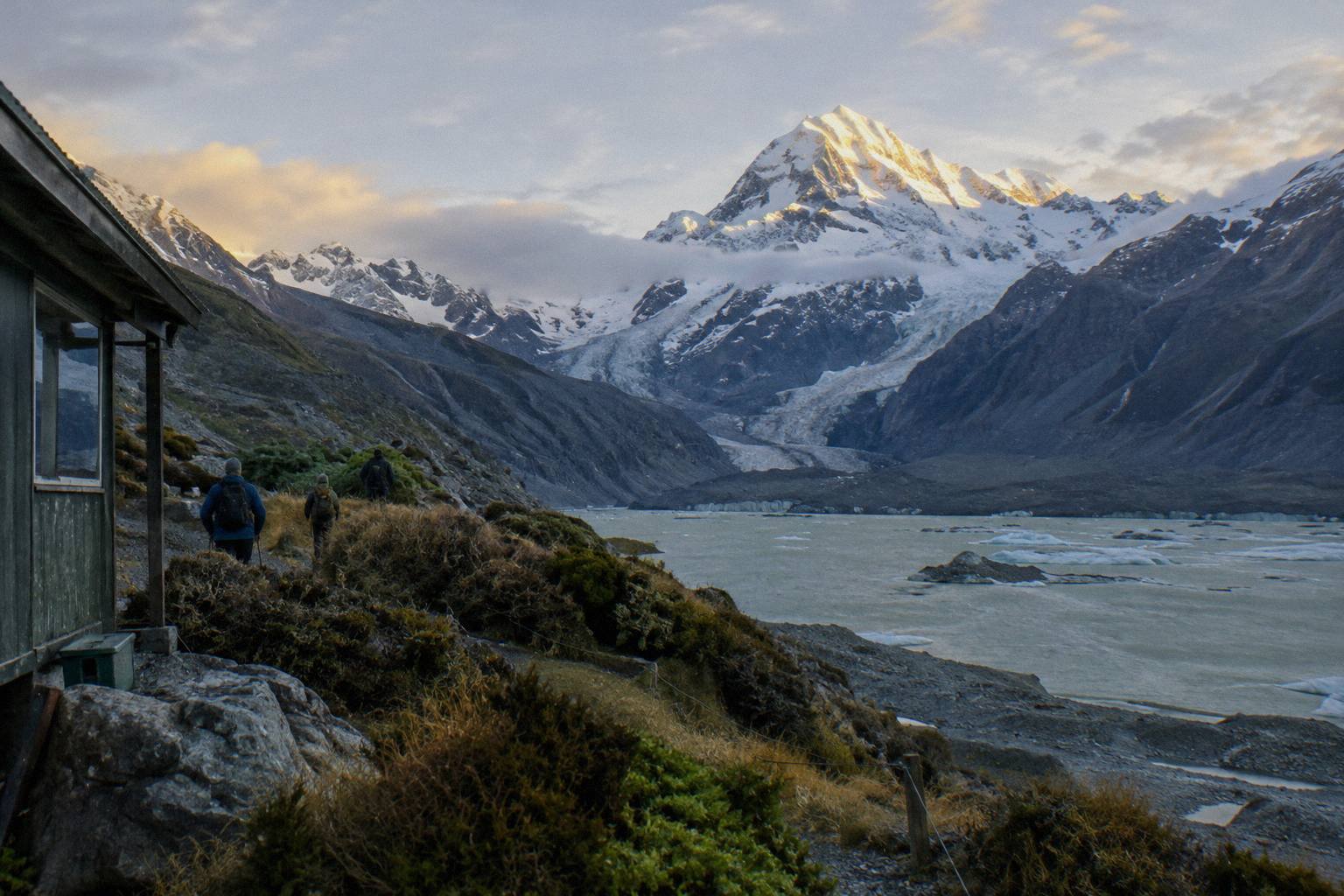
There is also a living, changing element to the fame. DOC's own track notes state that the Tasman Glacier, like glaciers worldwide, is retreating as the climate changes, and that Tasman Lake did not exist until 1974. The lake grows as the glacier melts. A 2026 end-of-summer snowline survey by Earth Sciences NZ (formerly NIWA) found retained snow on some glaciers but described it as "only a stay of execution and not a reversal in the long-term decline of ice coverage". The mountain is famous partly because its ice story is unfolding right now, on a timescale a visitor can see between visits. If the glacier itself is what draws you, the operator page for the Tasman heli hike describes what the trip onto the ice involves.
The Tasman Glacier And The Lake That Did Not Exist
The Tasman Glacier is 23 km long, up to three km wide and 101 square km, New Zealand's largest and longest. Tasman Lake, at its terminus, did not exist until 1974 and is growing rapidly as the glacier melts, a fact DOC prints on its own track notes.
The scale deserves restating slowly, because the numbers are what separate this glacier from every other in the country. Twenty-three kilometres of length, a width of up to three kilometres, 101 square kilometres of area. DOC notes the lower reaches are covered with rock, which is why the glacier reads grey-brown rather than white from the highway viewpoint, and why walking to the ice itself is not a simple stroll, a point covered in our piece on whether you can walk to the Tasman Glacier.
- Glacier Guiding 3-Hour Heli HikeNZ$1,021
- Helicopter Line 3-Hour Heli HikeNZ$1,021
- 12-Hour Bus Combo, Heli HikeNZ$1,210
- 7-Hour Fly-In Heli HikeNZ$2,149
The lake at its toe is the newer story. DOC's Tasman Glacier View Track page states it plainly: Tasman Lake did not exist until 1974, and it is growing rapidly as the glacier melts. In half a century, a body of water was born and expanded where ice once stood. Summer visitors see icebergs calved into the lake; winter brings lake ice instead. The view track itself is a modest walk, 1.5 km return, about 30 minutes, with 300 or more steps climbing the moraine wall to the viewpoint, and the nearby Blue Lakes, once blue, are now fed by rainwater and look green.
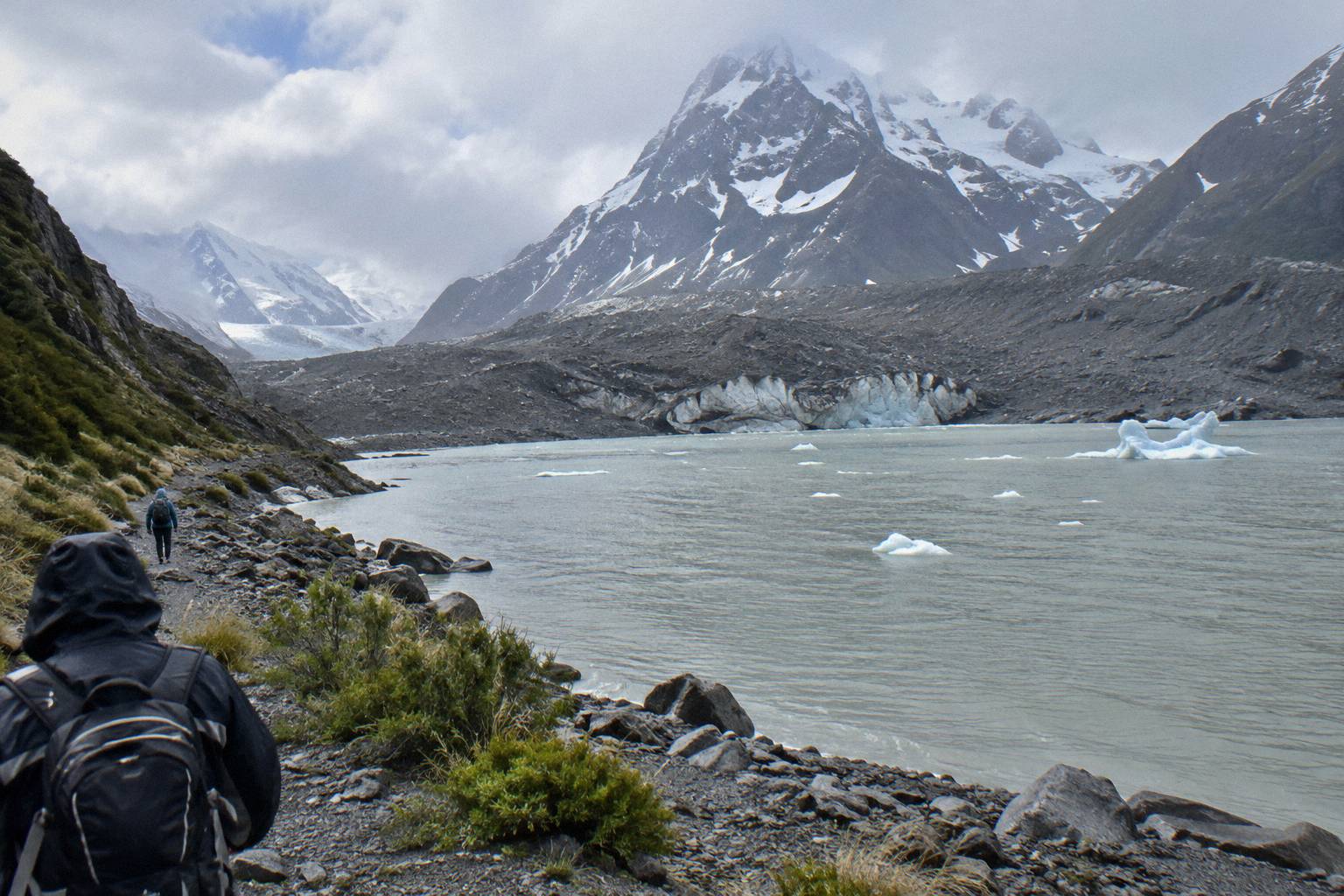
DOC also warns of real hazards here: the glacier lake and moraine are unstable, icebergs can shift, and the water is very cold. The Tasman Valley car park is free, and the track is about 10 minutes from the village by road. Standing on that moraine wall, looking at a lake younger than most of the people photographing it, is free of charge. The heli hike, by contrast, takes you past the terminal lake entirely and onto the live glacier above it, which is the fundamental difference between the two experiences, a comparison explored in our guide to the heli hike versus the Hooker Valley Track. For a closer look at how the two options stack up on cost, effort, and access, the side-by-side comparison of both options lays out the facts without declaring a winner.
What The Heli Hike Actually Is
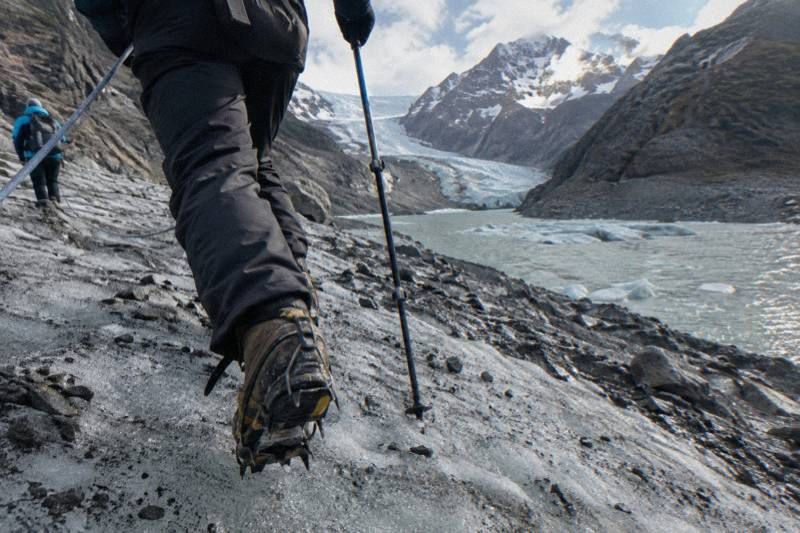
The Tasman Glacier heli hike is a about 3-hour experience: two scenic helicopter flights sandwiching up to 2 hours of guided walking on the ice, with boots, crampons and outerwear provided. Three brands sell essentially the same day out from Mount Cook Airport, with different minimum ages and terms.
The shape of the day is consistent across brands, and the details differ. You fly from Mount Cook Airport up the Tasman Valley, land on the glacier, spend up to 2 hours on the ice with a guide, and fly back. Mt Cook Glacier Guiding runs its version, The Adventurer, with aircraft from Mount Cook Ski Planes and Helicopters; The Helicopter Line flies the same route with Alpine Guides providing the guides; and Southern Alps Guiding sells a third version by helicopter or ski plane with a 9:00 AM start and "Low to Moderate" fitness, describing itself as an approved DOC concession holder. These are different companies selling a very similar product, not rivals to be ranked.
The brand differences are small but real, and they matter at the margin. Minimum age is 9 for the Mt Cook Glacier Guiding version, with under-18s needing parental or guardian consent, and 10 for The Helicopter Line version, which also requires the booking account holder to be 18 or over. Alpine Guides allows about 3.5 hours total and a guide ratio of 1:12, while The Helicopter Line says to allow about 3 hours; the safe general phrasing is about 3 hours total and up to 2 hours on the ice. The Alpine Guides trip page notes the landing at around 1,200 metres above sea level on the glacier.
Gear is provided on every version: leather boots, woolen socks, crampons (or snowshoes in winter), walking poles, and waterproof jackets and overtrousers if required. You bring sunglasses, sun protection, warm layers, a hat and gloves. You do not need mountaineering experience, a question we cover separately in detail, and moderate fitness is the stated bar on both major brands. If that sounds like your kind of morning, the most-booked version is below.
What It Costs And What Is Included
The standard heli hike costs from NZ$1,021 per person on both major brands listed here, with the Glacier Guiding version rated 4.9 from 340+ reviews and the Helicopter Line version 4.8 from 270+. Included are two scenic flights, a professional guide, and all glacier gear: boots, socks, crampons or snowshoes, poles and waterproofs.
The two headline versions share the same from-price, so price alone does not separate them. What you get for it is consistent: the flights, the guide, the equipment, and up to 2 hours on the ice weather permitting. The table below lines up the core facts.
| Trip | Operator | Rating and reviews | From price | Duration |
|---|---|---|---|---|
| Glacier Guiding 3-Hour Heli Hike | Mt Cook Glacier Guiding | 4.9 from 340+ reviews | from NZ$1,021 per person | 3 hours |
| Helicopter Line 3-Hour Heli Hike | The Helicopter Line | 4.8 from 270+ reviews | from NZ$1,021 per person | 3 hours |
| 12-Hour Bus Combo, Heli Hike | Cheeky Kiwi Travel | 68 reviews on the booking page | from NZ$1,210 per person | About 12 hours |
| 7-Hour Fly-In Heli Hike | True South Flights | 4.9 from 80+ reviews | from NZ$2,149 per person | About 7 hours |
The Queenstown-based options cost more because they bundle the travel: the Cheeky Kiwi bus combo runs about 12 hours door to door from The Station with a 6:30 am start, and the True South fly-in version uses a scenic fixed-wing flight between Queenstown and Mount Cook, with a guaranteed window seat on the plane. Those suit travellers based in Queenstown without a rental car; from the village itself, the standard three-hour trip is the whole commitment.
For context on the cheaper end, a flight without the hike is a different product: The Helicopter Line's 40-minute Tasman landing flight, with a 5 to 10 minute snow landing, costs from NZ$713 per person with 60+ reviews on the booking page. That comparison, flight versus hike, is worth making consciously, and our snow-landing versus heli hike guide does it properly.
Ages, Weights, Group Sizes And Cancellation
These figures belong to their trips and operators only, never to the activity in general. The Glacier Guiding 3-Hour Heli Hike takes age 9 and over with parental or guardian consent for under-18s, and runs groups of up to 11. The Helicopter Line version takes age 10 and over, requires the booking account holder to be 18 or over, caps a rear helicopter seat at 150 kg, and runs up to 20 per group. The True South fly-in version also lists 150 kg per passenger. Every version listed here offers free cancellation up to 24 hours before start before start.
| Trip | Min age | Weight rule | Max group | Cancellation |
|---|---|---|---|---|
| Glacier Guiding 3-Hour Heli Hike | 9 | Check when booking | 11 | Free up to 24 hours before |
| Helicopter Line 3-Hour Heli Hike | 10 | 150 kg rear seat | 20 | Free up to 24 hours before |
| 12-Hour Bus Combo, Heli Hike | Check when booking | 116 kg and over subject to day-of weights | 15 | Free up to 24 hours before |
| 7-Hour Fly-In Heli Hike | Check when booking | 150 kg per passenger | 11 | Free up to 24 hours before |
Fitness expectations are moderate across the board, with the Cheeky Kiwi combo the outlier at strong physical fitness given the large amount of hiking involved. The Helicopter Line asks that you can walk at least 1 km and climb or descend stairs easily. None of the trips is wheelchair accessible, and pregnancy is not recommended on several of them. The weight and age details matter more than people expect, so check your own numbers against the specific trip's listing before booking; our guide to weight limits on the helicopter covers the reasoning.
So, Is It Worth It? A Weighing
The answer is that it depends on three things you can judge before booking: whether about 2 hours on a glacier justifies from NZ$1,021 per person to you, whether your party meets the age, weight and fitness rules, and your tolerance for a weather-dependent day. Every operator is explicit that landing and ice time are weather permitting, never promised.
There is no verdict here, deliberately. What can be said factually is this: the trip puts you on New Zealand's largest glacier, at around 1,200 metres on the Alpine Guides version, for up to 2 hours, with all gear supplied, behind two scenic flights through the Tasman Valley. It is rated 4.9 from 340+ reviews on the Glacier Guiding listing and 4.8 from 270+ on the Helicopter Line listing, both with free cancellation to 24 hours, which lowers the financial risk of booking ahead. Reviews, and what travellers actually say, are examined in our heli hike reviews guide.
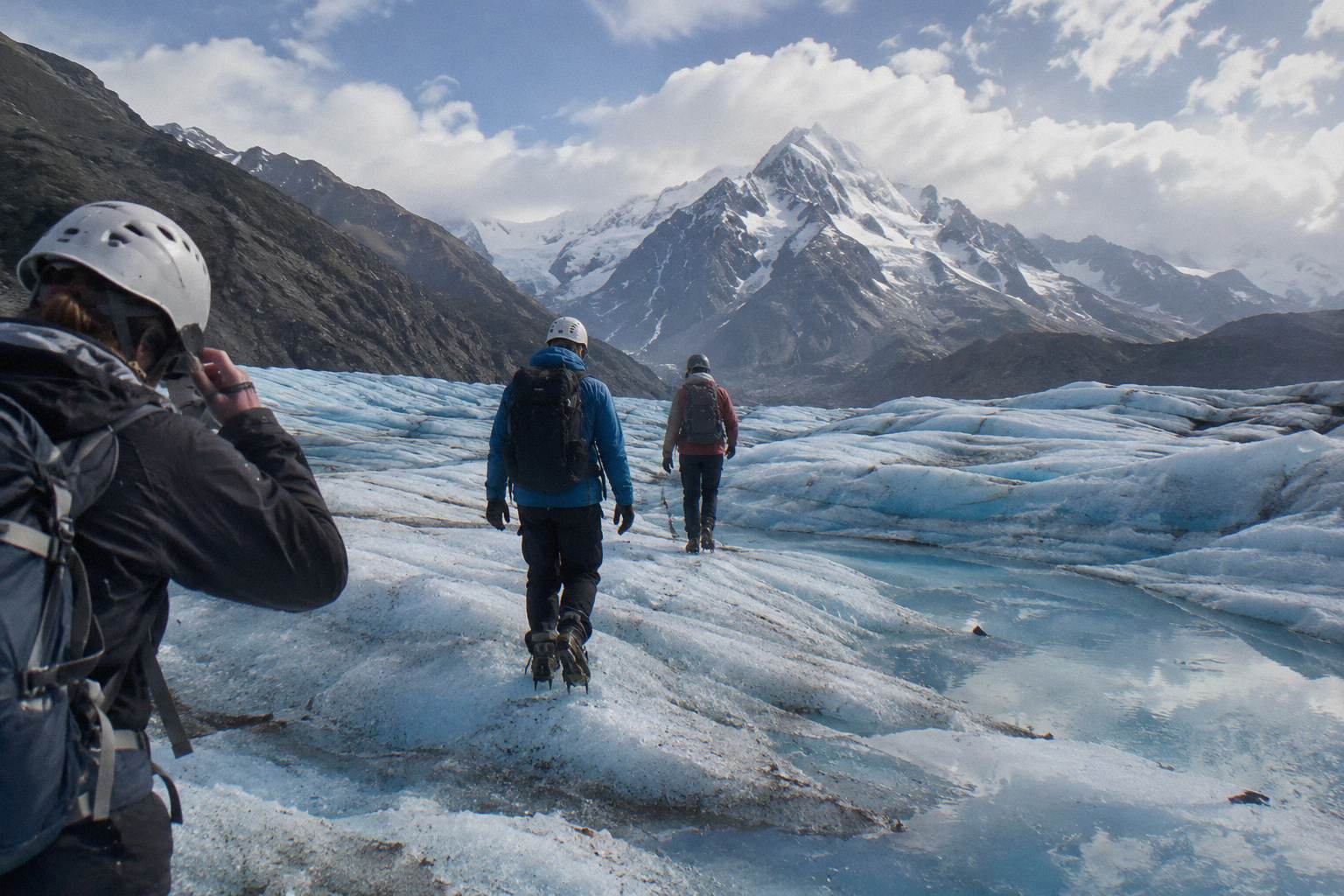
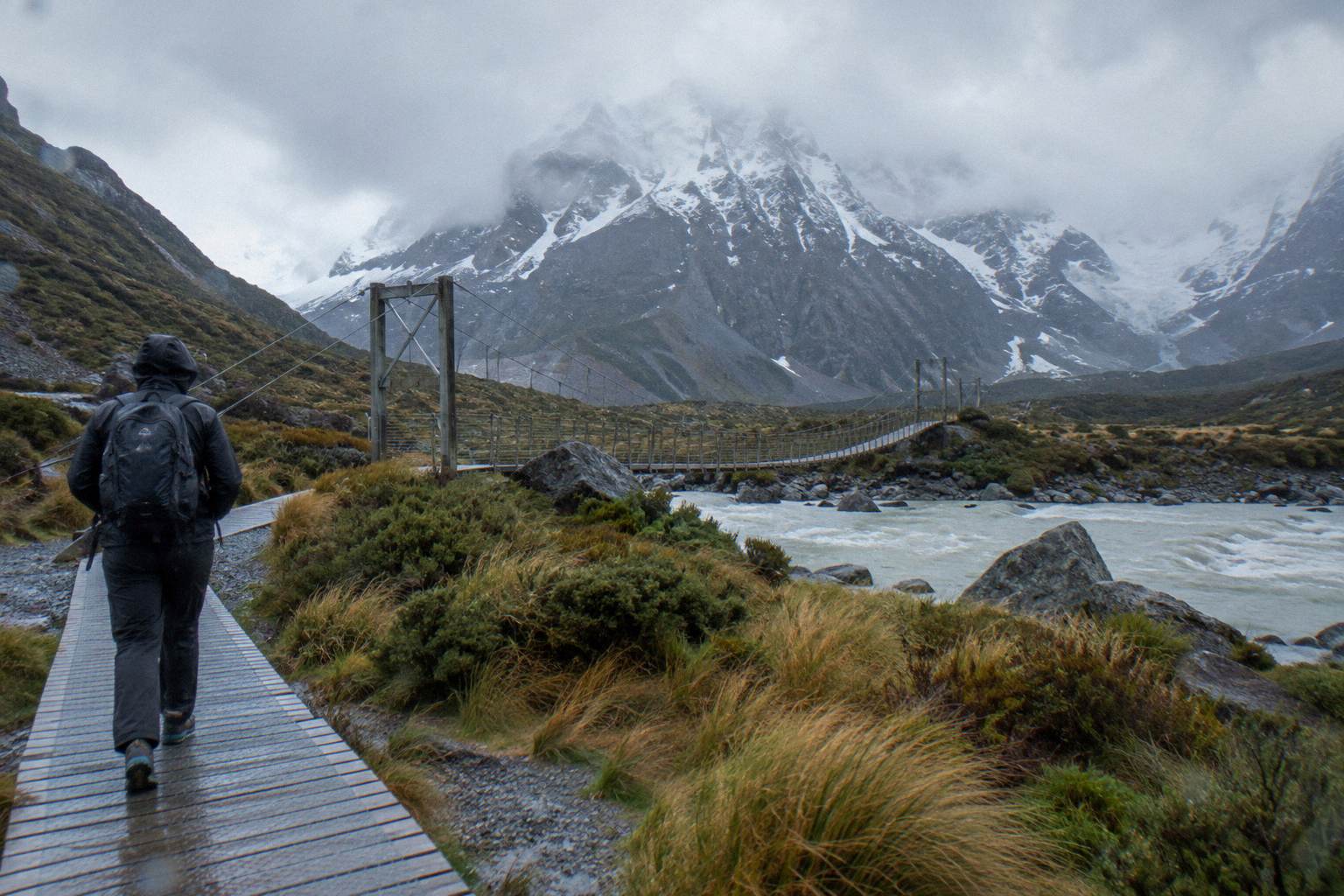
The case against is equally factual. It is a lot of money for three hours. The weather can cancel it late, sometimes with little notice, though then you are refunded or rebooked. The free alternatives in the park are genuinely good: the Hooker Valley Track is 10 km return through the same World Heritage landscape, and DOC notes its second swing bridge, opened in July 2026, is 189 metres, the longest suspension bridge in New Zealand. A visitor on a budget can see the mountain and the glacier country on foot for the cost of walking shoes. What the free walks cannot do is put you standing on the ice.
There is also a time-sensitive argument, and it is the one the science makes rather than any marketing department. DOC states the glacier is retreating and the lake is growing; the 2026 snowline survey calls recent retained snow "only a stay of execution". Nobody can promise the same experience in a decade. Whether that argues for going now or for saving the money is a values question, not a facts question.
How the mountain's fame translates into a booking decision is ultimately personal.
The choice between the two full hikes usually comes down to dates and minimum ages rather than anything else, since both run the same valley from the same airport at the same from-price. Families with a nine-year-old have one option that fits. Everyone else can reasonably pick on schedule.
Common Questions About Mount Cook And The Heli Hike
Why Is Mount Cook So Famous, And Is It Worth A Heli Hike?
Mount Cook is famous as New Zealand's tallest peak at 3,724 metres, anchor to a park with 19 peaks over 3,000 metres, glaciers across 40 percent of its area, and the country's largest glacier, all inside a World Heritage area. Whether the heli hike is worth it depends on your budget, fitness and weather tolerance: it costs from NZ$1,021 per person for about 3 hours with up to 2 hours on the ice.
Can You See The Tasman Glacier Without Paying For A Helicopter?
Yes. DOC's Tasman Glacier View Track is 1.5 km return, about 30 minutes with 300 or more steps, to a viewpoint on the moraine wall above the lake, and the car park is free. The glacier is also visible from the main highway at the park entrance. The walks show you the glacier; the heli hike puts you on it.
How Long Is The Heli Hike On The Ice?
Up to 2 hours on the glacier, weather permitting, inside a total experience of about 3 hours including flights and check-in. Alpine Guides allows about 3.5 hours for its version. Every operator is explicit that the landing and ice time are never promised.
Do I Need To Be Fit Or Experienced For The Heli Hike?
No mountaineering experience is needed, and both major brands ask for moderate fitness. The Helicopter Line requires that you can walk at least 1 km and climb or descend stairs easily. All glacier gear, boots, crampons and waterproofs, is provided.
What Happens If The Weather Cancels The Flight?
On the versions listed here, traveller cancellation is free up to 24 hours before start. Weather calls can come late, sometimes near departure time, so keep some flexibility in your day.
Is There A Cheaper Flight-Only Option?
Yes. A snow-landing flight without the hike starts at from NZ$713 per person on The Helicopter Line's 40-minute Tasman landing flight, which includes a 5 to 10 minute snow landing. It is a different product, a landing rather than a hike, but it shares the same scenery.