Is A Glacier Heli Hike Safe? Guides, Crevasses And Helicopters
No operator will promise you a safe day, and neither will we. What they do publish is a detailed picture of how the trip is run: trained guides, fitted gear, aircraft maintained to stated standards, and plain lists of what can go wrong on ice.
Short answer
The Tasman Glacier heli hike runs with professional guides at a stated ratio of one guide to 12 walkers (Alpine Guides), boots and crampons fitted by the guide, and aircraft described by The Helicopter Line as inspected and maintained to Civil Aviation Authority standards. The same operator publishes a risk disclosure listing falling rocks, ice cliffs, crevasses, changing snow conditions, icy surfaces and rapidly changing mountain weather.
The Tasman Glacier is 23 kilometres long, up to three kilometres wide and covered in crevasses, and several companies will land you in the middle of it on a Tuesday morning. That sentence alone explains why the word "safe" needs careful handling. No operator publishes a safety statistic and no regulator ranks these trips, so there is no verdict to hand you either. What the operators do publish is unusually candid: gear lists, guide ratios, risk disclosures and clear statements about who should not board the helicopter at all. Read those, and you can make your own call with better information than most first-time visitors have.
Below is what the operators themselves say about how a heli hike is run, then the hazards they name, then the weather machine that governs every departure. Nothing here is a promise. Weather calls are made on the day, by the operator, and a landing is never guaranteed. For the practical side of that last point, the companion page on heli hike weather and cancellations goes deeper on refunds and rebooking.
Is A Glacier Heli Hike Safe As The Operators Describe It?
Yes, as far as the published claims go: operators promise professional guides, boots and crampons fitted by your guide, a harness where the terrain calls for one, and aircraft that The Helicopter Line describes as inspected and maintained to Civil Aviation Authority standards. Alpine Guides cites a ratio of one guide to 12 walkers, every brand calls the walk moderate rather than technical, and that stated system is the whole published picture worth reading before booking.
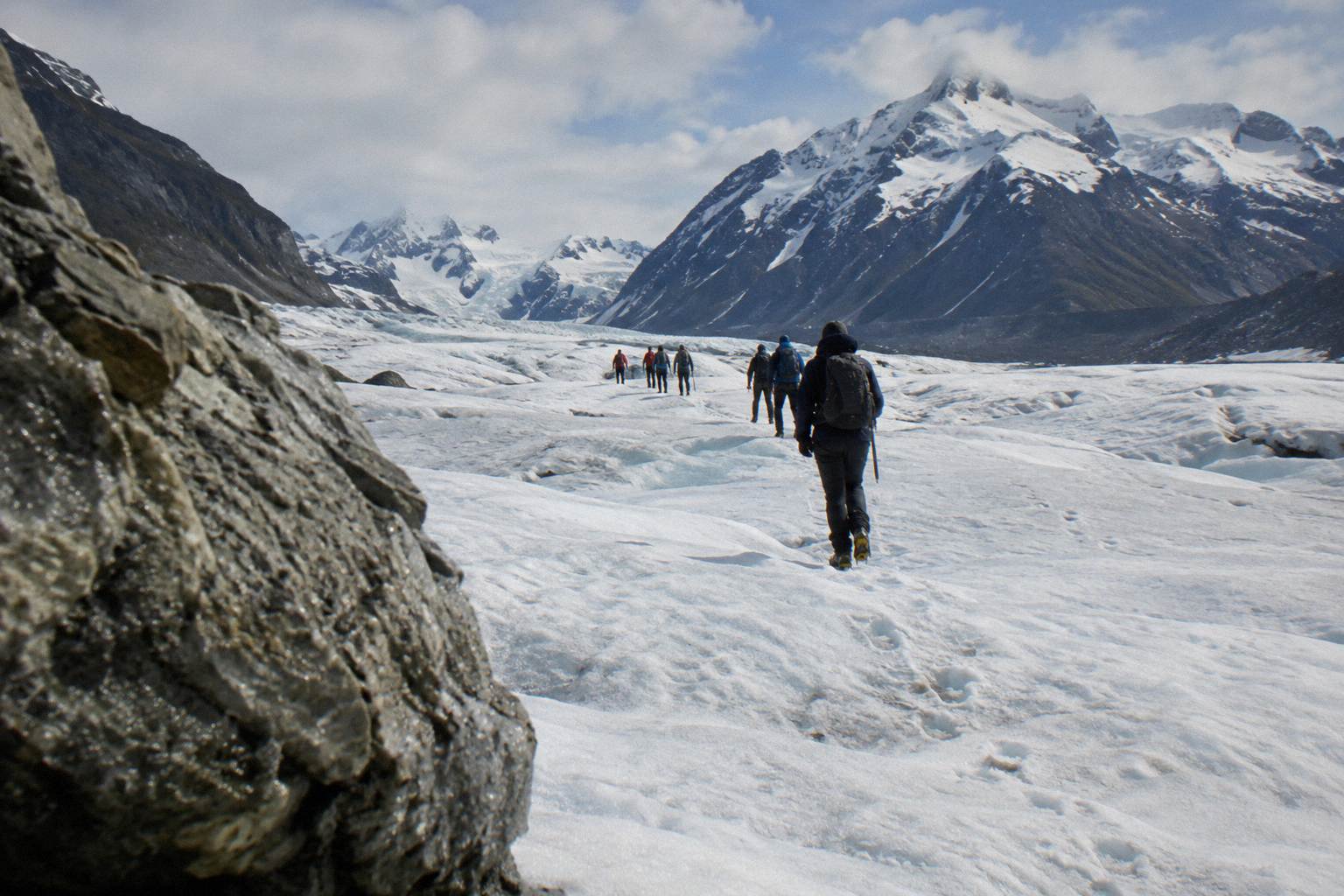
Start with the guide, because the guide is the safety system. Alpine Guides, which supplies the guides for The Helicopter Line's Tasman Glacier heli hike, states a ratio of one guide per 12 walkers on the ice. Mt Cook Glacier Guiding, the guiding brand that flies with Mount Cook Ski Planes and Helicopters, describes its trip as a professionally guided heli hike with the same shape: two scenic flights and up to two hours on the glacier, weather permitting. Neither company frames the walk as mountaineering. Alpine Guides calls it "not a strenuous hike" and suitable for people of average fitness; The Helicopter Line asks for "moderate fitness and hiking ability" and the ability to walk at least one kilometre and climb or descend stairs easily.
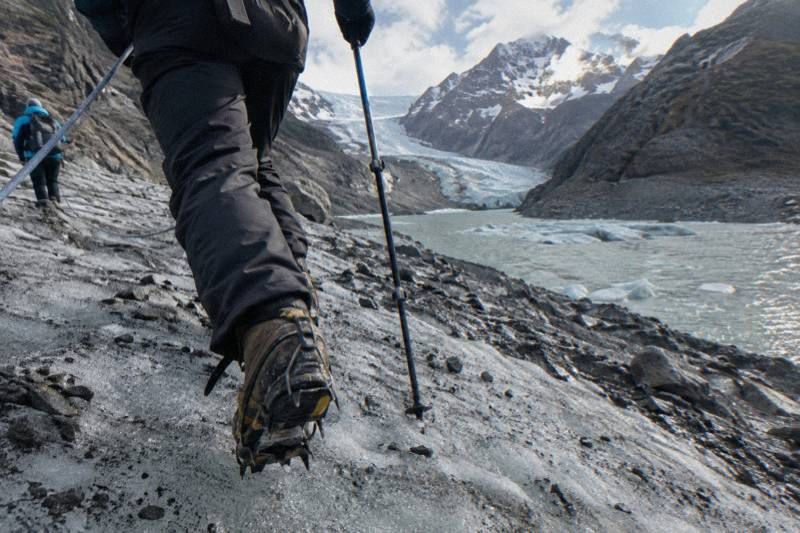
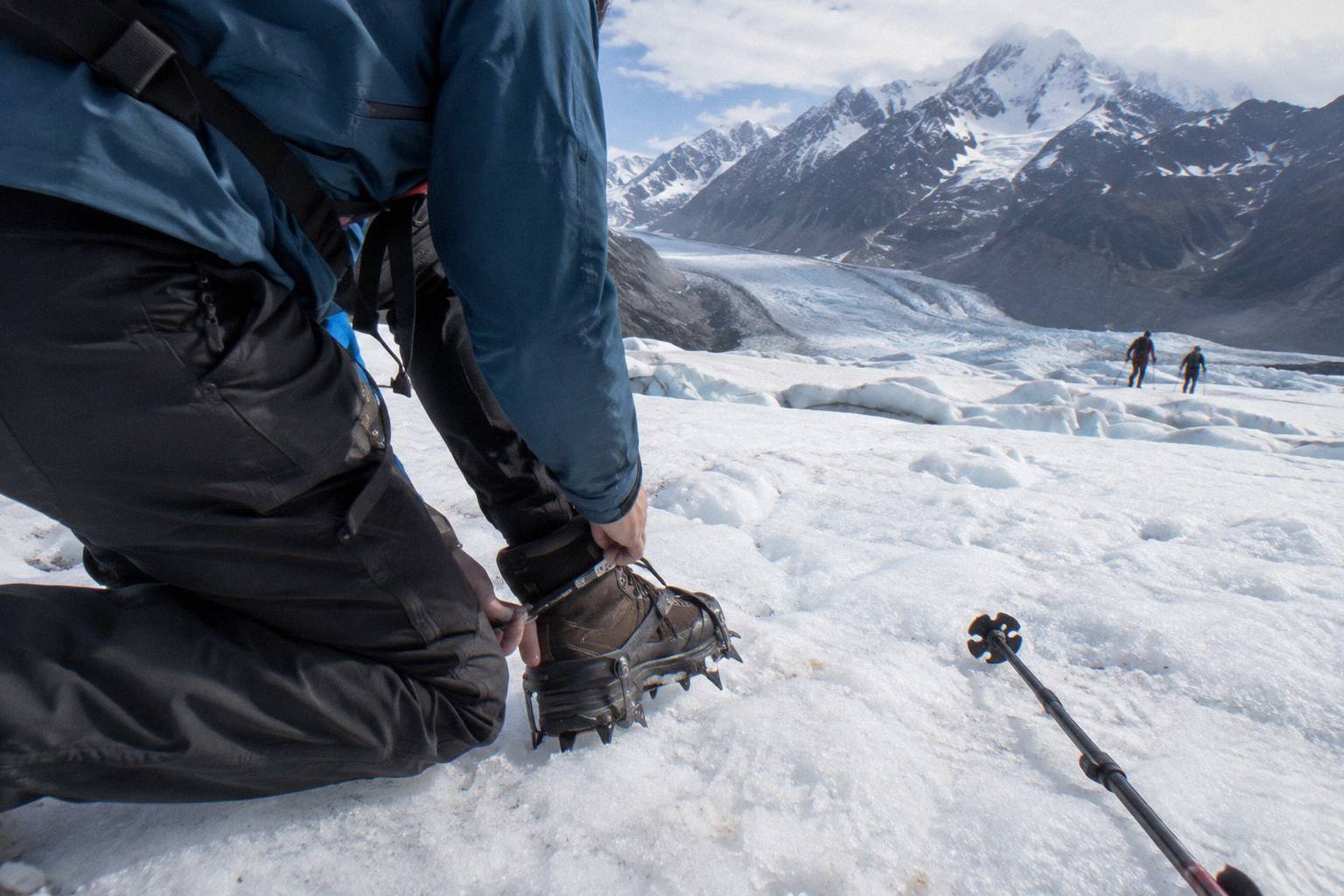
Then the gear, which is not optional and not yours to source. Both main brands fit you out at the base before you fly. Mt Cook Glacier Guiding provides leather boots, woolen socks, crampons in summer, crampons and/or snowshoes in winter, adjustable walking poles, a waterproof jacket and over-trousers, and a harness if required. The Helicopter Line's list covers glacier boots, ice crampons or snowshoes, waterproof jackets and trousers if required, walking poles and socks. The guide fits the crampons, which matters more than it sounds: ill-fitted crampons on ice are a hazard in themselves, and this is exactly why the operators do not let walkers bring their own.
The helicopter side is stated, not certified on any page you can check. The Helicopter Line's own risk disclosure says its aircraft are inspected and maintained to Civil Aviation Authority standards, and that wording is the operator's, carried here with attribution. No public source lists these operators' certifications or concessions, so nothing beyond the operators' own statements can be confirmed here. The rotorcraft themselves are everyday working machines at Mount Cook Airport, which sits at 656 metres elevation on State Highway 80 and has been an airfield since 1936.
- Glacier Guiding 3-Hour Heli HikeNZ$1,021
- Helicopter Line 3-Hour Heli HikeNZ$1,021
- 12-Hour Bus Combo, Heli HikeNZ$1,210
- 7-Hour Fly-In Heli HikeNZ$2,149
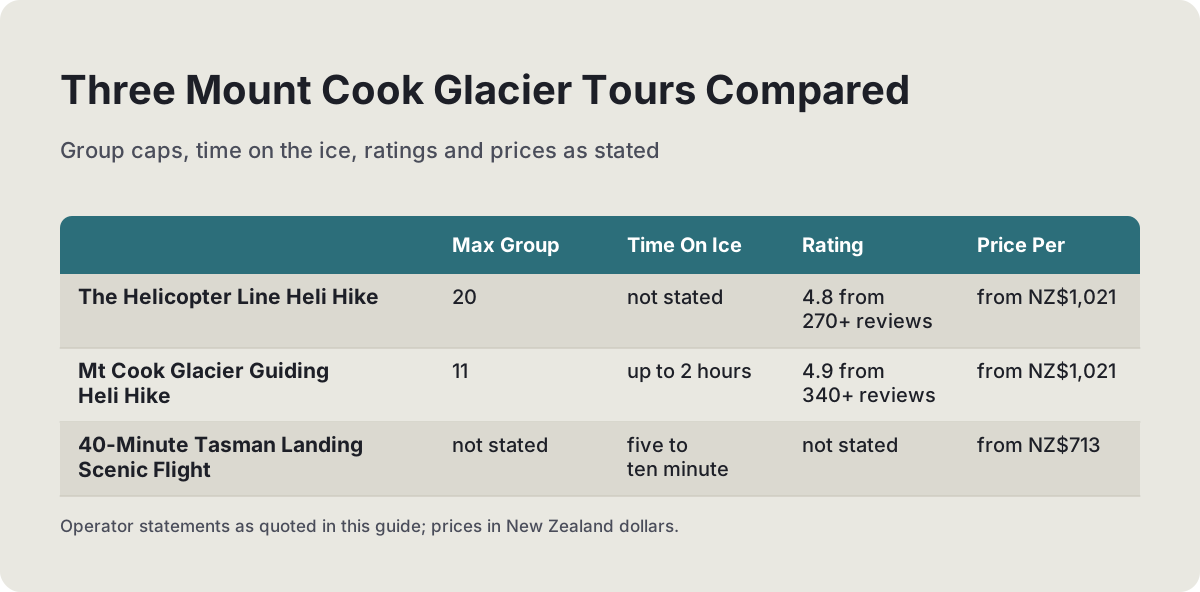
The staging also does quiet safety work. Groups are small: the Mt Cook Glacier Guiding trip caps at 11 people, The Helicopter Line's at 20, and both run on a minimum of four people per departure. Check-in is upstairs at Mount Cook Airport 15 minutes before departure for The Helicopter Line, and the whole experience, flights and check-in included, runs about three hours. You are never far from the aircraft, the guide or the base.
Who Keeps You Safe On The Ice?
Your guide owns every element of on-ice safety: they fit your boots and crampons, choose the landing site on the day, set a route around crevasses and ice cliffs, and decide when the group turns back. Alpine Guides states one guide to 12 walkers, while Mt Cook Glacier Guiding runs groups of up to 11, all on the Tasman Glacier at around 1,200 metres above sea level, per Alpine Guides.
The landing site itself is a daily decision, and that is a safety feature, not a marketing hedge. Alpine Guides notes that landing is around 1,200 metres above sea level on the Tasman Glacier, and Mt Cook Glacier Guiding's material says the primary landing site may vary with conditions. A glacier is not a static place: the surface shifts, meltwater channels move, and what was a safe walking route in December can be a bad one by February. A local guide who walked the ice last week is choosing a fresh line every single morning, which is something no independent walker on a viewpoint can replicate.
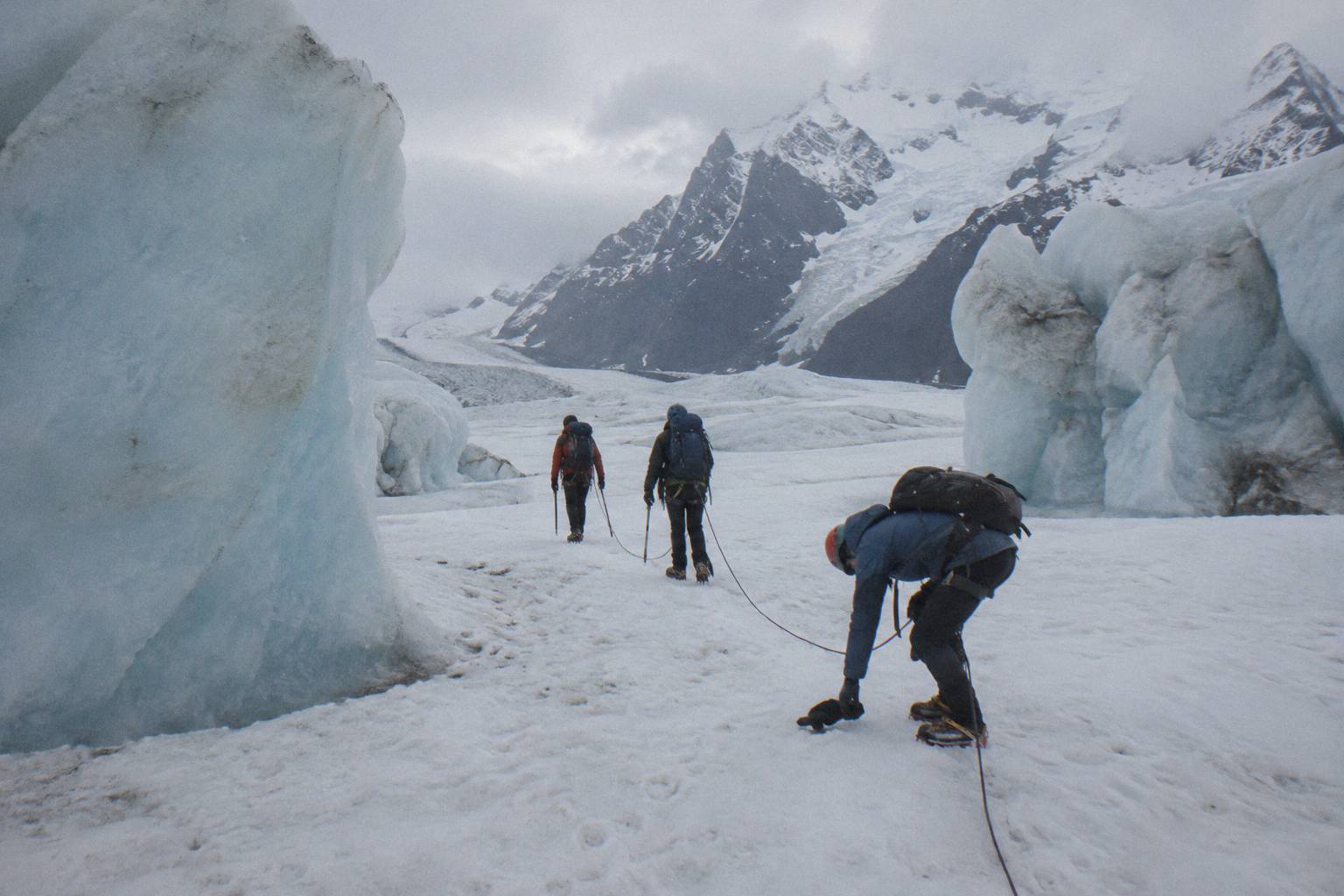
Both main brands are also upfront about what the hike is not. It is not a rope-team mountaineering ascent, and no operator's standard-hike page describes crevasse walking either. The Helicopter Line's disclosure lists crevasses among the terrain hazards its guides manage, which is precisely why the walk stays on the ground the guide has chosen and why walkers keep the pace and line the guide sets. Mt Cook Glacier Guiding mentions a harness "if required", and that phrase is the operator's own indication that some terrain on some days calls for extra protection.
Weather decisions run through the same people. The helicopter pilot and the guide make the call on the day, and The Helicopter Line asks passengers to phone 24 hours before departure for a weather check and to reconfirm. Mountain weather changes rapidly, in the operator's own words, and the strict fly times are part of the safety picture rather than an inconvenience. Arrive on time, because the aircraft and the weather window will not wait.
If the guided format still feels like more commitment than you want, there is a middle rung on the ladder: a snow-landing scenic flight gives you the helicopter, the alpine landing and the pilot commentary without the hike. The 40-Minute Tasman Landing by The Helicopter Line includes a five to ten minute snow landing and runs from Glentanner Park, from NZ$713 per person. It is a different product, not a version of the hike, but it lets a cautious group member share the flight side of the day.
The Helicopter Line trip is rated 4.8 from 270+ reviews and the Mt Cook Glacier Guiding trip 4.9 from 340+ reviews, both from NZ$1,021 per person, with all prices in New Zealand dollars.
What Hazards Do The Operators Themselves List?
The Helicopter Line publishes a risk disclosure naming falling rocks, ice cliffs, crevasses, changing snow conditions, icy surfaces and rapidly changing mountain weather as the hazards of the trip. It is the most specific public statement any brand makes about what can go wrong, and it deserves to be read in full before booking. Reading it is not a reason to stay home; it is the difference between informed consent and surprise.
The disclosure exists because a glacier is a genuinely dynamic environment. The Department of Conservation describes the Tasman Glacier as New Zealand's largest and longest, 23 km long and up to three km wide, with its lower reaches covered in rock, and it warns that Tasman Lake is growing rapidly as the glacier melts. Ice cliffs calve, rocks fall from valley walls, and the surface a group walks is snow and ice over a moving mass. None of this is hidden. It is in the operator's own words on the booking path, which is more transparency than most adventure activities offer.
What the operators do not say matters too. No operator's page for the standard hike promises ice caves (those belong to a private charter product, and only conditionally on snow and ice), none promises crevasse exploration, and none guarantees a landing or a set time on the ice. Mt Cook Glacier Guiding says "up to 2 hours on the glacier, weather permitting", and The Helicopter Line says a glacier landing is weather permitting, never promised. A company that promises you ice is selling you something the other companies refuse to sell, and that discrepancy should shape your choice of who to book with.
The table below gathers the hazards and safeguards the operators name, in their own framing. Treat it as attributed statements from the operators, not as an independent assessment.
| What is stated, and by whom | The operator's own wording or detail |
|---|---|
| Terrain hazards (The Helicopter Line risk disclosure) | Falling rocks, ice cliffs, crevasses, changing snow conditions, icy surfaces |
| Weather hazard (The Helicopter Line) | Mountain weather changes rapidly; every activity depends on the weather |
| Aircraft (The Helicopter Line) | Aircraft inspected and maintained to Civil Aviation Authority standards |
| Guide ratio (Alpine Guides) | One guide to 12 walkers |
| Landing site (Alpine Guides; Mt Cook Glacier Guiding) | Around 1,200 m on the Tasman Glacier; primary landing site may vary with conditions |
| Time on ice (Mt Cook Glacier Guiding) | Up to 2 hours on the glacier, weather permitting |
| Harness (Mt Cook Glacier Guiding) | Provided if required |
| Landing promise (both brands) | Weather permitting, never promised |
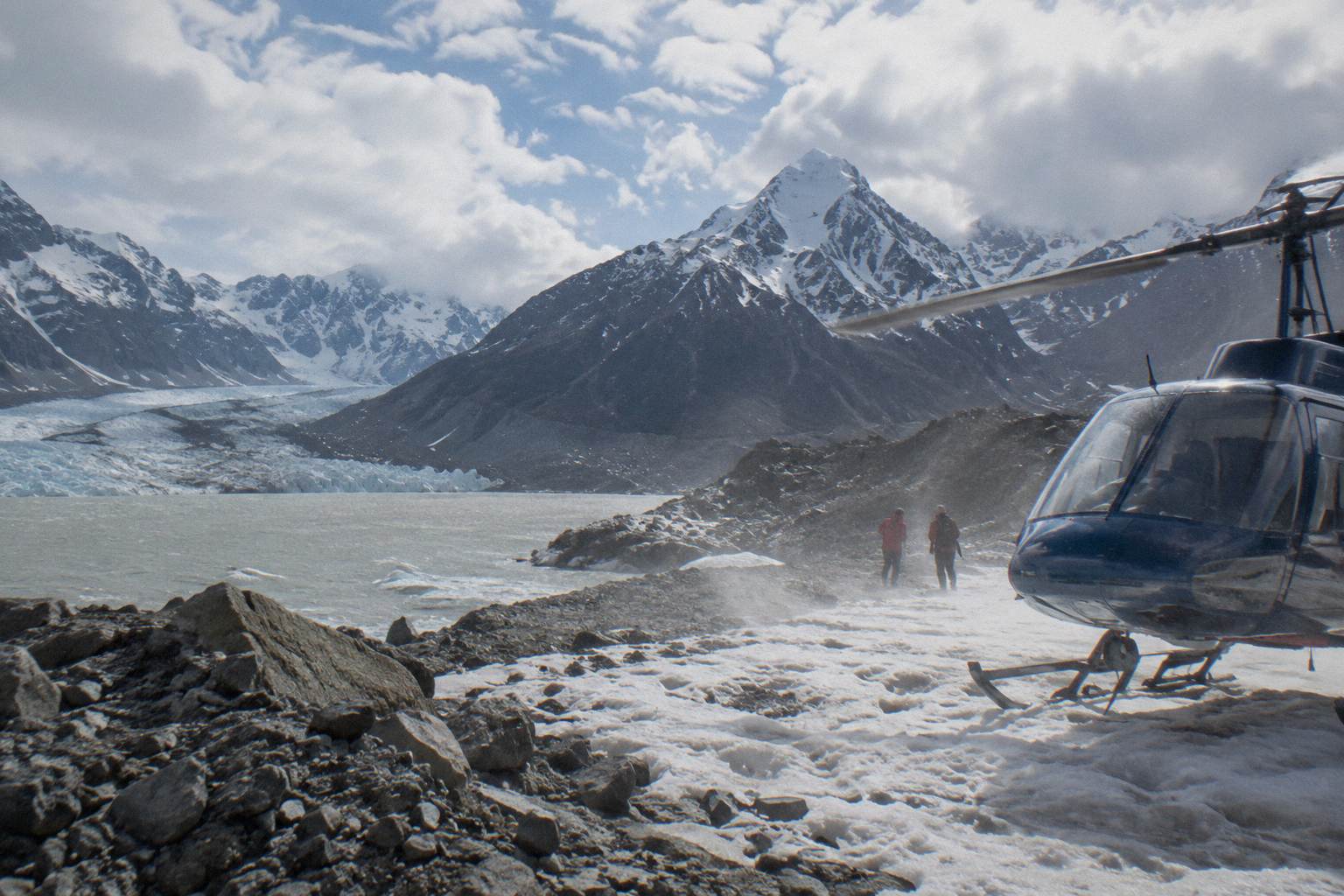
The wider glacier context comes from the Department of Conservation, whose park pages note that glaciers cover 40 percent of Aoraki / Mount Cook National Park and that the park holds five major glacier valley systems. DOC's Tasman Glacier View Track page states plainly that, like glaciers worldwide, Tasman Glacier is retreating as the climate changes. That retreat is why the lake exists and why operators describe changing conditions rather than fixed routes: the environment the guides work in is remade each season, and the guiding system is built around daily reassessment rather than a permanent trail.
Still deciding? The Helicopter Line's heli hike listing carries free cancellation up to 24 hours before the start, and an operator cancellation for weather gets a full refund or credit. Check availability and read the current terms on the booking page before you commit.
Who Should Not Book A Heli Hike?
The booking pages are blunt. Mt Cook Glacier Guiding lists moderate fitness, no wheelchair access, and no heart problems or other serious medical conditions. The Helicopter Line's page adds that the trip is not recommended for pregnant travellers, and Alpine Guides excludes mobility problems, knee, hip or back injuries, heart conditions and vertigo. The Queenstown bus combo requires strong fitness. If a listed condition applies to you, tell the operator when you book and check with your doctor.
Age rules differ by brand, which catches families out. The Helicopter Line and Alpine Guides set a minimum age of 10, with the booking account holder 18 or over and children needing a parent or guardian along; Alpine Guides requires a parent or guardian 18+ for the minimum-age walkers. Mt Cook Glacier Guiding sets the bar at 9 and over, with under-18s needing parental or guardian consent. There is no single "the heli hike" age, and any page that gives you one number for all brands is guessing. If your youngest is nine, one brand's trip is open to them and another's is not.
Weight rules are even more brand-specific, and only some are published. The Helicopter Line states a maximum of 150 kg for a person in a rear helicopter seat, and that limit belongs to that operator only. The True South Flights fly-in package from Queenstown also states a total weight per passenger of 150 kg on its booking page, again specific to that operator. Mt Cook Glacier Guiding publishes no weight limit for its hike, so check with the operator directly about weight before booking that trip. The Cheeky Kiwi bus combo takes a different approach entirely: passengers 116 kg and over fly only depending on other passengers' weights on the day, decided at check-in.
The Queenstown packages deserve their own caution line because the day is much longer than the walk. The 12-Hour Bus Combo, Heli Hike by Cheeky Kiwi Travel states a strong physical fitness level and "a large amount of hiking", and its suitability list excludes people with walking disabilities, back problems, heart problems or other serious medical conditions, and pregnant travellers. The 7-Hour Fly-In Heli Hike by True South Flights asks only moderate fitness, but still lists no heart problems or other serious medical conditions. Different door, different rules: always read the page for the exact trip you are booking.
| Trip and operator | Stated age rule | Stated fitness and exclusions |
|---|---|---|
| Glacier Guiding 3-Hour Heli Hike (Mt Cook Glacier Guiding) | 9 and over; under-18s need guardian consent | Moderate fitness; not wheelchair accessible; no heart problems or other serious medical conditions |
| Helicopter Line 3-Hour Heli Hike (The Helicopter Line) | Minimum 10; account holder 18+; children with a parent or guardian | Moderate fitness and hiking ability; walk at least 1 km, climb stairs easily; not wheelchair accessible; not recommended for pregnant travellers |
| 12-Hour Bus Combo, Heli Hike (Cheeky Kiwi Travel) | Not published, check the booking page | Strong physical fitness; large amount of hiking; excludes walking disabilities, back or heart problems, other serious medical conditions, pregnant travellers |
| 7-Hour Fly-In Heli Hike (True South Flights) | Not published, check the booking page | Moderate fitness; no heart problems or other serious medical conditions; not wheelchair accessible; not recommended for pregnant travellers |
Across all four columns, one thing stands out: the operators have already done the triage for you, in public, before you pay. The common thread across every page is the same two clauses, no heart problems or other serious medical conditions and not wheelchair accessible, plus the standing advice that applies to every trip: tell the operator when you book, and check with your doctor if any stated condition applies to you. No page here will tell you a trip is safe for you personally, because no page can.
Fitness worry, more than any hazard list, is what stops people booking, and it is the question most often overestimated. The walk is on fitted crampons over guided-chosen terrain, not a climb; the deeper breakdown lives in our piece on heli hike fitness and difficulty, which walks through each operator's stated requirement line by line.
What Happens If The Weather Turns?
Every booking page for these trips states free cancellation up to 24 hours before the start, and every operator states that a weather cancellation on their side brings an alternative date or a full refund or credit. The Helicopter Line adds full refund or credit with 24 hours' notice and full price inside 24 hours or for no-shows. The weather call is made by the operator on the day, and a landing is never promised.
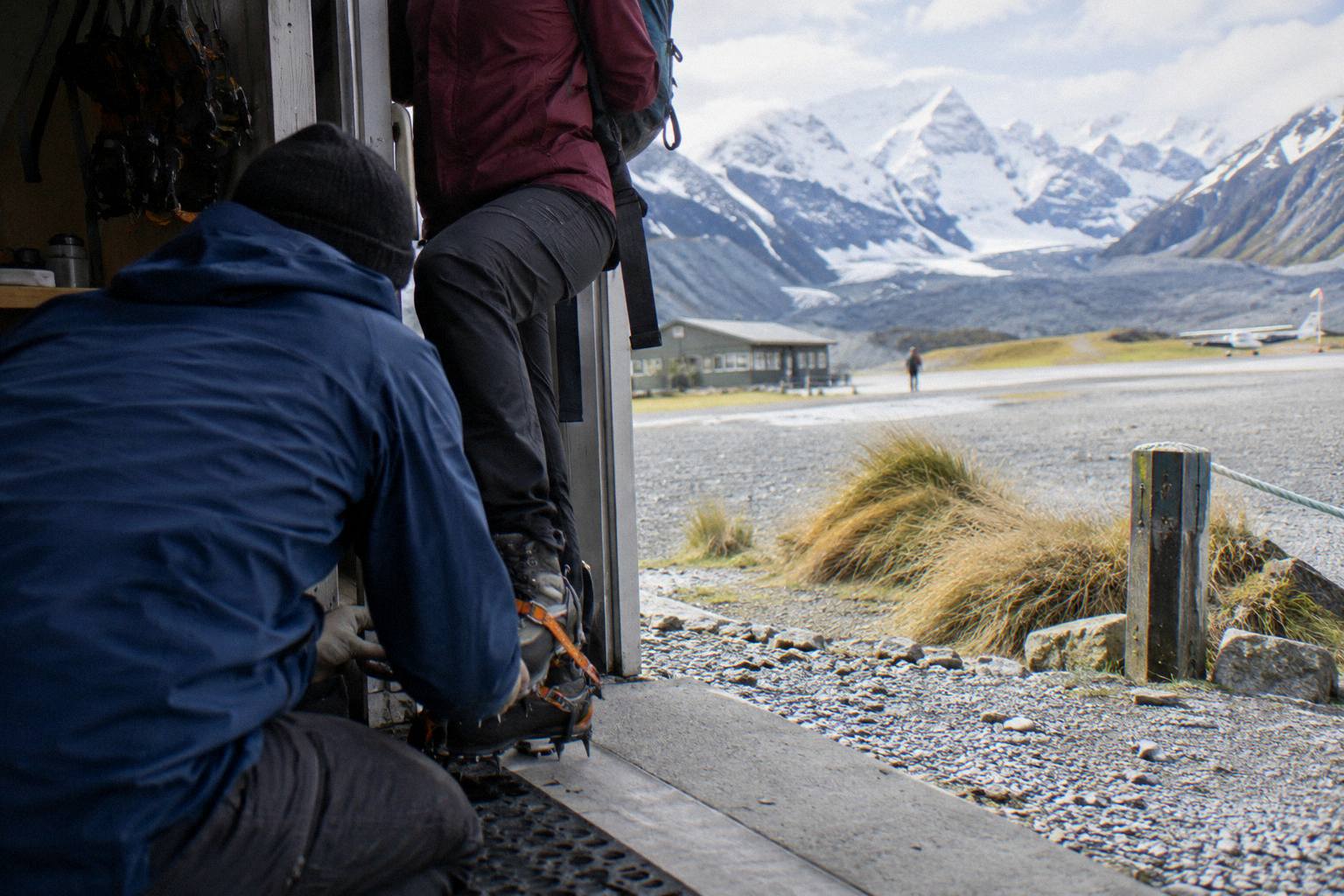
The mechanism matters as much as the refund. Mountain weather changes rapidly, in The Helicopter Line's own disclosure wording, so the go/no-go decision stays with the pilot and the guide rather than being made days ahead. The Helicopter Line asks you to call 24 hours before your departure for a weather check and to reconfirm, and the reason is practical: they want a live conversation, not a form signed last month. Mt Cook Glacier Guiding's trip is likewise subject to favourable weather, with an alternative date or full refund if cancelled, and its material stresses strict fly times.
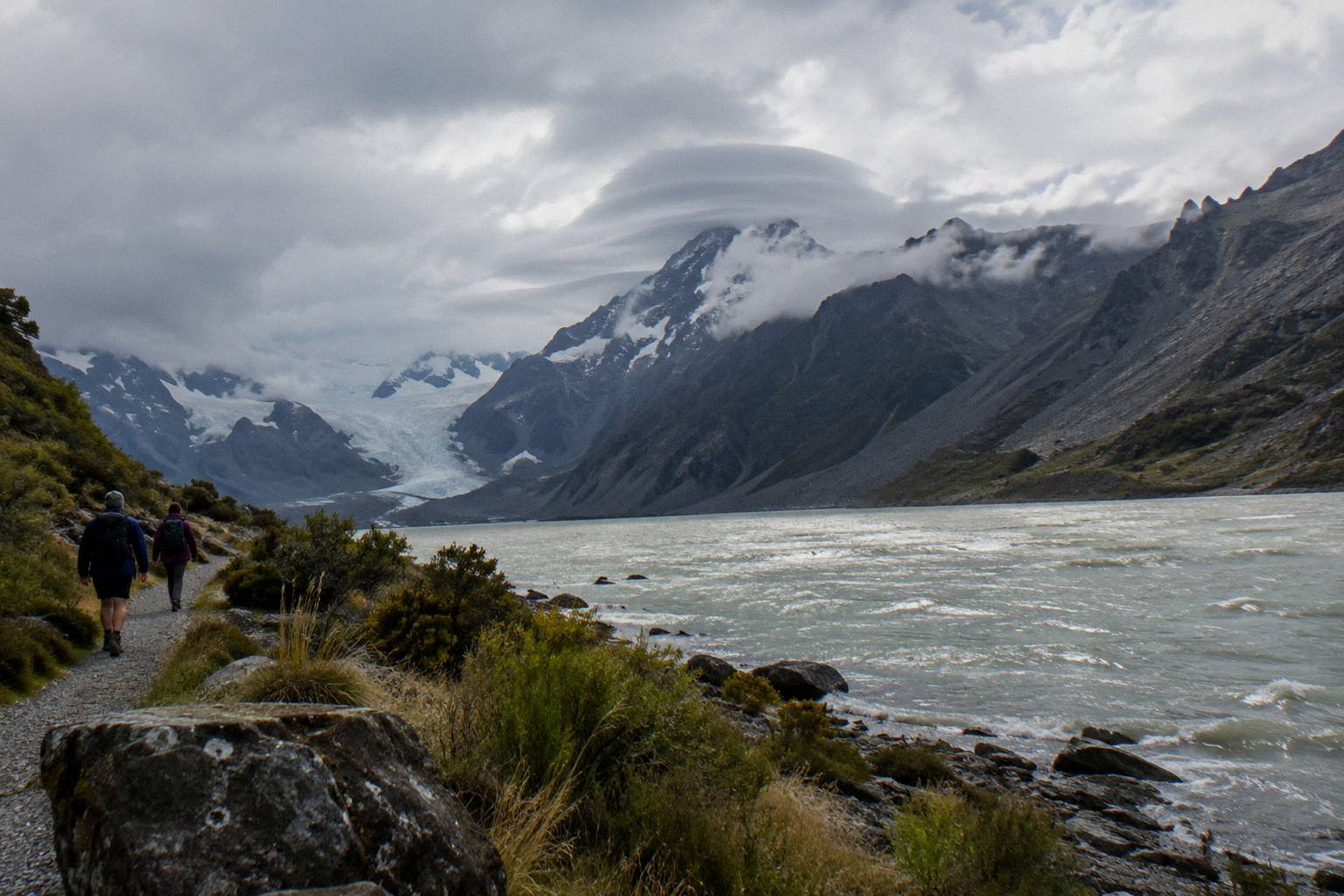
A weather cancellation is not a failure of the system; it is the system. The same operators who sell you the ice are the ones who decline to fly into it when the disclosure's hazards line up badly. Alpine Guides says the season runs all year round, Mt Cook Glacier Guiding swaps crampons for crampons and/or snowshoes in winter, and neither promises a best month, because there isn't a sourced one. What you are buying, in part, is a professional's willingness to lose the booking rather than take the risk.
Cancellation terms differ by brand, so never carry one policy across all of them. The Helicopter Line's 24-hour free cancellation and weather-refund terms sit on its own pages. Alpine Guides states free cancellation until 24 hours before, no charge after a bad-weather cancellation, with a credit card held and charged at trip time. Mt Cook Glacier Guiding's booking page says free cancellation up to 24 hours and a refund or other date after a weather cancellation; that operator's scenic-flight FAQ terms, including a 48-hour rule, are not confirmed for the hike and should not be applied to it. Southern Alps Guiding, the third brand of the same route, carries stricter operator-cancellation wording of its own. The table below sets the stated terms side by side, each attributed to its own brand.
| Brand and trip | Stated traveller cancellation | Stated weather-cancellation outcome |
|---|---|---|
| The Helicopter Line, 3-hour heli hike | Full refund or credit with 24 hours' notice; inside 24 hours and no-shows pay full price | Operator weather cancellation brings a full refund or credit |
| Alpine Guides, same route | Free cancellation until 24 hours before; credit card held and charged at trip time | Not charged after a bad-weather cancellation |
| Mt Cook Glacier Guiding, The Adventurer | Free cancellation up to 24 hours before the start (booking page) | Alternative date or full refund after a weather cancellation |
If the refund mechanics are what decide your booking, our post on refunds when a heli hike is cancelled for weather lays out each policy in full, including the rebooking questions to ask before you pay.
Is There A Lower-Commitment Way To See The Glacier?
Yes, and the operators sell it themselves: scenic snow-landing flights put you on the ice for minutes rather than hours, with a pilot guide and no hiking at all. The 25-Minute Alpine Landing by Mount Cook Ski Planes and Helicopters runs from NZ$379 per person, and The Helicopter Line's 40-Minute Tasman Landing from NZ$713 includes a five to ten minute snow landing. They are different products, not beginner versions of the hike.
The distinction is worth stating cleanly. A snow landing is a helicopter flight with a short stop on snow; a heli hike is a guided walk with two flights wrapped around it. Nobody on a landing flight wears crampons or follows a guide across ice. If your concern is crevasses, icy surfaces or the two-hour exertion, a landing flight removes those variables entirely while keeping the view, and the 40-minute option's longer route takes in the same Tasman landscape the hikers walk beneath.
For some groups the split decision is the best decision: one partner takes the heli hike, the other takes the landing flight, and both fly on the same morning from the same area. The Helicopter Line's landing flight departs from Glentanner Park while the heli hikes depart from Mount Cook Airport a short drive up State Highway 80, so a shared car works, with check-in times checked for both trips before you lock the day in.
So Should You Book, Or Not?
The answer is that the decision is yours, better informed: the operators publish guide ratios, fitted gear, aircraft standards in their own words, a full hazard list and clear exclusions, and every booking page offers free cancellation up to 24 hours before the start. Nothing here is a verdict that the trip is safe for any person. What they offer is transparency, small groups, guides and a refund if the mountain says no.
The practical sequence for a cautious reader is short. Read The Helicopter Line's risk disclosure in full on the operator's page, then the suitability list for the exact trip you want, since ages, weights and fitness lines differ by brand even on the same glacier. Phone 24 hours ahead if the operator asks, as The Helicopter Line does. Wear what the operator tells you to wear, three to four warm upper layers and no jeans on Mt Cook Glacier Guiding's list, sunglasses and sun protection on both. And keep the free alternative in mind: if the day looks wrong or the walk feels wrong, the same airport sells flights that never leave the aircraft's side.
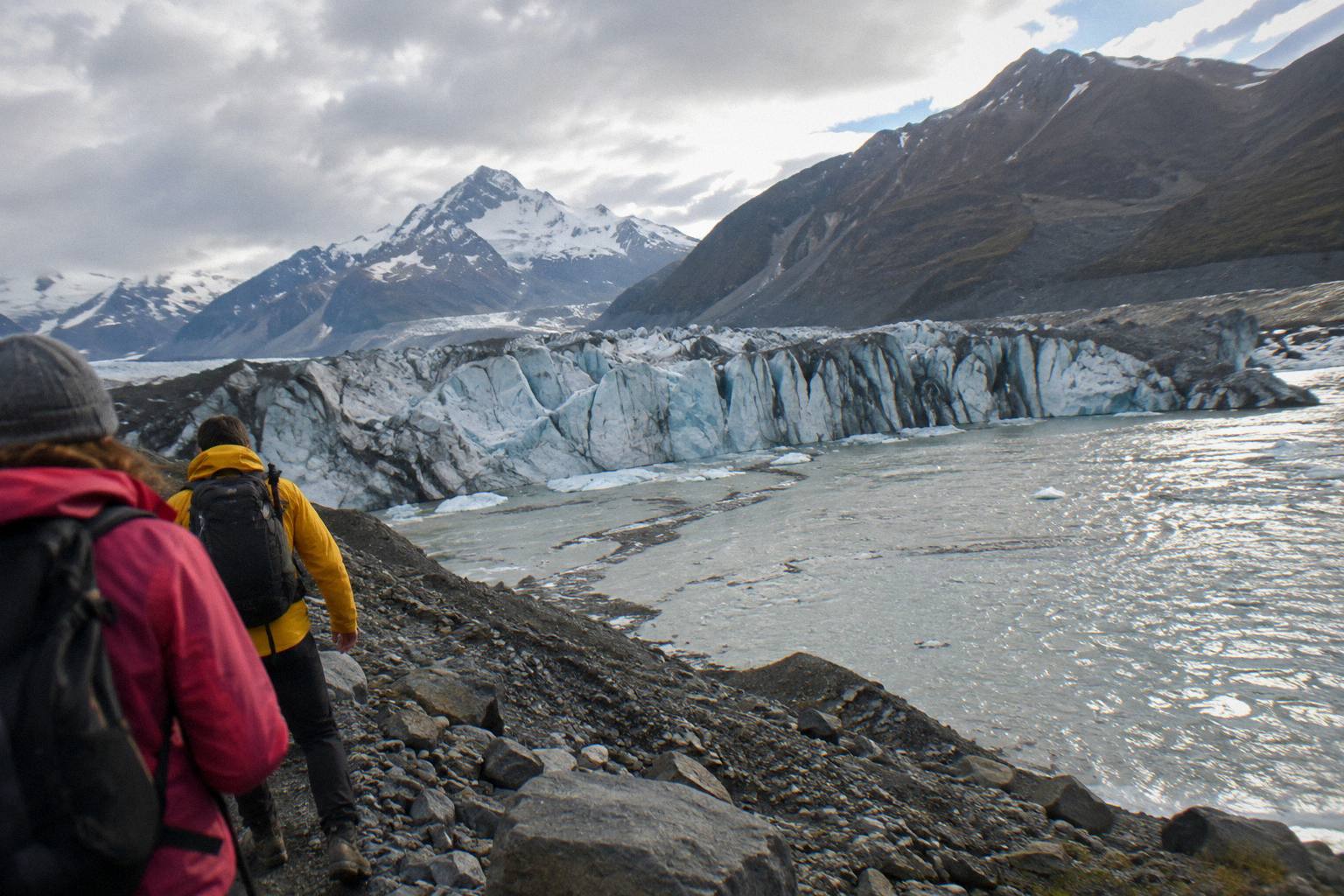
The glacier itself is the reason all this care exists, and it is worth knowing what you are standing on. Tasman Glacier is 23 km long and the country's largest, Tasman Lake did not exist until 1974, and the Department of Conservation notes the lake is growing rapidly as the ice melts. Our page of Tasman Glacier facts before a heli hike covers the ice, the lake and the retreat in depth for readers who want the full picture before flying.
Whichever way you lean, Mount Cook Helicopter Hike keeps every option on one site: both three-hour guided hikes from Mount Cook Airport, the snow-landing flights, and the Queenstown packages, each with its operator's stated terms gathered in one place.
Common Questions About Glacier Heli Hike Safety
Is A Glacier Heli Hike Safe?
No operator or regulator publishes a safety verdict, so there is no verdict here either. What the operators state: professional guides at a ratio of one to 12 (Alpine Guides), boots and crampons fitted by the guide, a harness if required (Mt Cook Glacier Guiding), and aircraft described by The Helicopter Line as inspected and maintained to Civil Aviation Authority standards. Read their risk disclosure and suitability lists, then decide for yourself.
Are There Crevasses On The Heli Hike?
Yes, crevasses are named in The Helicopter Line's published risk disclosure, alongside falling rocks, ice cliffs, changing snow conditions and icy surfaces. That is why the walk follows a guide who chooses the route that morning and why the landing site may vary with conditions. No operator's standard-hike page describes crevasse walking.
Is The Helicopter Safe?
The Helicopter Line states that its aircraft are inspected and maintained to Civil Aviation Authority standards, and that wording is the operator's. No public source lists these operators' specific certifications, so the attributed statements are all there is to go on. Flights are weather-dependent and a landing is never promised.
Who Should Not Do A Heli Hike?
Per the booking pages: anyone with heart problems or other serious medical conditions, anyone with mobility problems, knee, hip or back injuries or vertigo (Alpine Guides), and pregnant travellers, whom The Helicopter Line's page does not recommend the trip for. Wheelchair access is not available on any listed trip. Tell the operator when you book and check with your doctor.
What Happens If The Weather Is Bad?
The operator decides on the day, sometimes close to departure. Every booking page for these trips states free cancellation up to 24 hours before the start, and a weather cancellation by the operator brings an alternative date or a full refund or credit. The Helicopter Line asks for a call 24 hours before departure for a weather check and to reconfirm.
Do I Need Mountaineering Experience?
No. Both main brands describe moderate rather than technical requirements: The Helicopter Line asks for moderate fitness and hiking ability, the ability to walk at least one kilometre and manage stairs; Alpine Guides calls the hike "not a strenuous hike" and suitable for average fitness. All glacier gear, boots, crampons and poles is provided and fitted by the guide.