What To Wear On A Glacier Heli Hike
The operators hand you boots, crampons, socks and a jacket. Everything else, the layers, the gloves, the sunglasses, is yours to get right, and the lists differ by brand.
Short answer
Wear 3 to 4 warm upper layers, warm trousers that are not jeans, sunglasses, sun protection, a warm hat and gloves, and carry a small daypack with drink and snacks. Both main operators supply leather boots, woollen socks, crampons or snowshoes, walking poles and a waterproof jacket. From NZ$1,021 per person, all prices in New Zealand dollars.
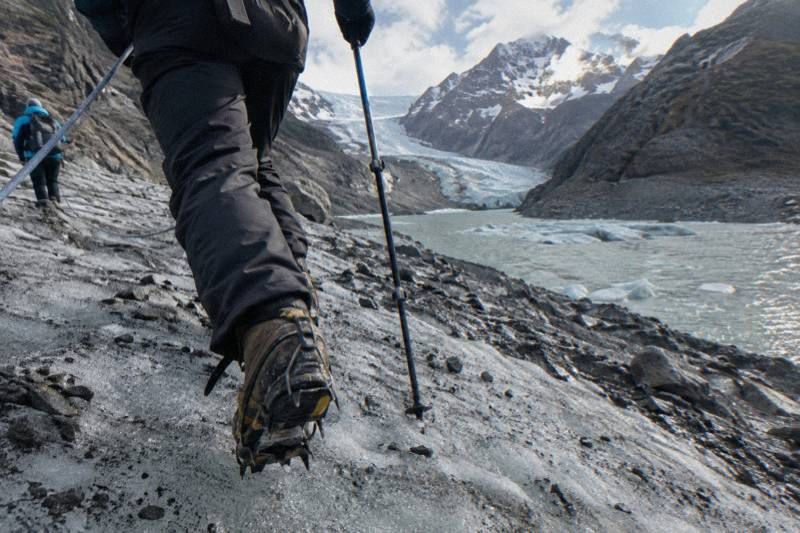
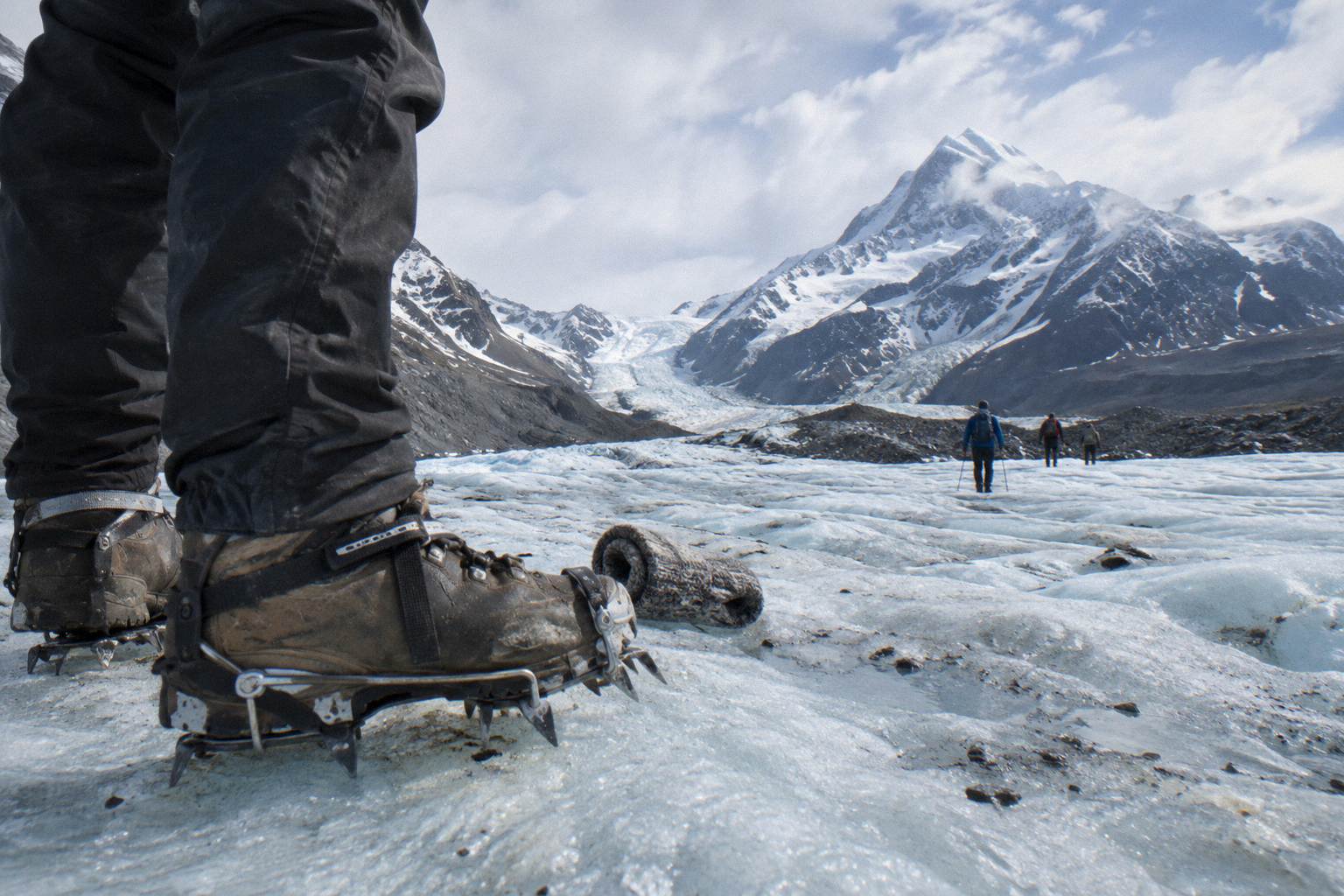
Ice reflects light and eats heat from your fingers in a way the valley floor never does, and the difference between a good two hours on the glacier and a miserable one is almost always clothing. The good news is that the heavy gear is not your problem. Both main operators on the Tasman Glacier supply leather boots, woollen socks, crampons or snowshoes, walking poles and a waterproof jacket, fitted by the guide before the flight. Your job is the layering system underneath, the small items in your pockets, and knowing what the operators ask you to leave behind.
The operator lists are laid out item by item, brand by brand, because they are not identical. Mt Cook Glacier Guiding and The Helicopter Line sell a very similar day out on the same glacier, but their bring lists, age minimums and leave-behind rules differ in the details, and a figure that is true for one is not automatically true for the other.
What The Operators Supply Versus What You Bring
The Glacier Guiding 3-Hour Heli Hike, run by Mt Cook Glacier Guiding with aircraft from Mount Cook Ski Planes and Helicopters, lists its inclusions plainly on the operator's Tasman heli hike page: quality leather boots and woollen socks, a harness if required, crampons and snowshoes in winter, adjustable walking poles, and a waterproof jacket and over-trousers. The trip runs about three hours in total with up to two hours on the ice, weather permitting, from NZ$1,021 per person, and it is rated 4.9 from 340+ reviews. Its bring list is the clearest of the two: 3 to 4 warm upper layers, warm trousers with an explicit no-jeans note, sunglasses and sun protection, a daypack, drink and snacks, a warm hat and gloves, and a camera.
The Helicopter Line 3-Hour Heli Hike, guided by Alpine Guides, supplies a near-identical kit: return scenic flights, a glacier landing weather permitting, crampons and quality walking boots, waterproof jackets and trousers if required, walking poles and woollen socks, all from the same NZ$1,021 per person, rated 4.8 from 270+ reviews. Alpine Guides goes one step further on loan gear: hats, gloves, socks, backpacks and warm jackets are available if you arrive without them. That loan offer is a genuine safety net, but arriving dressed properly beats borrowing on a cold morning.
Here is the two lists side by side:
| Item | Mt Cook Glacier Guiding | The Helicopter Line / Alpine Guides |
|---|---|---|
| Leather glacier boots | Supplied | Supplied |
| Woollen socks | Supplied | Supplied, loans available |
| Crampons | Supplied, snowshoes in winter | Supplied, snowshoes as conditions require |
| Walking poles | Supplied, adjustable | Supplied |
| Waterproof jacket | Supplied | Supplied if required, loans available |
| Over-trousers | Supplied | Supplied if required |
| Harness | If required | Not listed |
| Warm hat and gloves | Bring your own | Bring yours; loans available |
| Upper layers | Bring 3 to 4 warm layers | Bring warm layers |
| Trousers | Warm, no jeans | Long trousers, no shorts or skirts |
| Sun protection | Sunglasses, sun block | Sunglasses, sun block, lip balm |
| Daypack | Bring, with drink and snacks | Bring a small backpack |
A common worry is whether boots fit, and the plain answer is that both operators fit gear on the day, so arrive early enough to try things on calmly. The boots-plus-crampons combination is covered in more detail in are boots and crampons provided, which walks through the fitting process as the booking pages describe it.
The Layering System For Two Hours On The Ice
Dress in three to four warm upper layers under a windproof or waterproof jacket, with warm trousers and no cotton jeans anywhere in the system. The glacier environment combines reflected sunlight, wind on an open snowfield and long stationary spells while the guide fits crampons, so you need layers you can shed on the flight and pile back on the moment you stop moving.
The number comes straight from Mt Cook Glacier Guiding's list: 3 to 4 warm upper layers. Think a thermal base layer, one or two mid-weight fleeces or insulated layers, and something windproof on top, with the operator's supplied waterproof jacket as the outer shell. The reason is physics rather than fashion. Ice reflects a large share of incoming light back up at you, so on a bright day your upper body bakes while your hands, gripping metal poles and cold ice tools, go the other way. Layers you can remove and add individually are the only system that handles both.
- Glacier Guiding 3-Hour Heli HikeNZ$1,021
- Helicopter Line 3-Hour Heli HikeNZ$1,021
- 12-Hour Bus Combo, Heli HikeNZ$1,210
- 7-Hour Fly-In Heli HikeNZ$2,149
Legs matter just as much. Warm trousers, explicitly not jeans, is the wording on the Mt Cook Glacier Guiding list, and The Helicopter Line asks for long trousers with no shorts or skirts. Jeans are singled out because cotton holds moisture and loses its insulating value when damp, and between sweat on the hike and any contact with snow at the landing site, damp is likely. Synthetic or wool hiking trousers, or a softshell, are the right call.
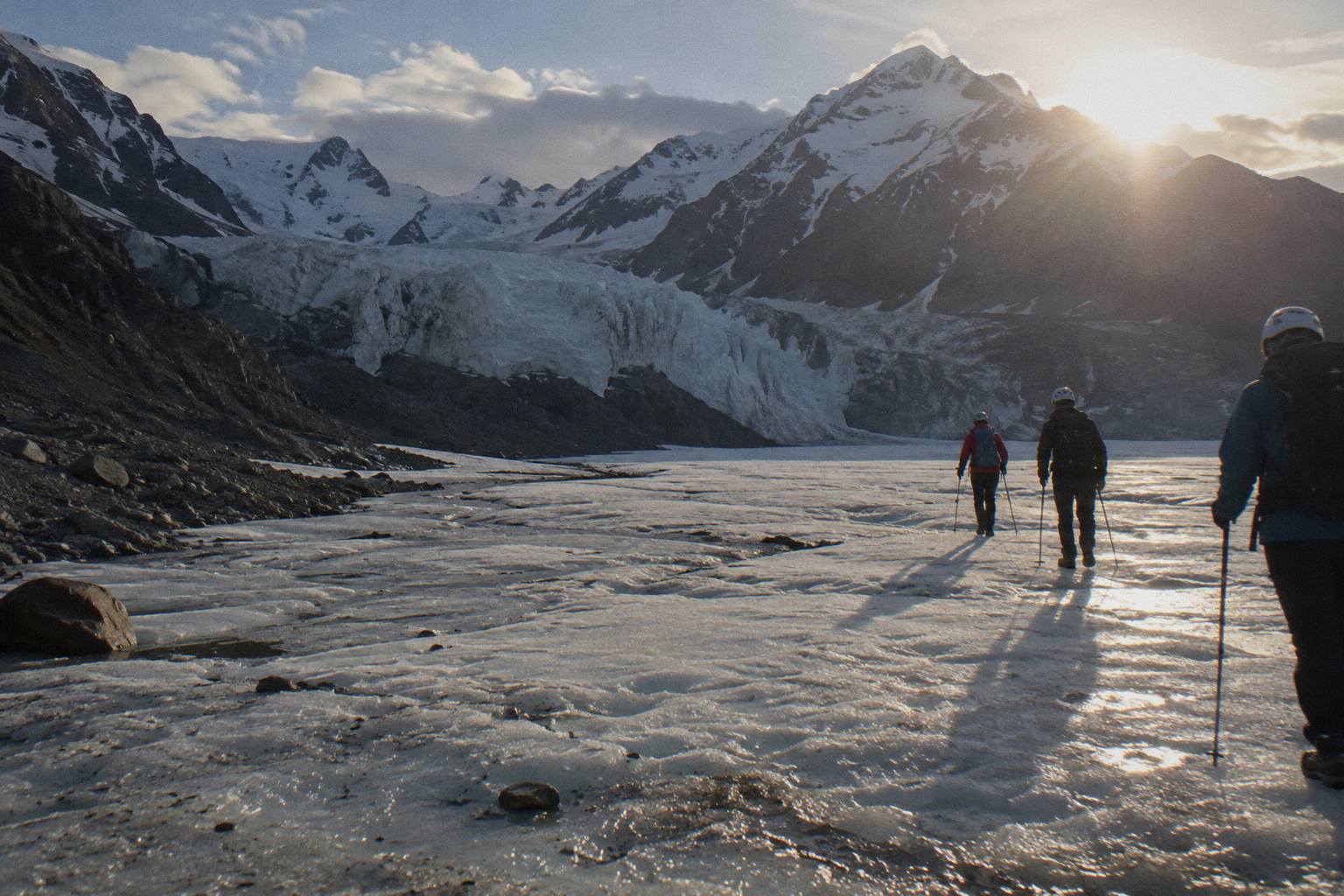
One item nobody regrets bringing is a spare base layer in the daypack. The flight to the landing site is short, the hike is about two hours at moderate effort, and the return flight is cold and still. If you want a sense of the effort involved before deciding how warm to dress, the detail is in heli hike fitness and difficulty: The Helicopter Line describes it as moderate fitness and hiking ability, able to walk at least one kilometre and manage stairs easily, and Alpine Guides calls it not strenuous and suitable for average fitness.
No Jeans, No Drones: What Stays Behind
The Helicopter Line asks visitors to leave behind bags, jeans, drones, power banks, iPads, loose clothing and scarves, and large cameras on a strap, because loose items and helicopters do not mix and cabin space is minimal. Recreational drones are banned everywhere in Aoraki / Mount Cook National Park regardless of what any tour operator says, so a drone should not even be in the car for this trip.
The leave-behind list is The Helicopter Line's, published on its operator page alongside the heli hike details, and it reads like a checklist of things that have caused problems around helicopter doors. Loose clothing and scarves can flap, catch and blow; power banks and iPads add weight and bulk with no real role on the ice; bags beyond a small daypack clutter a small cabin shared with up to 11 or 20 guests depending on the brand. Mt Cook Glacier Guiding's version of the same idea is simpler: bring a daypack, drink, snacks and a camera, and arrive on time for strict fly times.
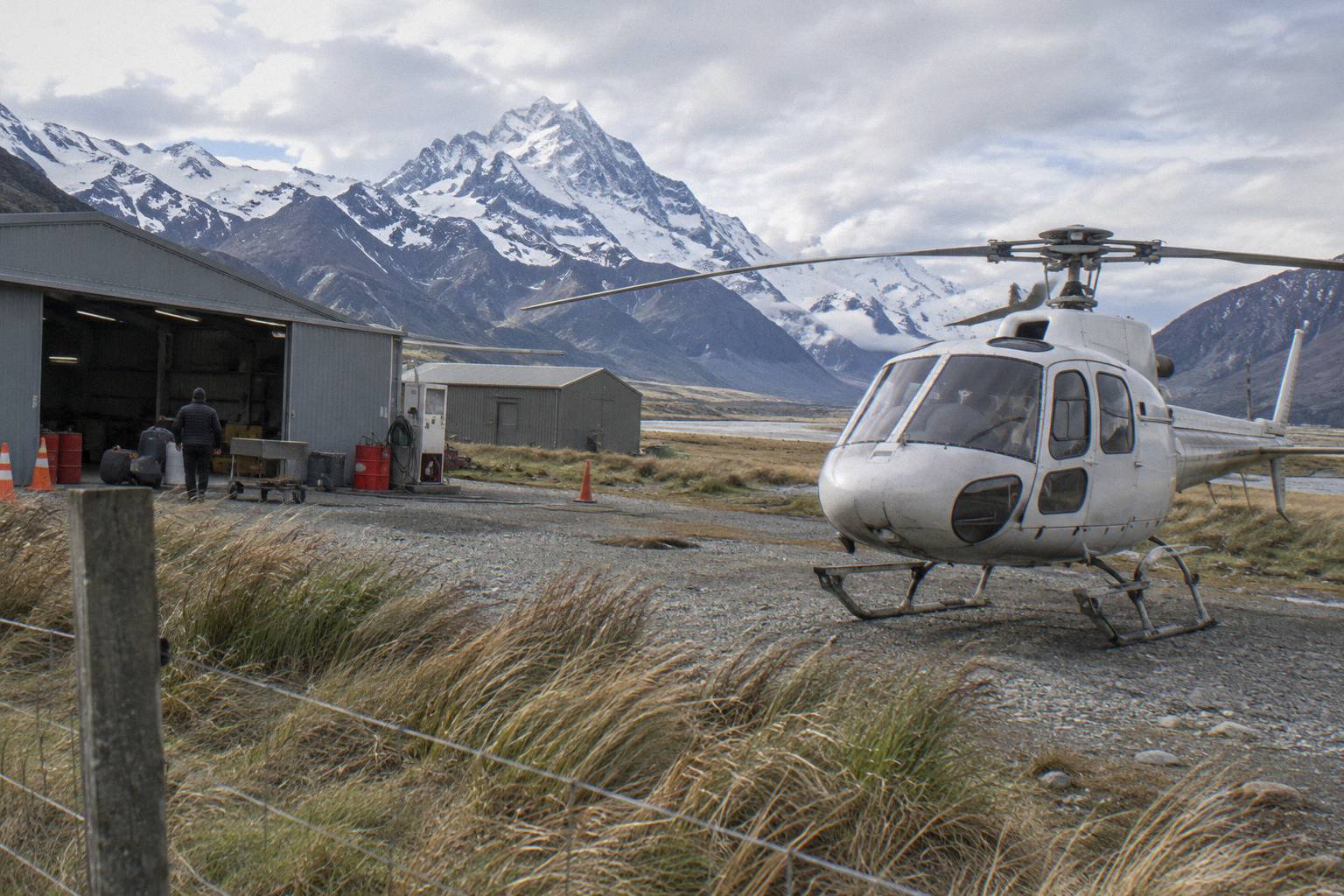
The drone rule deserves its own sentence. The Department of Conservation states that recreational drones are not allowed anywhere in the national park, and commercial use needs a permit, so this is not a tour-policy quibble but a park-wide rule. If you were hoping for aerial footage of your glacier day, the operator's own flight is the aerial footage. The wider question of action cameras and phones is genuinely open: the operators list a camera as a bring item and ban large cameras on a strap, but neither addresses helmet-mounted cameras, so ask the operator at booking rather than assuming either way.
| Item | Rule | Source |
|---|---|---|
| Jeans | Do not wear; cotton holds moisture | Mt Cook Glacier Guiding |
| Drones | Leave behind, and banned park-wide | The Helicopter Line and DOC |
| Power banks, iPads | Leave behind | The Helicopter Line |
| Loose clothing, scarves | Leave behind | The Helicopter Line |
| Large cameras on a strap | Leave behind | The Helicopter Line |
| Bags beyond a small daypack | Leave behind | The Helicopter Line |
| Phone or action camera | Not addressed; ask at booking | Operator guidance |
If your day is built around a long round trip from Queenstown rather than a village start, the same packing logic applies with one addition: the Cheeky Kiwi 12-hour bus combo includes the full heli hike gear set, boots, socks, gaiters, crampons or snowshoes, poles, jacket and over-trousers, but lunch is not included, so the daypack needs actual food. Strong physical fitness is listed for that trip, which also argues for serious layers you can move in.
How Cold Is It, Really?
No single on-ice temperature can be given for the Tasman Glacier because no operator or official source publishes one. The nearest hard numbers come from Mount Cook Airport at 656 metres, where summer days average a mild 22 °C in January, July days peak near 7.9 °C, and July nights drop to about minus 2.4 °C.
That gap between the airport record and the landing site is the whole reason the layering lists exist. The landing site sits around 1,200 metres above sea level per Alpine Guides, higher and colder than the airport, with wind and reflected glare on top, and the operators sensibly refuse to promise a temperature. What they do instead is tell you what to wear, and the lists in the sections above are that answer in full. Anyone telling you a specific glacier temperature is guessing.
| Mount Cook Airport normals, 2012 to 2024 | Value |
|---|---|
| Mean daily maximum, January | 22 °C |
| Mean daily maximum, July | 7.9 °C |
| Mean daily minimum, July | minus 2.4 °C |
| Mean daily minimum, June | minus 1.8 °C |
| Annual mean maximum | 15.0 °C |
| Annual mean minimum | 3.6 °C |
Read that table as a planning range, not a forecast. Even a warm January day at the airport can turn cold and windy up on the ice within the hour or so you spend there, which is exactly why the three to four layer rule exists. A useful mental model is alpine skiing: the air temperature at the base station tells you very little about the wind chill at the top of the field, and the people who dress in removable layers are the ones still comfortable at lunchtime. The same logic applies here, compressed into a shorter day and a smaller pack.
Hands, Head And Eyes: The Small Items That Decide The Day
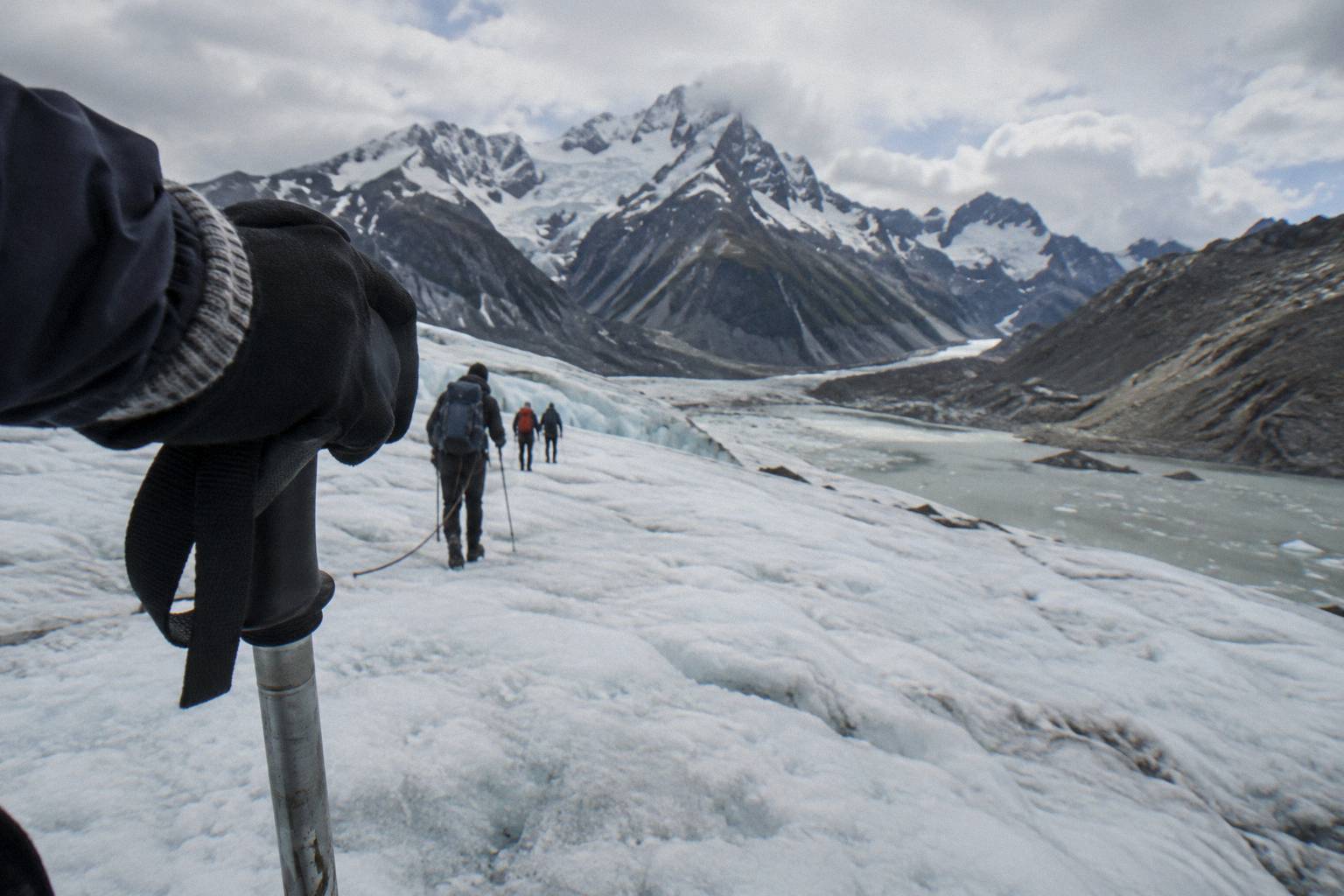
Sunglasses, sun block and lip balm, a warm hat and gloves appear on both operators' bring lists, and they are the items people most often skip. Glacier glare is intense enough that eye protection is a comfort and safety issue rather than an accessory, and hands on metal poles and ice surfaces lose heat fast, so gloves should be warm enough to wear for two hours without removal.
The eye and skin items are on both lists, worded nearly identically: Mt Cook Glacier Guiding says sunglasses and sun protection, The Helicopter Line says sunglasses, sun block and lip balm. The reason is the same reflected-light physics behind the layers. Snow and pale ice bounce ultraviolet light back up from below, so you can burn in places the sun never directly touches, and wind plus glare will punish bare eyes within minutes of landing. Standard sunglasses beat none, and wrap-around styles beat flat ones on an open snowfield.
Gloves deserve real thought. Thin fashion gloves will feel inadequate within the first stationary stretch while the guide fits crampons, and mittens make operating a camera awkward. A warm, reasonably slim pair, with a spare in the daypack if you run cold, is the practical answer. Alpine Guides will loan hats, gloves and socks if you arrive without them, which is a backup, not a plan.
A warm hat matters more than most visitors expect, because the supplied helmet-and-harness era of glacier travel has given way to lighter trips where a hat is the only head insulation you carry. If your trip is one of the snow-landing flights rather than the hike, the same small-items logic applies with less intensity: the 25-minute alpine landing from Mount Cook Ski Planes, from NZ$379 per person, gets you onto snow with live commentary and headsets, and warm clothes are still the operator's implied dress code even though no gear list is published for it.
Footwear, Socks And The Boots Question
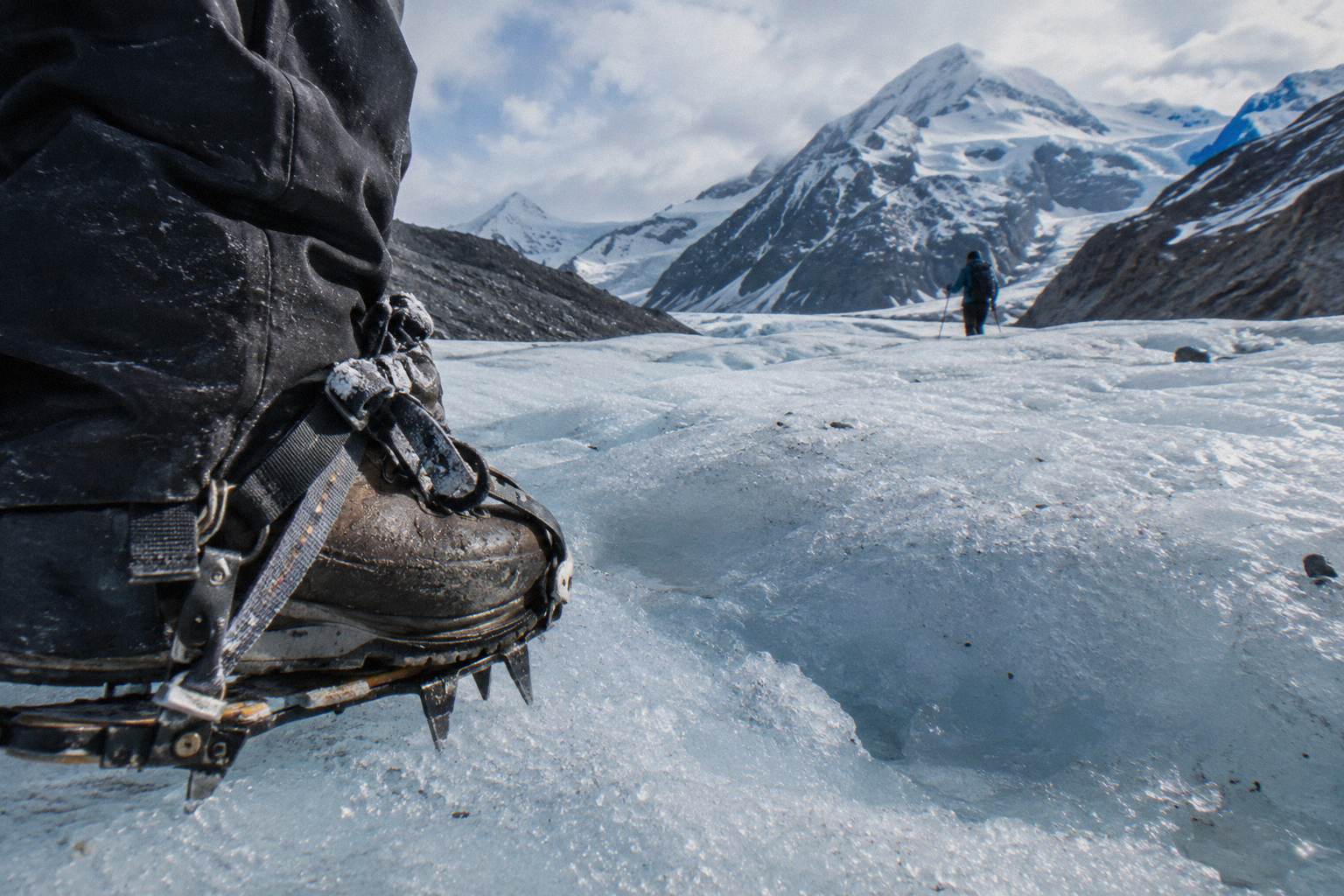
You do not wear your own boots on the ice. Both operators supply leather glacier boots, fitted over supplied woollen socks, with crampons attached by the guide, and your own hiking footwear only needs to carry you from the car park to check-in. Do not buy glacier boots for this trip, and do not break in new hiking boots for it either.
The fitting happens on the day, before the flight, and it is one reason both operators stress early arrival: The Helicopter Line asks you to check in upstairs at Mount Cook Airport 15 minutes before departure, and Mount Cook Ski Planes runs strict fly times that late arrivals can miss. Sock strategy is worth ten seconds of thought. The supplied woollen socks are there, but if you have a favourite thick hiking sock, wearing or carrying it costs nothing and can improve the fit of a boot that has served hundreds of feet before yours.
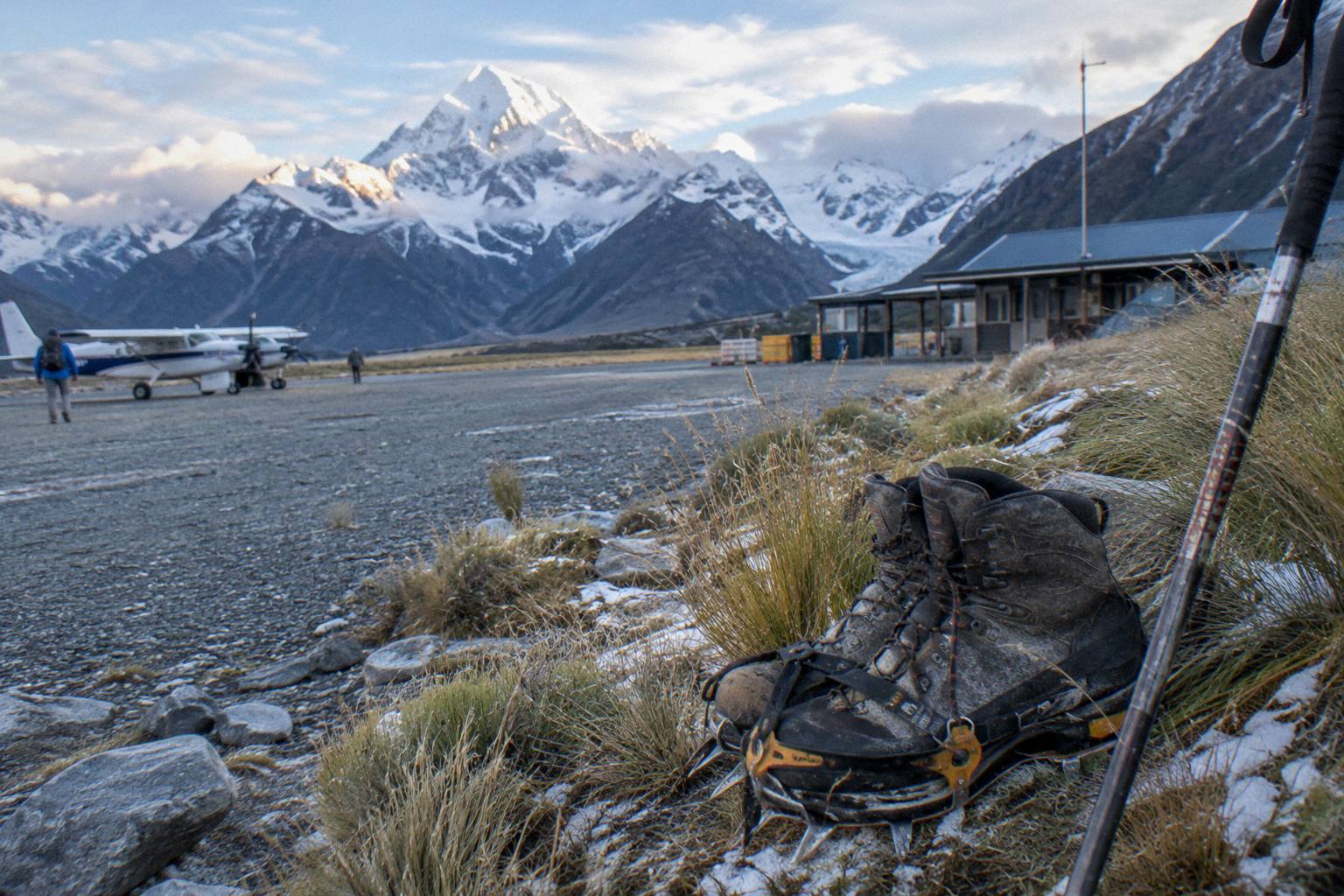
Your own shoes come on the trip, they just do not go on the ice. Wear whatever is comfortable for the drive and the wait, and leave the rest to the operator's kit. If you are weighing this trip against other ways to see the glacier on foot, heli hike or Hooker Valley Track covers the trade-offs, including the fact that the valley walk needs your own proper boots while the heli hike does not.
A Packing Checklist For The Night Before
Lay out three to four warm upper layers, warm non-jean trousers, sunglasses, sun block and lip balm, a warm hat, gloves, a small daypack with drink and snacks, and a camera you can secure. Charge nothing that belongs on the leave-behind list, pack no drone, and leave the big camera strap at the hotel. That single daypack is the entire carry-on allowance for the helicopter.
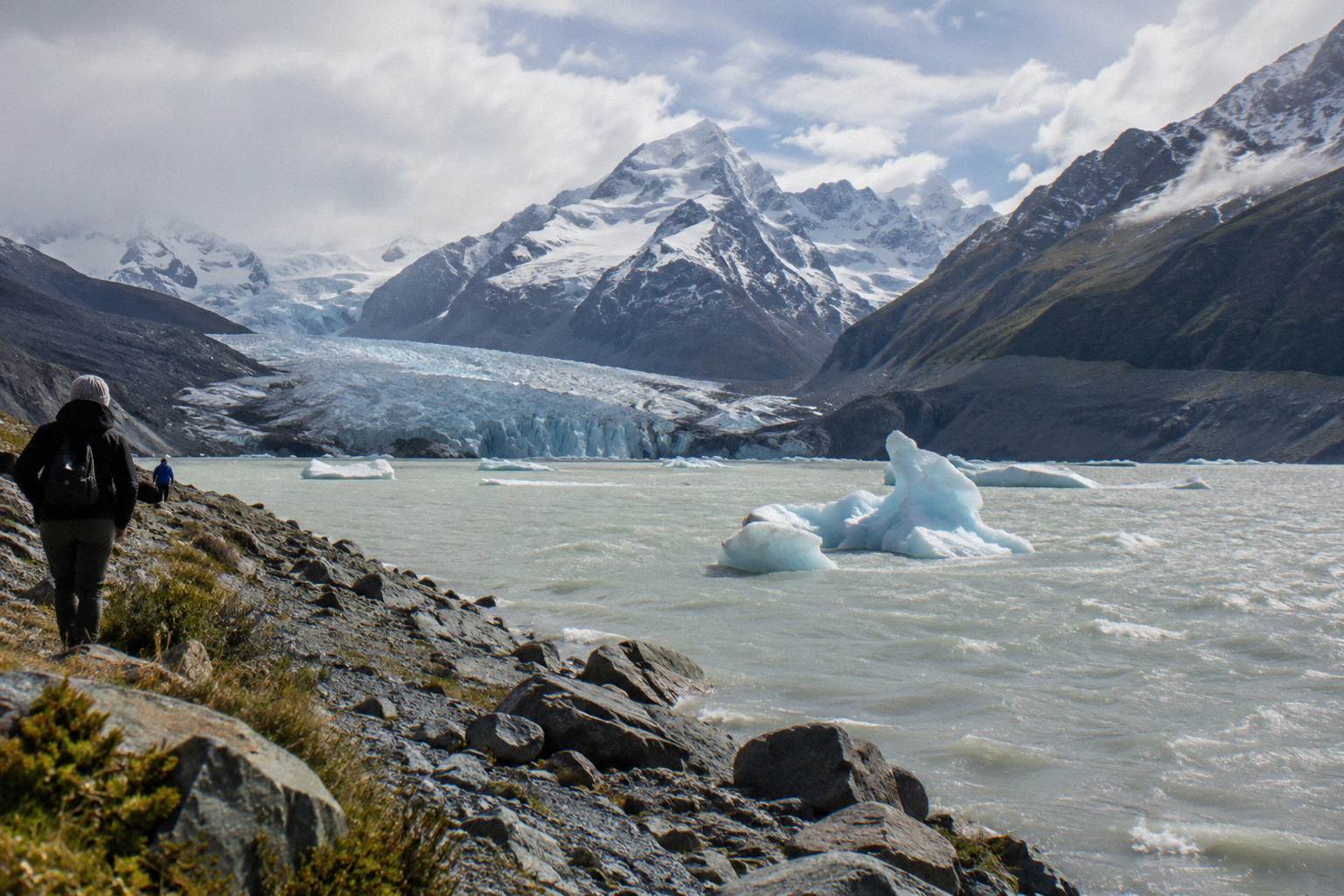
The night-before routine is short because the operators carry the technical load. Check the weather line, The Helicopter Line asks for a call 24 hours ahead to reconfirm and hear the forecast, lay out the layers, fill the drink bottle, and confirm your check-in time: 15 minutes before departure at Mount Cook Airport for The Helicopter Line, or the strict fly times Mt Cook Glacier Guiding operates. Weather calls can come very late, so have a backup plan for the day that does not depend on the flight. The mechanics of cancellations and refunds are covered in heli hike weather and cancellations.
| Packing slot | What goes in | Notes |
|---|---|---|
| Worn on the body | 3 to 4 warm layers, warm trousers, sturdy shoes | Layers removable one at a time |
| Pockets | Sunglasses, sun block, lip balm | Needed within minutes of landing |
| Daypack | Warm hat, gloves, drink, snacks, spare layer, camera | Small pack only |
| Left at base or hotel | Bags, jeans, drone, power bank, iPad, big strap camera | The Helicopter Line leave-behind list |
| Supplied on arrival | Boots, socks, crampons or snowshoes, poles, jacket, over-trousers | Fitted by the guide |
Two practical notes finish the routine. First, lay the day's clothing out physically rather than packing it, because the morning of a heli hike starts early and cold fingers fumble with zips. Second, check the age minimum for your booked brand before you pack for children: Mt Cook Glacier Guiding takes age 9 and over with parental or guardian consent for under-18s, while The Helicopter Line sets a minimum age of 10. A child packed identically to an adult, with one extra layer and a spare pair of gloves, is the usual recipe, since smaller bodies lose heat faster and cannot always say so before it matters.
For most visitors this is a half-hour of preparation the night before, and it is the half-hour that decides whether two hours on New Zealand's largest glacier feels like the highlight of the trip or an endurance test. Dress for reflected light and wind rather than for the car thermometer, trust the supplied kit for everything technical, and the clothing side of the day is solved. For a wider look at how a visit like this stacks up against the cost, glacier heli hike cost and value walks through what the from-price buys you on Mount Cook Helicopter Hike trips. And if a scenic flight with a snow landing, rather than a hike, is the better fit for your group, the 55-minute glacier flight from The Helicopter Line, from NZ$949 per person, runs year-round weather permitting with the same layered-clothing logic applying.
Footwear is the one slot where you can relax. Boots, socks, and over-trousers are supplied and fitted by the guide on arrival, so the sturdy shoes on the list only have to carry you across Mount Cook Airport and into the aircraft. That frees the small daypack for what you will actually reach for: the spare layer, the hat and gloves, and the camera you can secure.
A second pass through your pockets pays off. Power banks, iPads, and big-strap cameras stay behind with bags and jeans, and because the daypack is the entire carry-on allowance, whatever remains has to earn its weight. Sunglasses, sun block, and lip balm earn theirs within minutes of landing, when the glare starts.
Two small refinements finish the job. Pick a drink and snacks you can open with gloves on, because bare-hand time on the glacier is short and cold. And if children are coming, handle the parental or guardian consent that Mt Cook Glacier Guiding requires for under-18s during the same evening, not at the 15-minute check-in.
Common Questions About What To Wear On A Glacier Heli Hike
Do I Need To Bring My Own Boots For The Heli Hike?
No. Both main operators supply leather glacier boots, woollen socks and crampons or snowshoes, fitted by the guide before the flight. Your own footwear only needs to get you to check-in comfortably.
Can I Wear Jeans On The Glacier Hike?
No. Mt Cook Glacier Guiding explicitly lists warm trousers with no jeans, and cotton's habit of holding moisture is the reason. Wear synthetic or wool hiking trousers or a softshell instead.
Is A Waterproof Jacket Provided?
Yes on the standard heli hikes. Mt Cook Glacier Guiding supplies a waterproof jacket and over-trousers, and The Helicopter Line supplies waterproofs if required, with Alpine Guides also loaning jackets, hats, gloves, socks and backpacks.
How Cold Is It On The Glacier?
No operator or official source publishes an on-ice temperature, so there is no single figure to plan around. The airport record shows mean daily maxima of 22 °C in January and 7.9 °C in July with winter minima below zero, and the landing site around 1,200 metres is colder than that: dress in layers, not for a number.
Can I Bring A Drone Or GoPro?
Recreational drones are banned everywhere in Aoraki / Mount Cook National Park, and The Helicopter Line also lists drones, power banks and iPads on its leave-behind list. Phones and action cameras are not addressed by the operators, so ask at booking rather than assuming.
What Bag Can I Take On The Helicopter?
A small daypack with drink and snacks, per the Mt Cook Glacier Guiding bring list. The Helicopter Line asks visitors to leave bags behind beyond what fits in the small cabin, so anything larger stays at your accommodation.