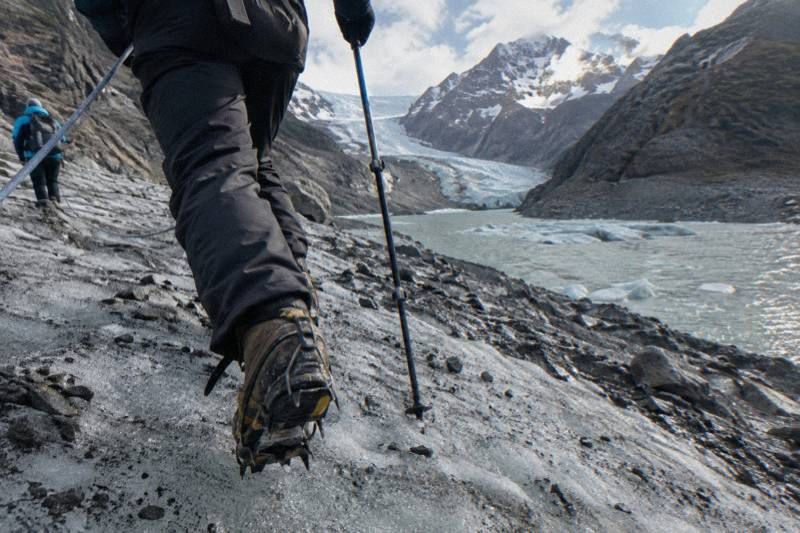
Are Boots And Crampons Provided On A Glacier Heli Hike?
Yes, boots, crampons and more are provided on the Tasman Glacier heli hike. Here is exactly what each operator supplies, what you still bring, and what to leave behind.
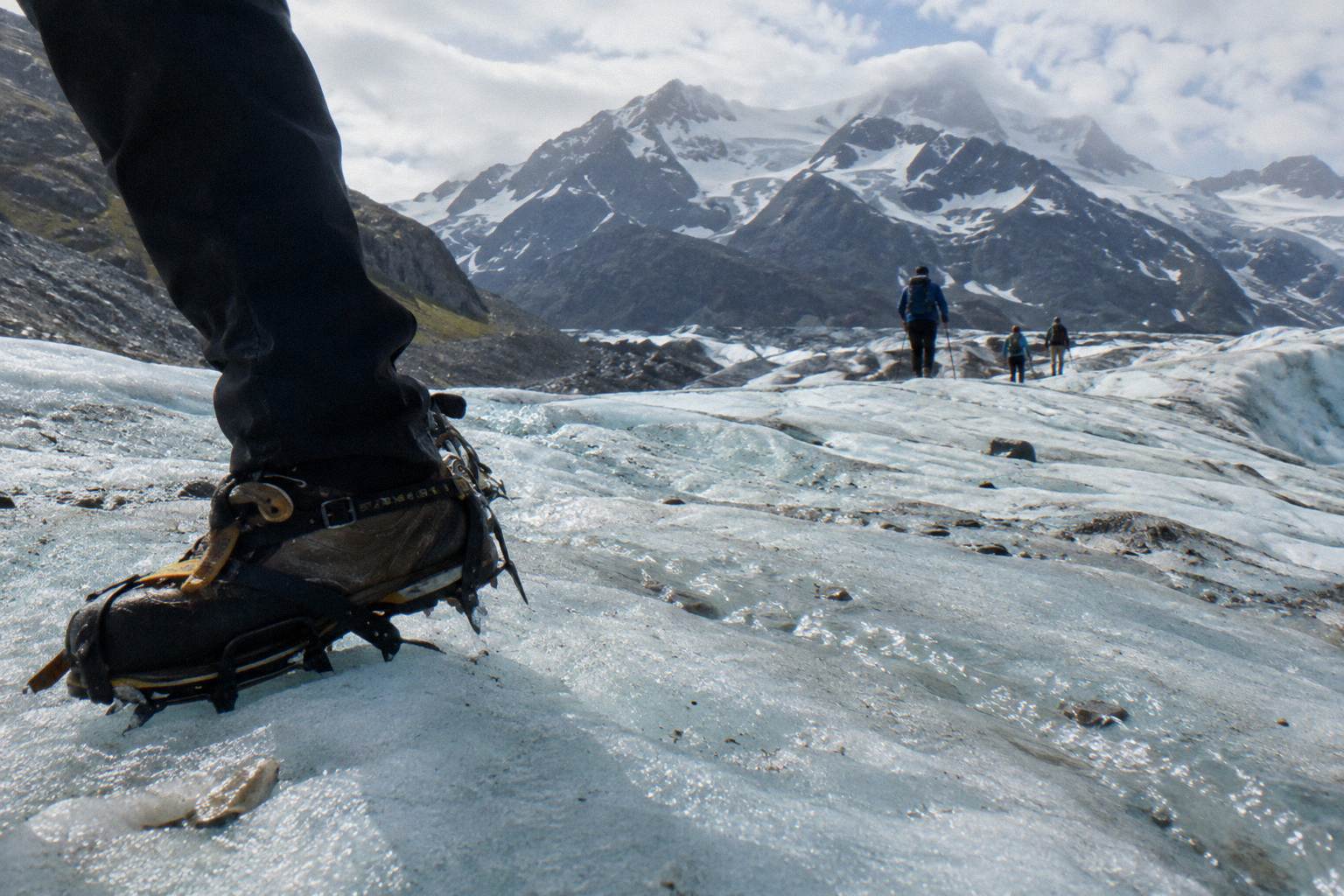
Yes, glacier boots and crampons are provided, so leave yours at home. Every operator running the Tasman Glacier heli hike from Mount Cook Airport includes boots and crampons, or snowshoes in winter, in the trip price; Mt Cook Glacier Guiding adds woollen socks, walking poles, a waterproof jacket and over-trousers, and a harness when the route needs one, while The Helicopter Line supplies the same core kit and Alpine Guides lends hats, gloves and backpacks if you arrive short.
That answer surprises people who have read about guided glacier walks elsewhere in the world, where rental fees for mountain boots are sometimes charged on top of the ticket. On the Tasman Glacier trips sold from Aoraki Mount Cook Airport, the gear is bundled. The from-price on the booking page, from NZ$1,021 per person on the two three-hour heli hikes, is the whole number: boots, crampons, guide and two scenic flights included, with no equipment add-on at checkout.
The reason is practical rather than generous. Crampons only work when they are matched to the boot they are strapped to, and a guide who fits the pair together on the day can control both the fit and the safety margin. Operators bring a full size run of stiff leather boots to the airport, swap out anything that does not fit properly, and fit the crampons themselves once the group is dressed and booted. Nobody expects a summer traveller in Queenstown to be carrying mountaineering footwear, and the operators do not try.
What each brand supplies differs at the edges, and those edges are worth knowing before you pack. Mt Cook Glacier Guiding, whose guiding team flies with Mount Cook Ski Planes and Helicopters, lists the most complete kit on its operator page: quality leather boots, woollen socks, crampons or snowshoes depending on the season, adjustable walking poles, a waterproof jacket and over-trousers, and a harness if the day's route requires one. The Helicopter Line, which runs the same style of trip with guides from Alpine Guides, lists glacier boots, crampons or snowshoes, walking poles, woollen socks and a waterproof jacket if required. Alpine Guides goes a step further on its own page and notes loan supplies of hats, gloves, socks, backpacks and jackets for walkers who need them.
If you are weighing this trip against the alternatives, the two core heli hikes and a shorter snow-landing flight are compared below.
- Glacier Guiding 3-Hour Heli HikeNZ$1,021
- Helicopter Line 3-Hour Heli HikeNZ$1,021
- 12-Hour Bus Combo, Heli HikeNZ$1,210
- 7-Hour Fly-In Heli HikeNZ$2,149
The distinction matters because the gear is not a small perk. The Mt Cook Ski Planes page for The Adventurer, the product the Mt Cook Glacier Guiding brand sells, describes crampons in summer and crampons and/or snowshoeing in winter, with all gear fitted by the guide. The Helicopter Line's Tasman Glacier Heli Hike page carries the equivalent list for its trip. Both are saying the same thing in their own words: you arrive in your own clothes and street shoes, and you leave the ice in ours.
What Exactly Does Each Operator Hand Out?
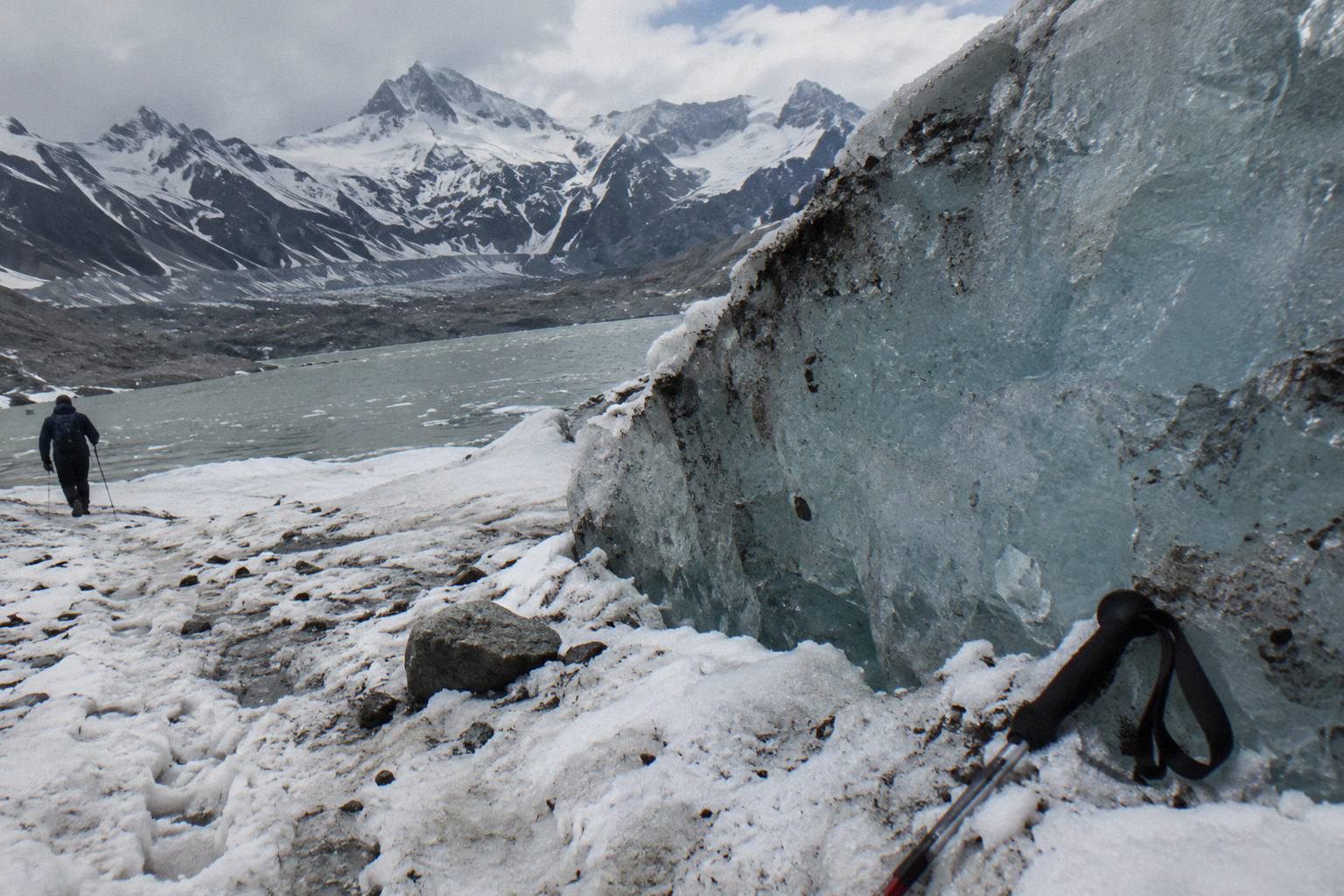
Mt Cook Glacier Guiding provides leather boots, woollen socks, crampons or snowshoes, adjustable walking poles, a waterproof jacket and over-trousers, and a harness if required. The Helicopter Line provides glacier boots, crampons or snowshoes, walking poles, woollen socks and a waterproof jacket if needed, with Alpine Guides also lending hats, gloves, socks, backpacks and jackets. Everything is fitted by the guide before the helicopter leaves, and nothing on either list is rented for an extra fee.
The fullest public list belongs to the Mt Cook Glacier Guiding trip, a 3-hour experience rated 4.9 from 340+ reviews, from NZ$1,021 per person. Its booking page itemises the kit under what is included: two scenic flights, a professional guide, quality leather boots and woollen socks, a harness if required, crampons and/or snow shoes in winter, adjustable walking poles, and a waterproof jacket and over-trousers. That is a complete head-to-foot system apart from the hat and gloves you are asked to bring, and it is why the operator's suggested packing list, 3 to 4 warm upper layers, warm trousers, sunglasses and sun protection, a daypack with drink and snacks, warm hat and gloves and a camera, reads like a clothing list rather than an equipment list.
The Helicopter Line trip, also from NZ$1,021 per person and rated 4.8 from 270+ reviews, carries a parallel list: return scenic helicopter flights, a glacier landing weather permitting, pilot commentary, the 2-hour guided hike on the Tasman Glacier, walking poles, crampons and quality walking boots, waterproof jackets and trousers if required, and woollen socks. The phrase "if required" on the waterproofs reflects how the day actually runs. If the forecast is clear and still, the jacket may stay in the box; if the cloud is down, everyone gets one. You do not need to request it in advance.
| Item | Mt Cook Glacier Guiding | The Helicopter Line (with Alpine Guides) |
|---|---|---|
| Boots | Quality leather boots | Quality walking / glacier boots |
| Crampons | Yes, and/or snowshoes in winter | Yes, or snowshoes |
| Socks | Woollen socks provided | Woollen socks provided |
| Poles | Adjustable walking poles | Walking poles |
| Waterproof jacket | Yes | If required |
| Waterproof trousers | Over-trousers provided | If required |
| Harness | If required | Not listed |
| Extras if short | Gear fitted by guide | Alpine Guides lends hats, gloves, socks, backpacks, jackets |
The winter line in both lists is the detail people miss. Snowshoes are not a downgrade or a different product; they are the same trip with a different sole. When the snow cover on the upper glacier is soft, a toothed crampon punches through and walking becomes slow work, so the guides switch the group to snowshoes, or sometimes run crampons and snowshoes together on the same pair of boots. Mt Cook Glacier Guiding says crampons in summer and crampons and/or snowshoeing in winter, fitted by the guide; The Helicopter Line says crampons or snowshoes. Either way, the decision is made on the day by the guide standing in front of the snow, not by you at the time of booking.
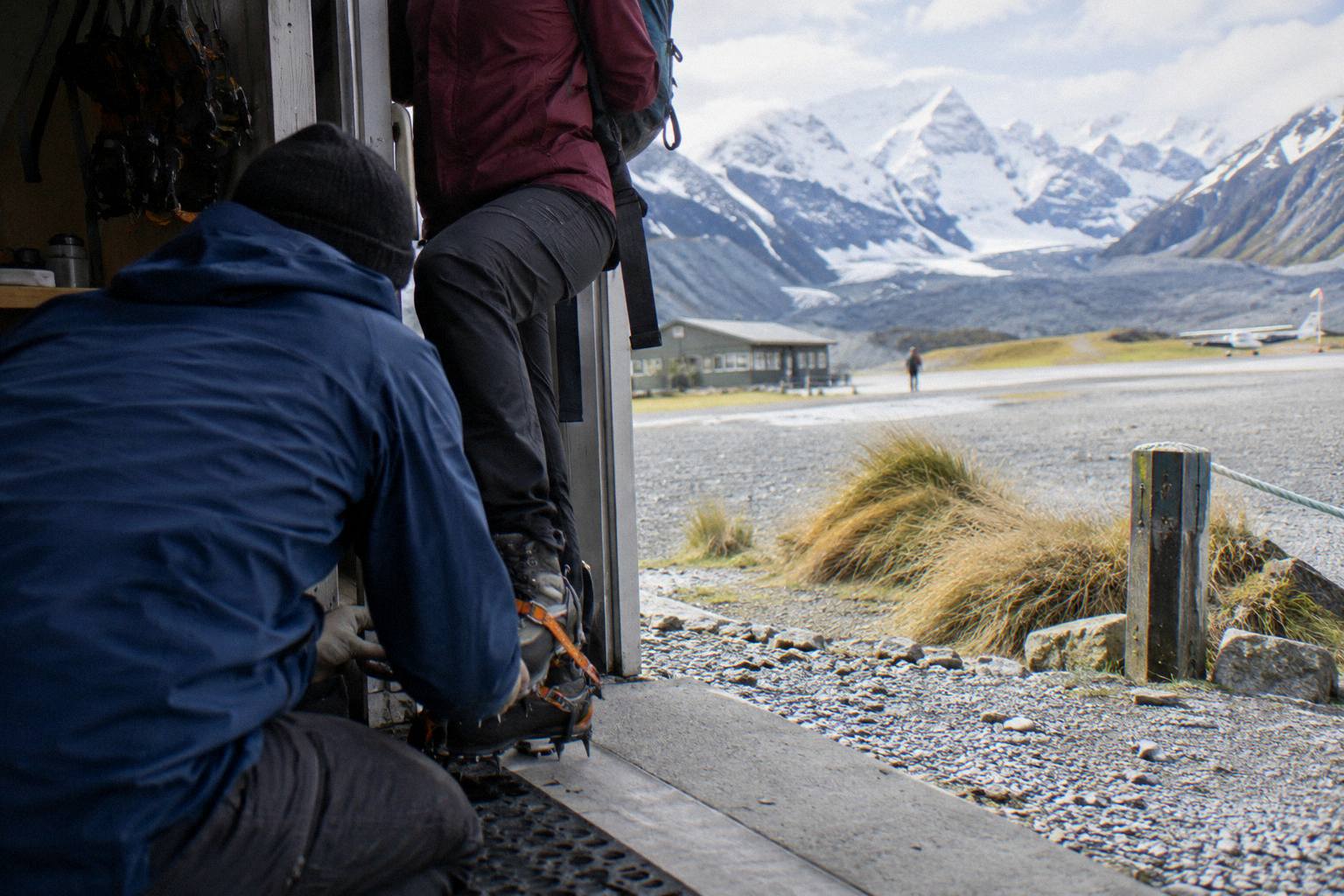
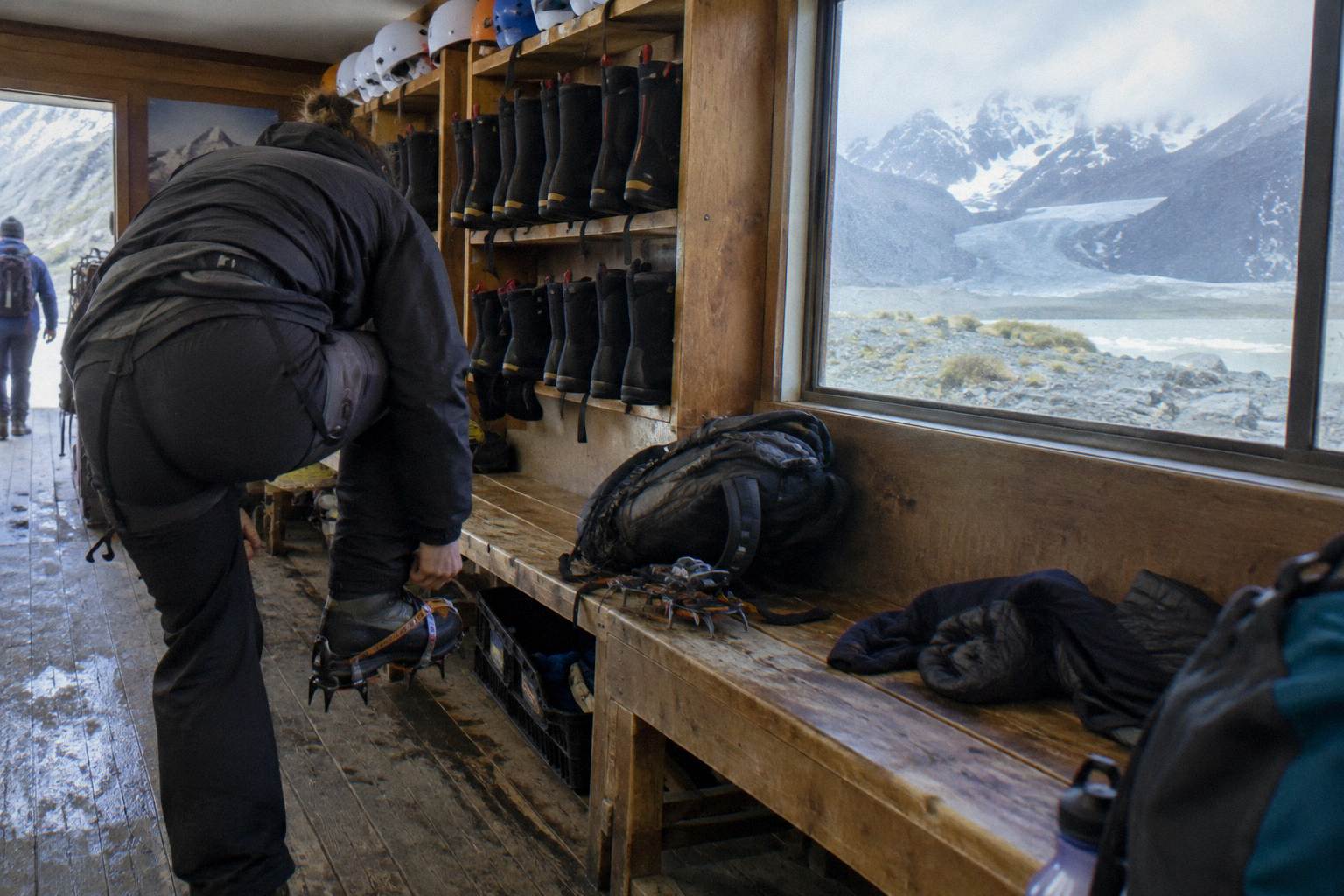
Fitting happens at the airport before the flight, not on the ice. You will try boots on indoors, walk a few steps in them, and swap sizes if the guide sees heel lift or crushed toes. Crampons are fitted once the boots are right, checked by the guide, and checked again after the helicopter lands. This is the part of the trip that takes the first twenty minutes, and it is the reason operators ask the Mt Cook Glacier Guiding trip's participants to arrive on time, since the page warns of strict fly times with no delaying for latecomers.
Our guide to what to wear on a heli hike goes deeper on clothing layers, but the short version of the gear story is this: everything that touches the ice is provided, and everything that keeps your body warm is mostly yours.
What Do You Still Need To Bring Yourself?
Bring sunglasses, sun protection and lip balm, a warm hat and gloves, a windproof jacket, a small backpack, long trousers, and three to four warm upper layers. Mt Cook Glacier Guiding also asks for warm trousers rather than jeans, a daypack with drink and snacks, and a camera. None of it is technical equipment, and almost all of it fits the "clothes you'd pack for a cold day anyway" test, which is the point of the provided-gear system.
The two brands word their bring lists slightly differently, but they agree on the substance. Mt Cook Glacier Guiding's operator list reads: 3 to 4 warm upper layers, warm trousers with an explicit no-jeans note, sunglasses and sun protection, a daypack, drink and snacks, warm hat and gloves, and a camera. The Helicopter Line and Alpine Guides list sunglasses, sun block and lip balm, warm hat and gloves, a windproof jacket, a small backpack, and long trousers, with no shorts or skirts. The reasoning is the same on both: the operator can hand you a shell and a pair of boots, but it cannot hand you the insulation underneath, and glacier sun off white snow is stronger than most visitors expect.
The no-jeans rule is worth taking seriously rather than treating as operator fussiness. Denim holds water, dries slowly, and goes stiff and cold when it does. Woollen or synthetic walking trousers do the opposite. The same logic sits behind the long-trousers requirement: crampon straps and boot cuffs sit against your ankles, and bare skin under a glacier boot is a fast way to end a good day. If you own skiing or hiking trousers, bring them; if you do not, any soft warm trousers that are not denim will do.
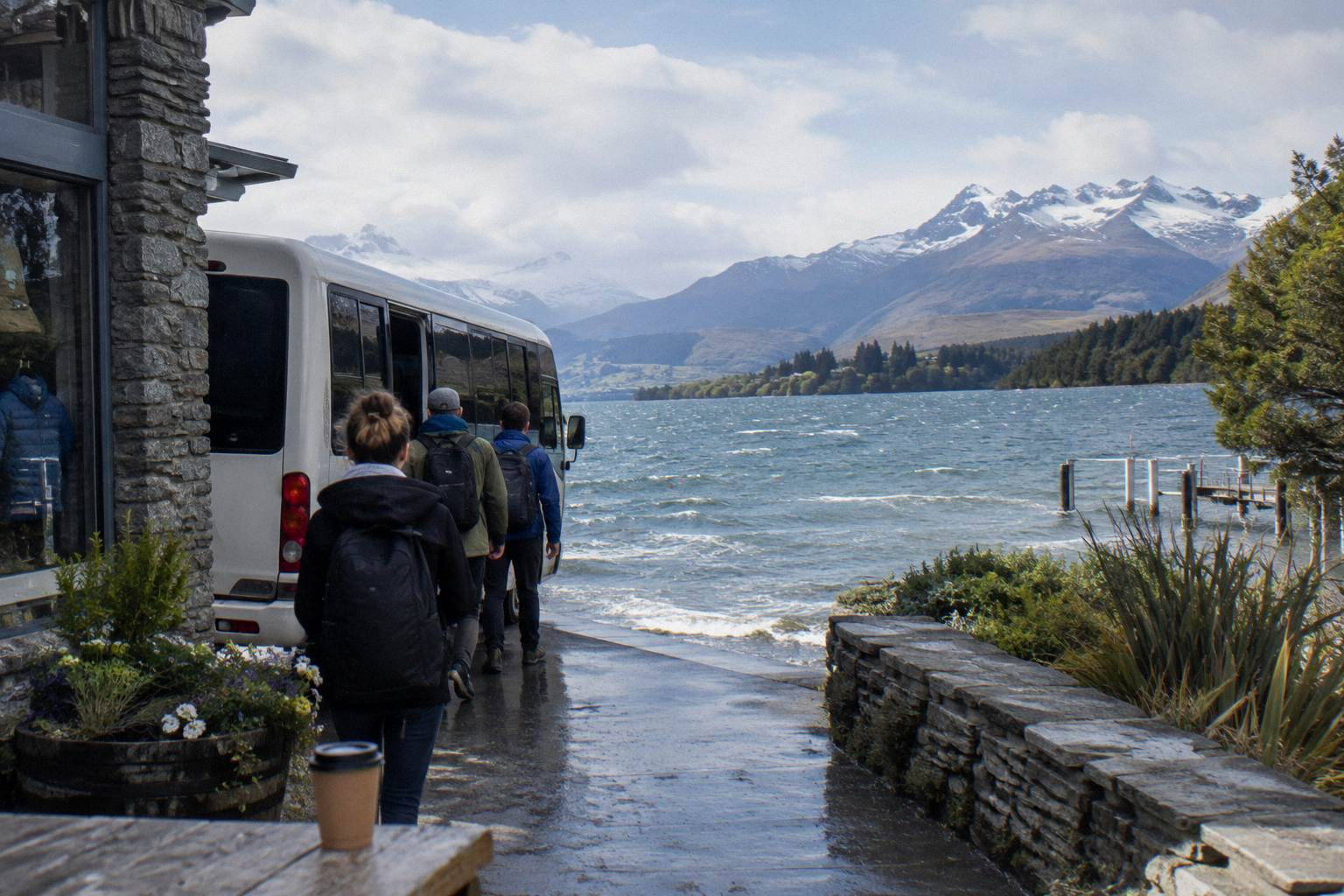
Sunglasses deserve their own sentence. On a bright day the glacier surface reflects light from below while the sun hits from above, and eye comfort becomes the difference between a two-hour hike you remember and one you endure. Lip balm is on the list for the same reason as the sunglasses: the combination of sun, wind and reflection is drying in a way a valley walk is not.
| Bring yourself | Why | Both brands say |
|---|---|---|
| Sunglasses and sun protection | Snow reflection doubles your sun exposure | Yes |
| Lip balm | Wind and reflection dry lips quickly | Helicopter Line list |
| Warm hat and gloves | Warmth is the one thing operators only lend, not always stock | Yes |
| Windproof jacket | Layering under any provided shell | Helicopter Line list |
| 3 to 4 warm upper layers | Insulation is yours, shells are theirs | Mt Cook Glacier Guiding list |
| Long trousers, no jeans | Jeans hold water and freeze stiff; boots need coverage | Yes, worded differently |
| Small backpack | Snacks, drink, camera, spare layer | Yes |
| Camera | The scenery is the point | Mt Cook Glacier Guiding list |
Snacks and a drink are on the Mt Cook Glacier Guiding list and lunch is not included on the Queenstown packages, so a muesli bar and a bottle in a small daypack is the standard move. Our longer piece on whether lunch is included on the heli hike covers that side of the day.
What Should You Leave Behind?
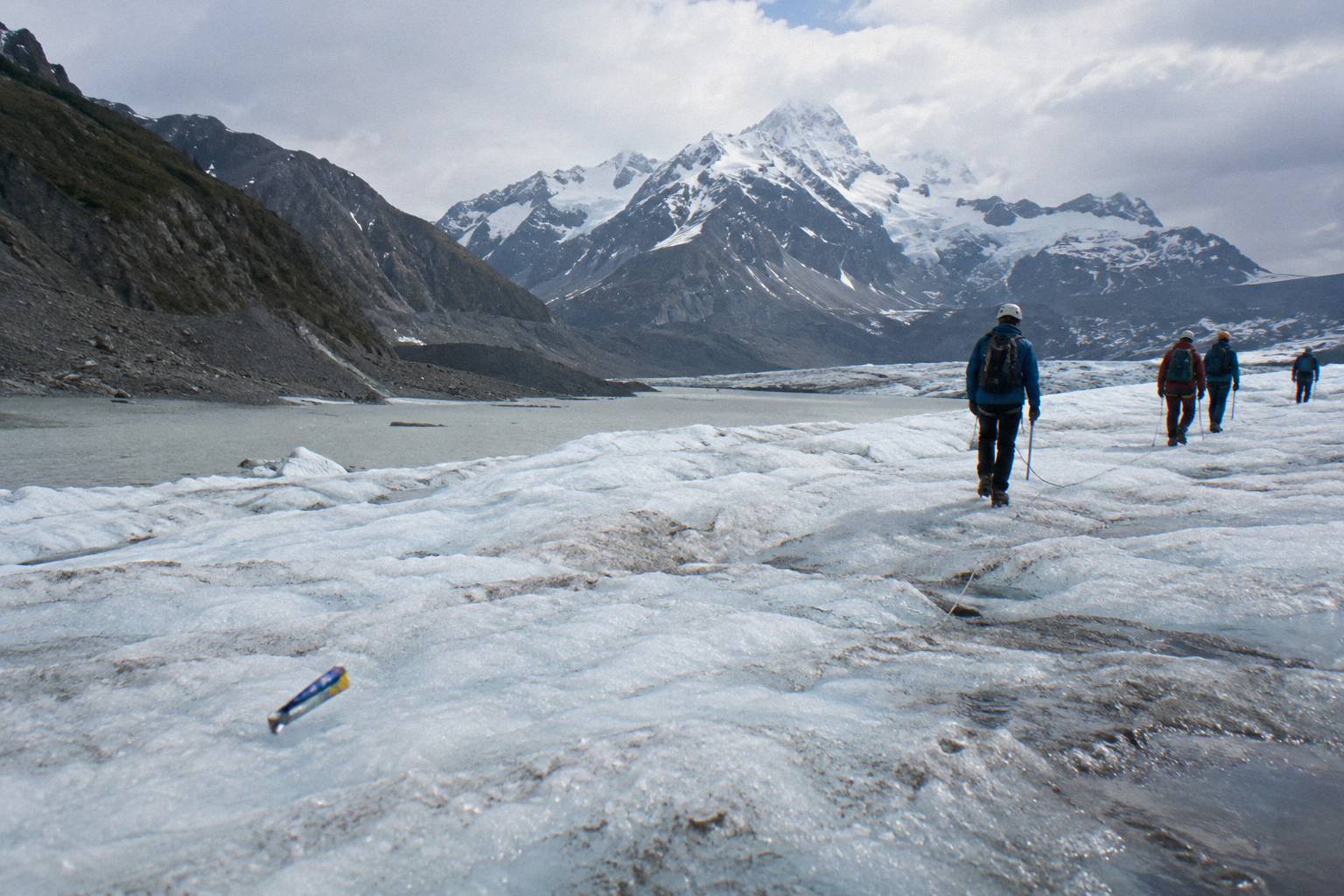
The Helicopter Line's list is explicit: bags, jeans, drones, power banks, iPads, loose clothing and scarves, and large cameras on a strap all stay behind. Loose items and drones are the serious ones, since anything that can drop on a glacier or fly near a helicopter is a genuine hazard rather than a comfort issue, and the Department of Conservation does not allow recreational drones anywhere in the national park. Phones and small cameras are fine.
The drone point is not operator preference. Recreational drones are not allowed anywhere in Aoraki / Mount Cook National Park, per the Department of Conservation's park rules, so a drone that comes to the village has to stay in the hotel room regardless of what any individual guide might say. The site has a fuller piece on drones and GoPros on the heli hike if you are weighing camera gear, but the one-line version is that a pocket camera or phone is welcome and anything loose, dangly or flying is not.
Loose clothing and scarves are on the leave-behind list for a rotor reason. A scarf that unwinds near a running helicopter, or near a crampon point on a narrow section of the route, is a hazard the guides would rather not manage. The same logic applies to large cameras on a strap: a phone in a zipped pocket is a better glacier camera than a swinging DSLR, and our guide to heli hike photography and what to bring works through the options. Bags are left at the airport, which is also where you change into the provided boots, so plan around a small daypack that can sit in the departure lounge rather than a suitcase that cannot.
Power banks and iPads trip people up because they seem harmless. The concern is loose objects in the cabin and on the ice, plus weight and space in a small aircraft where every kilogram is counted. If you want reading for the drive, leave it in the car; the flight is short and the hike fills every minute of attention you have.
Do The Two Brands' Gear Lists Differ In Any Way That Matters?
In practice, no. The core system, boots, crampons or snowshoes, socks, poles and waterproofs, is identical on both three-hour trips, and the differences are at the edges: Mt Cook Glacier Guiding lists a harness if required and over-trousers as standard, while Alpine Guides explicitly lends hats, gloves, socks, backpacks and jackets if you arrive without them. A reasonable reader packing for either trip packs exactly the same personal bag.
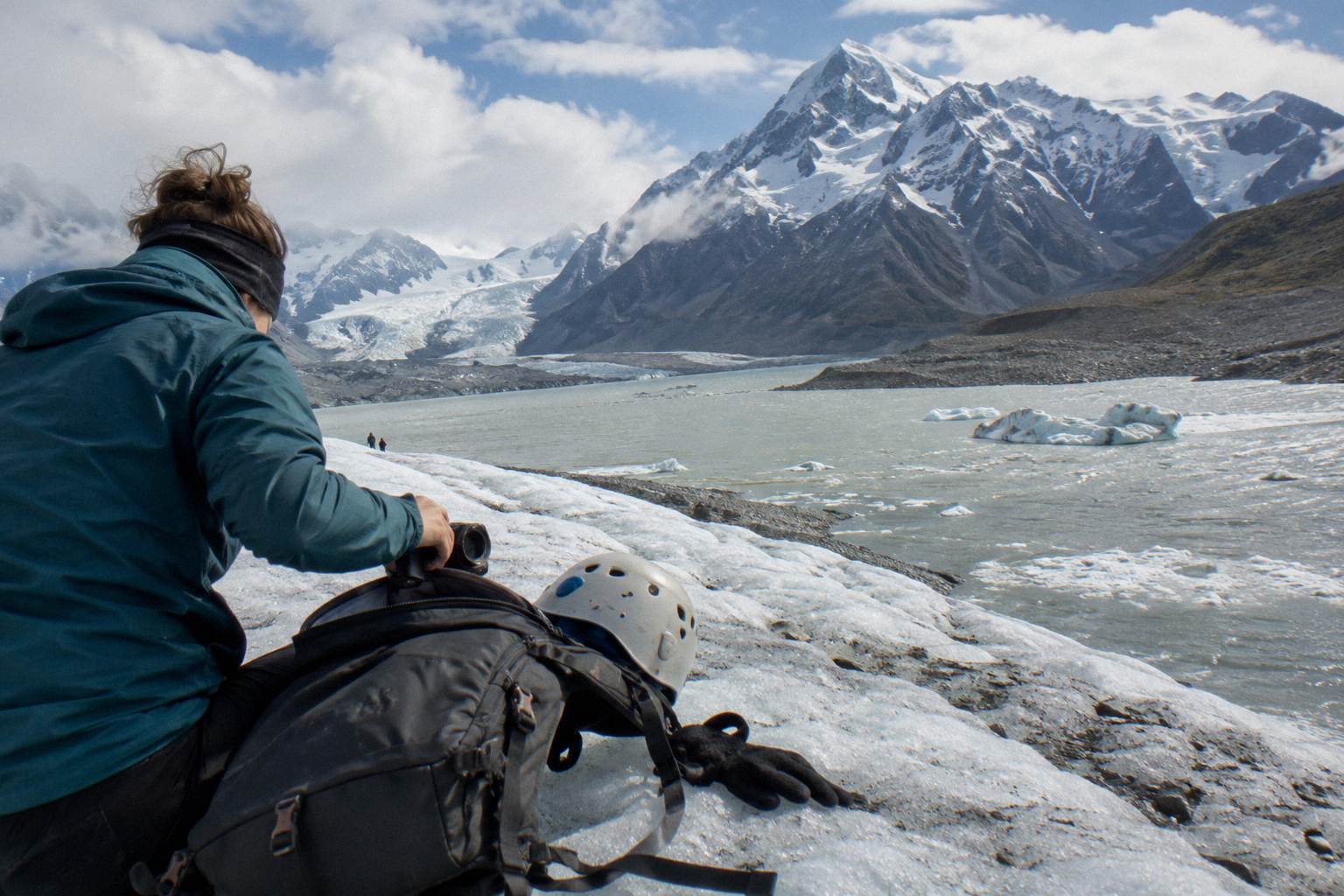
The two trips are also the same price, from NZ$1,021 per person on both listings, and close in shape: about 3 hours door to door, up to 2 hours on the ice, two scenic flights, a guided group. Mt Cook Glacier Guiding's trip is rated 4.9 from 340+ reviews; The Helicopter Line's is rated 4.8 from 270+ reviews. Those figures sit side by side as facts about each trip, not as a ranking; our guide to glacier heli hike reviews digs into what reviewers actually say.
The one place the brands genuinely diverge on people rather than gear is the entry rules: the minimum age is 9 on the Mt Cook Glacier Guiding trip and 10 on The Helicopter Line's, and The Helicopter Line alone publishes a 150 kg maximum for a rear helicopter seat. Nothing like that affects the equipment question. Boots come in the same adult size range on both, and a guide on either trip will swap a pair that does not fit.
The Queenstown packages, the 12-hour bus combo from Cheeky Kiwi Travel from NZ$1,210 per person and the 7-hour fly-in trip with True South Flights from NZ$2,149 per person, run the same glacier day with the flight partner at Mount Cook, so the gear story holds there too. Both listings include the full boot, crampon, gaiter, pole and waterproof kit, and both ask you to bring only the personal warm layers and sun protection.
How Does The Fitting Actually Work On The Day?
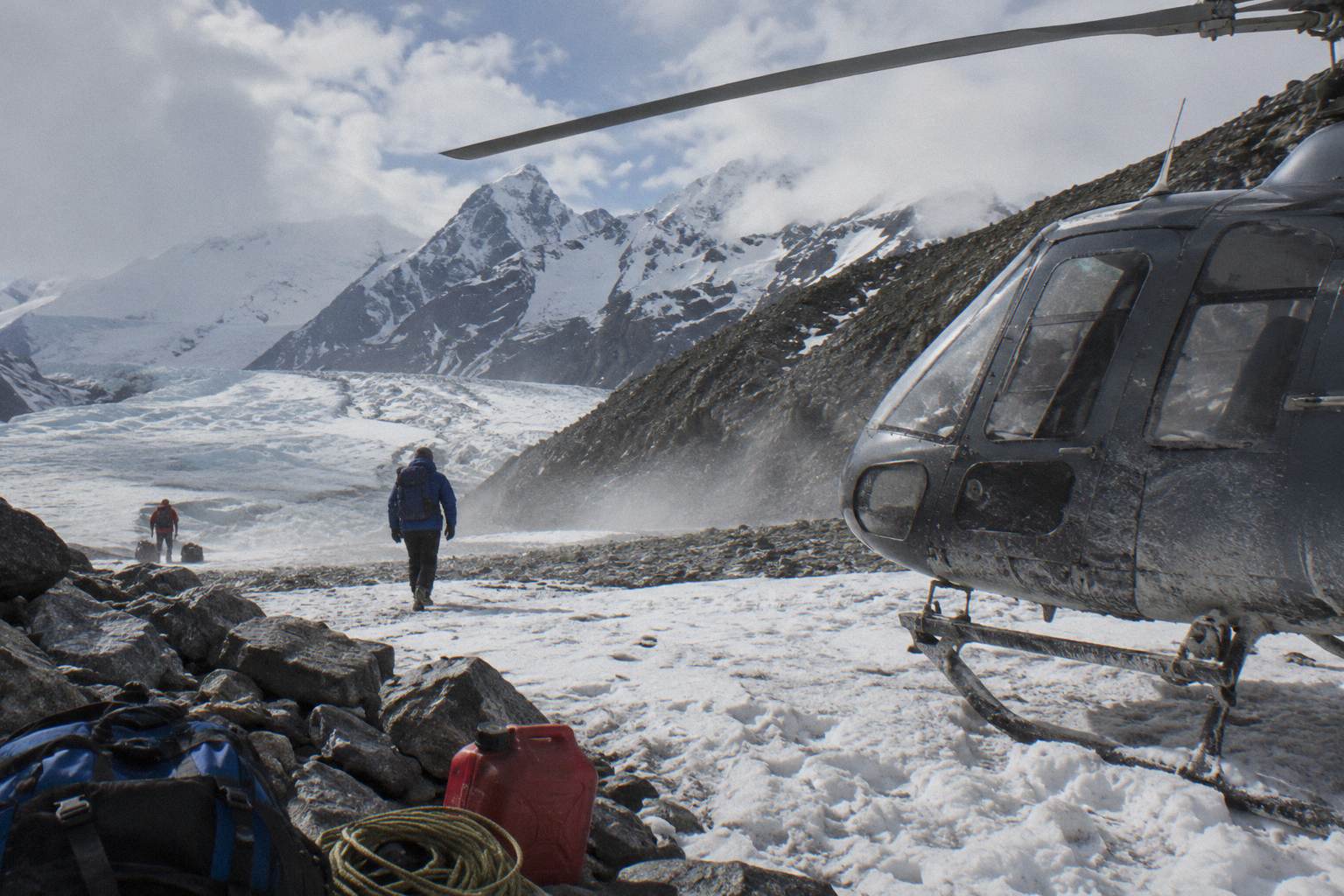
You check in at Mount Cook Airport in your own shoes, try on the provided leather boots indoors, walk a few steps, and swap sizes until the fit is right, before your guide fits crampons or snowshoes to the boots. Everything is checked before boarding and again on the ice after landing, and since this takes roughly the first twenty minutes, arrive on time; The Helicopter Line asks you to check in upstairs fifteen minutes before departure.
The sequencing exists for safety, not ceremony. A crampon is only as good as the boot it is strapped to: too loose and it shifts underfoot, too soft a boot and the points cannot hold their angle on ice. That is why no operator on this route lets you wear your own hiking boots with their crampons, however good your boots are. The pair is fitted together, by the person who will be standing next to you on the glacier, and the guide's final check happens after the landing when the group is actually standing on snow and any adjustment can be made before the walking starts.
For winter departures the same routine applies to snowshoes. Mt Cook Glacier Guiding's page says gear is fitted by the guide, with crampons in summer and crampons and/or snowshoeing in winter, so the guide looks at the surface on the day and chooses. You will not be asked at booking whether you want crampons or snowshoes, and there is no version of the trip where you bring your own.
The practical takeaway for timing is simple. The Helicopter Line asks passengers to check in upstairs at Mount Cook Airport fifteen minutes before departure and to call 24 hours ahead for a weather check; Mt Cook Glacier Guiding warns that strict fly times are not delayed for late arrivals. Show up at the start of your check-in window with your own warm layers on and your street shoes ready to swap, and the fitting runs smoothly. Show up at departure time and you may be watching from the lounge.
What If Something Does Not Fit Or You Run Cold?
Tell the guide before the helicopter leaves. Both brands carry spare sizes, and Alpine Guides keeps loan hats, gloves, socks, backpacks and jackets precisely for travellers who underestimate the cold. Our piece on how cold it is on a glacier heli hike explains the conditions, but the gear-side answer is that an underdressed walker is a solved problem on this route, and a badly fitted boot is the only fitting issue a guide cannot fix in the air.
The lending system is quiet but real. Alpine Guides' own page notes loan supplies of socks, gloves, hats, backpacks and jackets, which means the "bring warm hat and gloves" instruction has a safety net under it. Nobody is turned away for forgetting a beanie. The same spirit applies to socks: fresh woollen socks are handed out on both trips partly for warmth and partly for hygiene, and asking for a second pair is routine, not awkward.
Boots are the one item where speaking up early saves the day. Heel lift, numb toes and pinched forefeet all get worse, not better, over two hours of walking downhill-tilted ice, so say something during the indoor fitting rather than after the landing. The guides do this fitting every day and have seen every foot shape; a swap takes two minutes on the ground and is impossible once the rotors are turning.
The Alpine Guides page for the Tasman heli hike also describes the trip as not a strenuous hike, suitable for people of average fitness, which frames the gear question correctly. The equipment is provided not because the day is an expedition but because it is a walk with a technical floor: you could not do it safely in trainers, and with the provided kit you do not need to own anything technical at all.
Common Questions About Boots And Crampons On A Heli Hike
Are Boots And Crampons Provided On A Glacier Heli Hike?
Yes. Both three-hour Tasman Glacier heli hikes from Mount Cook Airport include boots, crampons or snowshoes, walking poles, woollen socks and waterproofs in the price. Mt Cook Glacier Guiding also provides over-trousers and a harness if required, and Alpine Guides lends hats, gloves, socks, backpacks and jackets. You bring only warm clothing layers, sun protection and a small backpack.
Can I Wear My Own Hiking Boots With The Provided Crampons?
No. Operators on this route fit their own stiff leather or glacier boots together with their own crampons, because the pairing has to be matched for the crampons to hold safely on ice. Your boots travel in the lounge with your street shoes, and you change into the provided pair before the flight.
Do I Need To Bring Socks?
No. Woollen socks are provided on both the Mt Cook Glacier Guiding and The Helicopter Line trips, and Alpine Guides keeps loan socks as well. Asking for a fresh pair during the fitting is completely normal. Many walkers still bring their own thick socks out of habit, and nobody minds either way.
Is Any Of The Gear An Extra Charge?
No. Every item on the provided lists is included in the trip price. The from-price on the booking page, from NZ$1,021 per person on both three-hour heli hikes, covers the guide, the flights and the full equipment set, with no rental fee or equipment add-on at checkout.
What Happens To My Bag And Shoes During The Flight?
They stay at the airport. Bags are on The Helicopter Line's leave-behind list, and you change into the provided boots before boarding, so your own footwear and daypack wait in the lounge. Bring only what fits in a small backpack that can stay behind, plus a phone or pocket camera on the ice.
Do Children Get Smaller Boots And Crampons?
Yes, the operators carry a full size range and the guide fits each walker individually, children included. Note the age rules differ by brand: the minimum is 9 on the Mt Cook Glacier Guiding trip and 10 on The Helicopter Line's, with under-18s needing parental or guardian consent on the Mt Cook Glacier Guiding booking.
Planning the rest of the day around the fitting window is the last piece. Once the boots are on and the crampons are checked, everything technical about a Tasman Glacier heli hike is behind you, and the operator behind Mount Cook Helicopter Hike has already solved the packing problem you were worried about. Bring the layers, bring the sunglasses, and let the guide do the strapping.