Tasman Glacier Ice Caves And Ice Conditions On A Heli Hike
Ice caves are not part of the standard Tasman Glacier heli hike. Here is exactly what each operator promises about ice, what stays conditional, and what the glacier itself is doing.
Short answer
The standard 3-hour heli hike from Mount Cook Airport promises up to 2 hours on the ice, from NZ$1,021 per person, with no ice caves. The only ice cave trip is a private charter, enquiry only, conditional on snow and ice. The lower glacier is rock-covered, and the guide picks the route on the day.
Tasman Lake did not exist until 1974. The Department of Conservation notes it is growing rapidly as the Tasman Glacier melts, and the ice that is left is 23 km long, up to three km wide and 101 square km, the largest and longest glacier in New Zealand. That is the ice a heli hike buys you access to. What it does not buy, on the standard trip, is an ice cave.
Can a heli hike take you inside the Tasman Glacier's ice caves, and if not, what ice will you actually stand on, walk across and photograph? Everything below comes from the operator pages and booking listings, plus the Department of Conservation's own glacier facts, and it separates what is promised from what is merely possible. Read this before you book rather than after, because the gap between the brochure image in a traveller's head and the product actually sold is almost always the cave.
Are Ice Caves Included On The Heli Hike At Aoraki?
No. Ice caves are not part of the standard Tasman Glacier heli hike sold by any of the brands at Mount Cook Airport. The 3-hour trips promise a glacier landing and up to 2 hours on the ice, and the route is chosen by the guide on the day. A cave walk is never part of what you are booking, and no listing for the standard hike guarantees one.
The standard product, sold as the Glacier Guiding 3-Hour Heli Hike and the Helicopter Line 3-Hour Heli Hike, is a scenic flight onto the Tasman Glacier, roughly two hours walking on the ice with crampons, and a flight back. Mt Cook Glacier Guiding describes its version, "The Adventurer", as 3 hours total with up to 2 hours on the glacier, weather permitting. The Helicopter Line, guiding with Alpine Guides, describes a professionally guided 2-hour hike within an experience of about 3 hours including flights and check-in.
Neither description mentions caves. The only ice cave product on the books anywhere at Mount Cook is a private charter run by Mount Cook Ski Planes and Helicopters, the aircraft partner on the Mount Cook Helicopter Hike route: the Tasman Glacier Ice Cave and Picnic Experience. It is enquiry only, allows about 6 hours, and the operator's own wording is conditional: "depending on snow/ice conditions you will either explore the ice caves mid glacier or the seracs of the upper Glacier Neve." Even that trip does not promise a cave. Alpine Guides' private "Exclusive Tasman Encounter" heli hike mentions ice caves too, with an asterisk, which is the industry's way of saying the same thing: if and only if conditions allow.
- Glacier Guiding 3-Hour Heli HikeNZ$1,021
- Helicopter Line 3-Hour Heli HikeNZ$1,021
- 12-Hour Bus Combo, Heli HikeNZ$1,210
- 7-Hour Fly-In Heli HikeNZ$2,149
One booking page for The Helicopter Line at one point suggested a walk among ice caves is usually part of the tour. That sentence is contradicted by the operator's own product descriptions and risk disclosures, and it should not shape your expectations. Caves form and collapse seasonally in the ice; a guided group with a fixed landing zone does not hunt for them. A cave that was open in December may be gone by February, and one that collapsed in autumn may reform somewhere else entirely by the following spring. No commercial operator can schedule against that.
What Ice Does The Standard Heli Hike Actually Deliver?
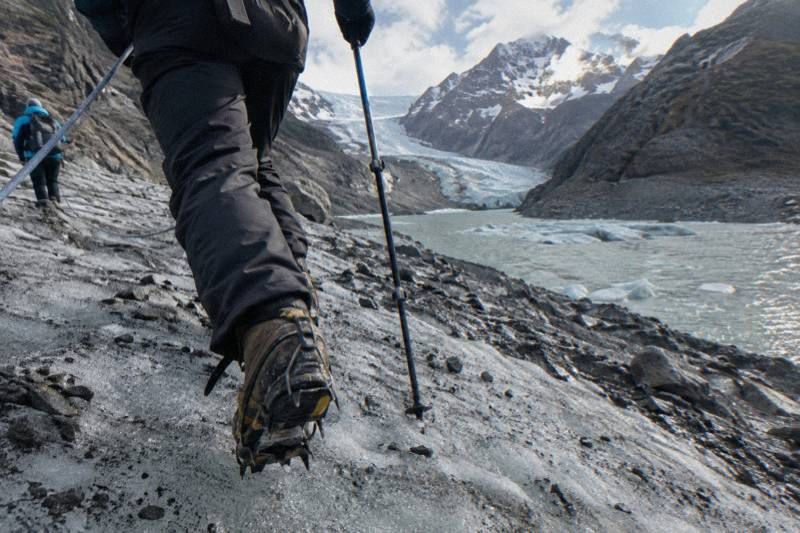
Two scenic helicopter flights, a landing on the glacier at around 1,200 metres above sea level per Alpine Guides, and a guided walk of about two hours on ice wearing crampons. You will see the Hochstetter Icefall on the flight, blue ice and meltwater features underfoot, and, in winter, snowshoe terrain. The cave is the one headline ice feature that is absent from every standard listing.
The ice itself is genuinely spectacular, and it helps to know why. Glaciers cover 40 percent of Aoraki / Mount Cook National Park, one of five major glacier valley systems named by DOC for the park (Godley, Murchison, Tasman, Hooker and Mueller). The standard hike lands around 1,200 metres above sea level according to Alpine Guides, and the return flight passes close to the Hochstetter Icefall, which the operator describes as roughly 1,000 metres high. Those two figures belong to the standard heli hike; do not confuse them with the ski plane product described below.
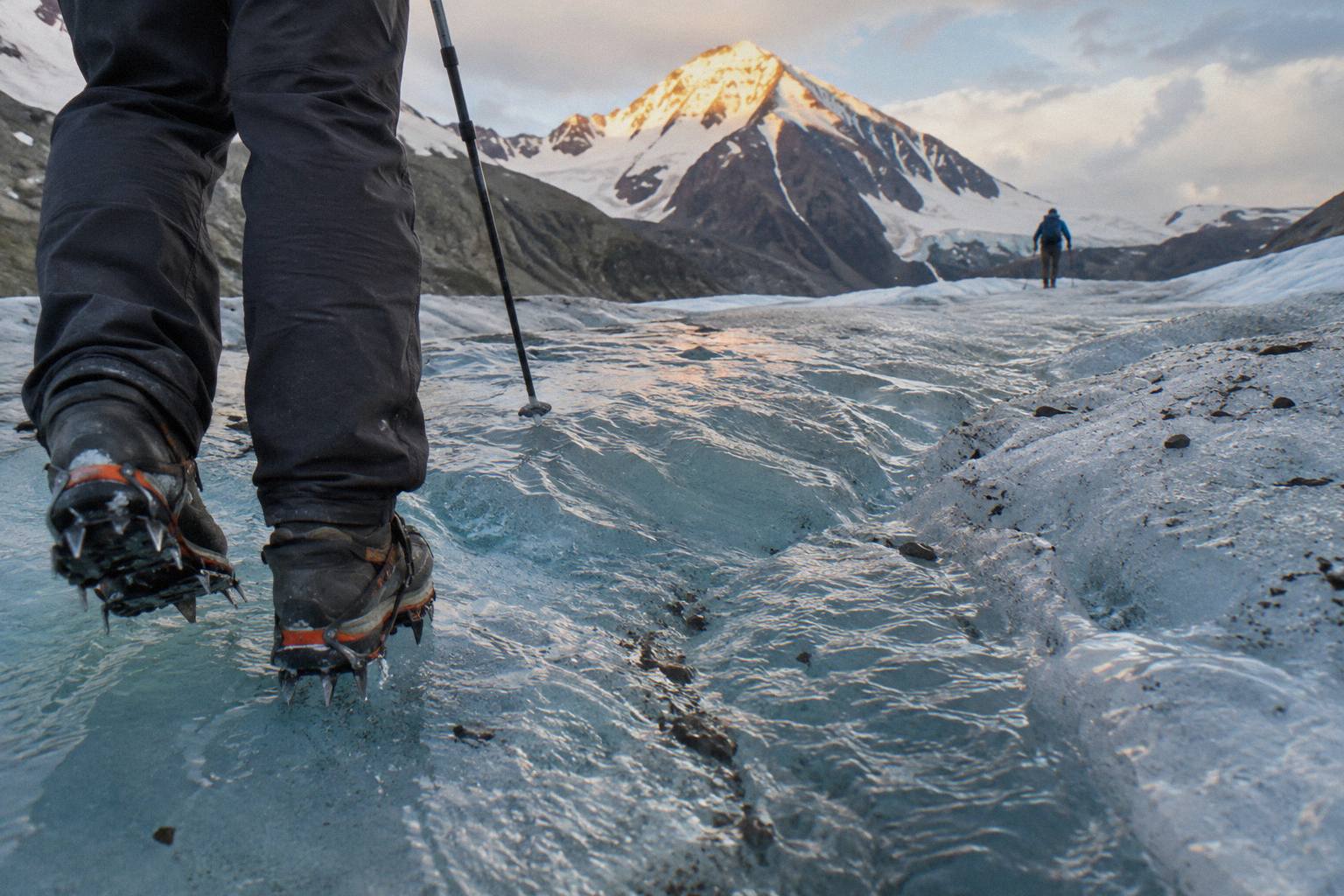
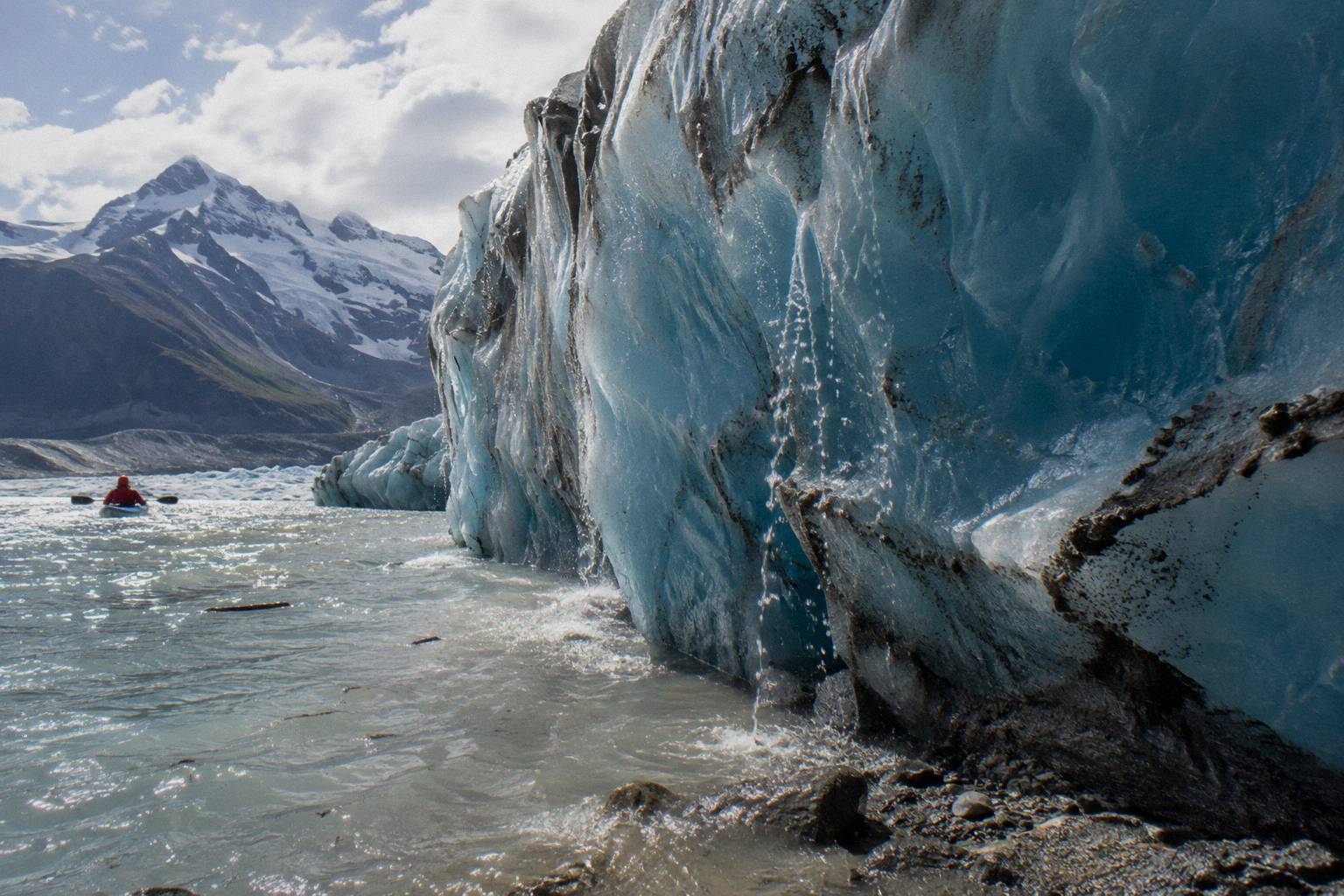
Underfoot, what you get is the glacier surface itself: ice carved by wind and meltwater, sometimes blue in the deeper sections, sometimes buried under seasonal snow that the crampons bite into. In winter Mt Cook Glacier Guiding fits snowshoes as well as crampons. Meltwater streams, small moulin and sculpted seracs are the realistic ice photography targets, and they are what most hikers come back talking about. If caves are the only thing that will satisfy you, the standard hike is the wrong product.
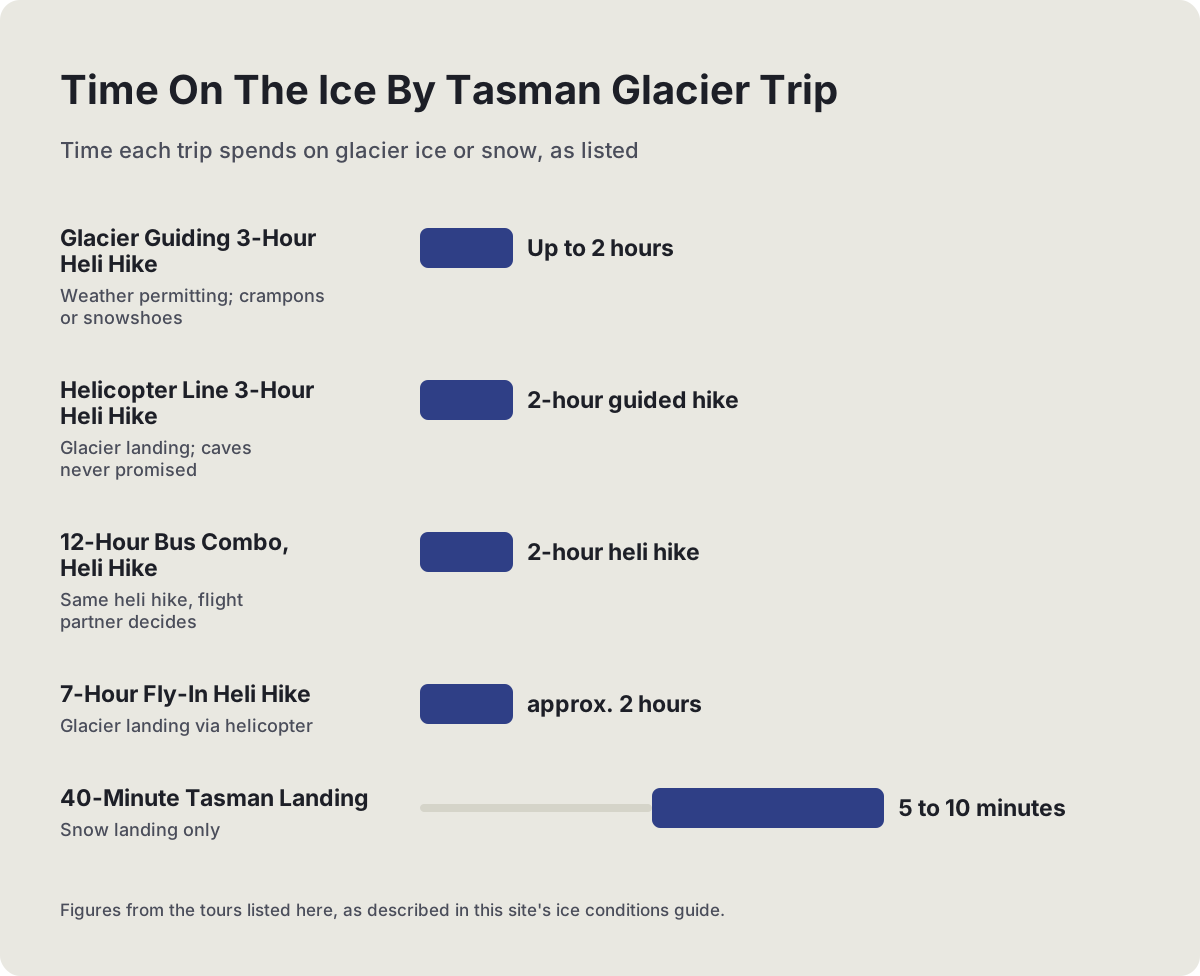
What each bookable trip promises about ice:
| Trip | Time on the ice | Ice features promised | Caves? |
|---|---|---|---|
| Glacier Guiding 3-Hour Heli Hike | Up to 2 hours, weather permitting | Glacier landing, crampons or snowshoes | No |
| Helicopter Line 3-Hour Heli Hike | 2-hour guided hike | Glacier landing, never promised | No |
| 12-Hour Bus Combo, Heli Hike | 2-hour heli hike within the day | Same heli hike, flight partner decides | No |
| 7-Hour Fly-In Heli Hike | Guided glacier hike, approx. 2 hours | Glacier landing via helicopter | No |
| 40-Minute Tasman Landing | Snow landing, 5 to 10 minutes | Snow landing only | No |
That table is the whole story in one glance. The heli hikes put you on the ice for about two hours. The landing flights touch snow for minutes, not hours, and never involve walking gear. Nothing bookable on a standard listing involves a cave, and the distinction matters enough that it is worth a reader knowing before money changes hands rather than after.
How the time budget works is worth pinning down before you book. A trip sold as three hours spends about two of them on the glacier; the balance goes to the two scenic flights and to getting fitted with crampons before the walk starts. If your priority is standing on ice rather than looking at it, that split still favours you. The 40-Minute Tasman Landing sits at the opposite end of the scale, with five to ten minutes on snow, no walking gear and no chance to photograph ice detail up close. Treat it as a sightseeing stop rather than a hike, and set your expectations, and your budget, accordingly.
What you can photograph depends on the season and on what the surface is doing that day. Winter departures with Mt Cook Glacier Guiding fit snowshoes alongside crampons for snow-covered terrain, while trips in warmer months tend to expose more of the carved surface, with blue tones showing in the deeper sections. Build your shot list around meltwater streams, small moulin and sculpted seracs rather than around arches or tunnels, because no bookable product includes a cave. Hikers who arrive hoping for a glowing blue tunnel are the ones most likely to feel shortchanged; hikers who come for sculpted ice underfoot are getting exactly what is promised.
A final practical point concerns the flights themselves. The Hochstetter Icefall, which the operator describes as roughly 1,000 metres high, is a from-the-air feature on this product, seen on the flight in or out rather than from the ground, so treat both legs of the journey as photography time rather than as transit. Scale also helps set expectations for the walk. The Tasman runs 23 km end to end and is only one of the valley systems DOC names for the park, so two hours on the surface samples a small section of a far larger glacier. Understood that way, the standard heli hike is not a lesser version of a cave tour; it is a different product with different highlights.
What Is The Private Ice Cave Charter, Then?
The Tasman Glacier Ice Cave and Picnic Experience is a private charter from Mount Cook Ski Planes and Helicopters, enquiry only, allowing about 6 hours, in which the operator says you either explore ice caves mid glacier or the seracs of the upper Glacier Neve, depending on snow and ice conditions. It is not sold on a standard booking listing and carries no published price here.
The conditional wording deserves emphasis because it is the operator's own, not a paraphrase. "Depending on snow/ice conditions" is doing real work in that sentence. Ice caves are transient: they open where meltwater has carved a cavity and they close when the roof thins or the ice shifts. A commercial operator cannot schedule one the way it schedules a landing zone. The charter works because it is long, private and flexible, with a guide who can move the day around what the glacier is doing that week.
Alpine Guides' private Exclusive Tasman Encounter is the other cave-adjacent product: a private heli hike of at least 3 hours with up to 4 hours on the ice, age 12 and over, priced in minimum-charge tiers by group size, with "ice caves" asterisked in the operator's description. Same story, different operator: possible, never promised. If a cave is the goal, the enquiry route with either operator is the only path, and even then you should plan for the seracs-and-neve day rather than the cave day.
For everyone else, the standard hike remains the practical way onto the ice, and the Glacier Guiding three-hour heli hike, rated 4.9 from 340+ reviews and from NZ$1,021 per person, is the most-booked version of it.
Why Is The Lower Glacier Covered In Rock?
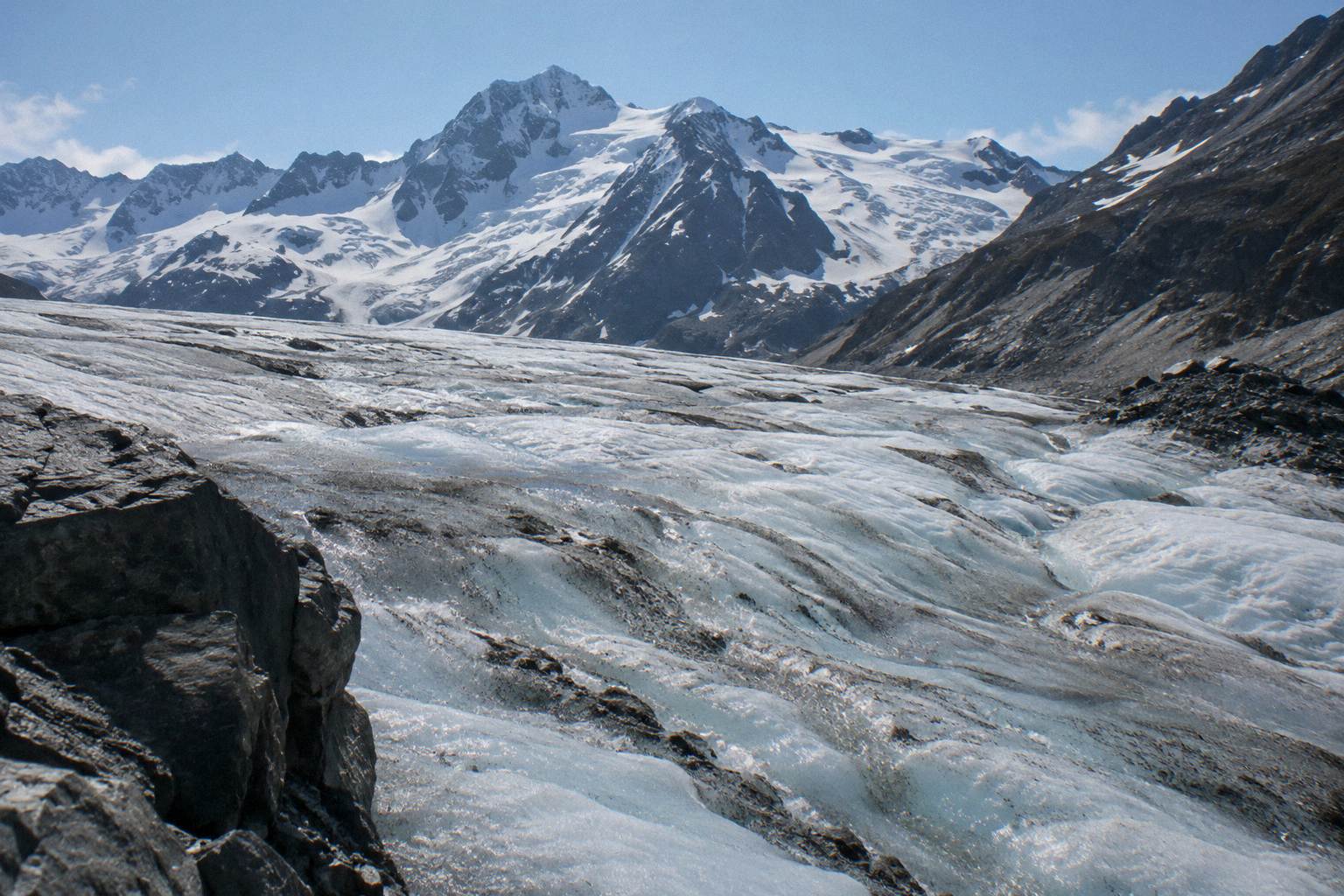
Because the Tasman Glacier's lower reaches are blanketed in rock debris, as the Department of Conservation describes: the glacier is retreating as the climate changes, Tasman Lake did not exist until 1974 and is growing rapidly as the ice melts. The rock cover insulates the ice beneath and hides it, which is exactly why operators fly guests past the grey terminal zone to the white ice higher up.
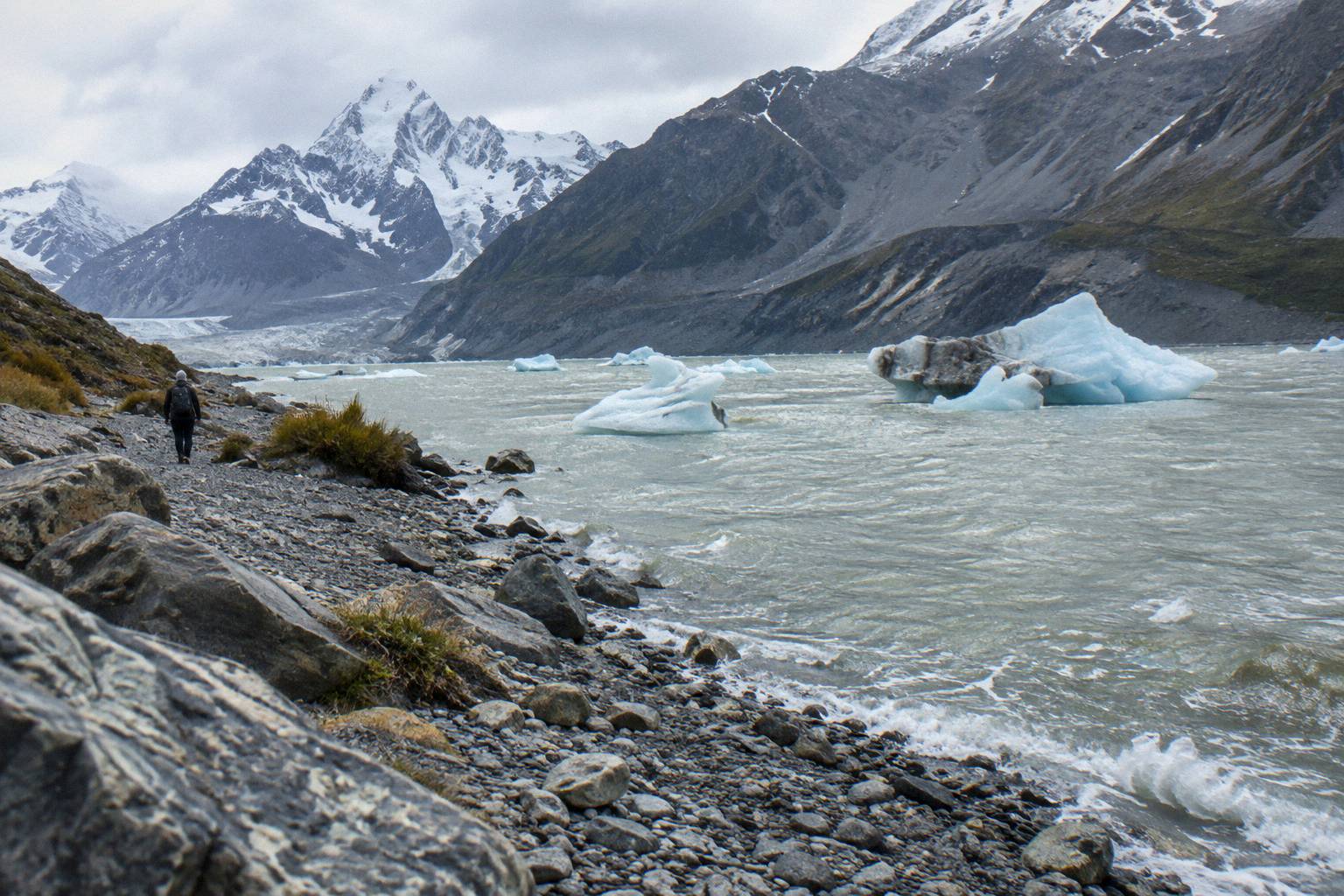
If you walk to a viewpoint on your own, the free Tasman Glacier View Track, 1.5 km return with 300-plus steps, shows you a moraine wall, a lake with icebergs in summer, and a glacier tongue that looks like a field of grey rubble. That is the real condition of the lower glacier. The rock is not pollution; it is debris fallen from the valley walls and carried down on the ice, and it is what remains of a melting terminus.
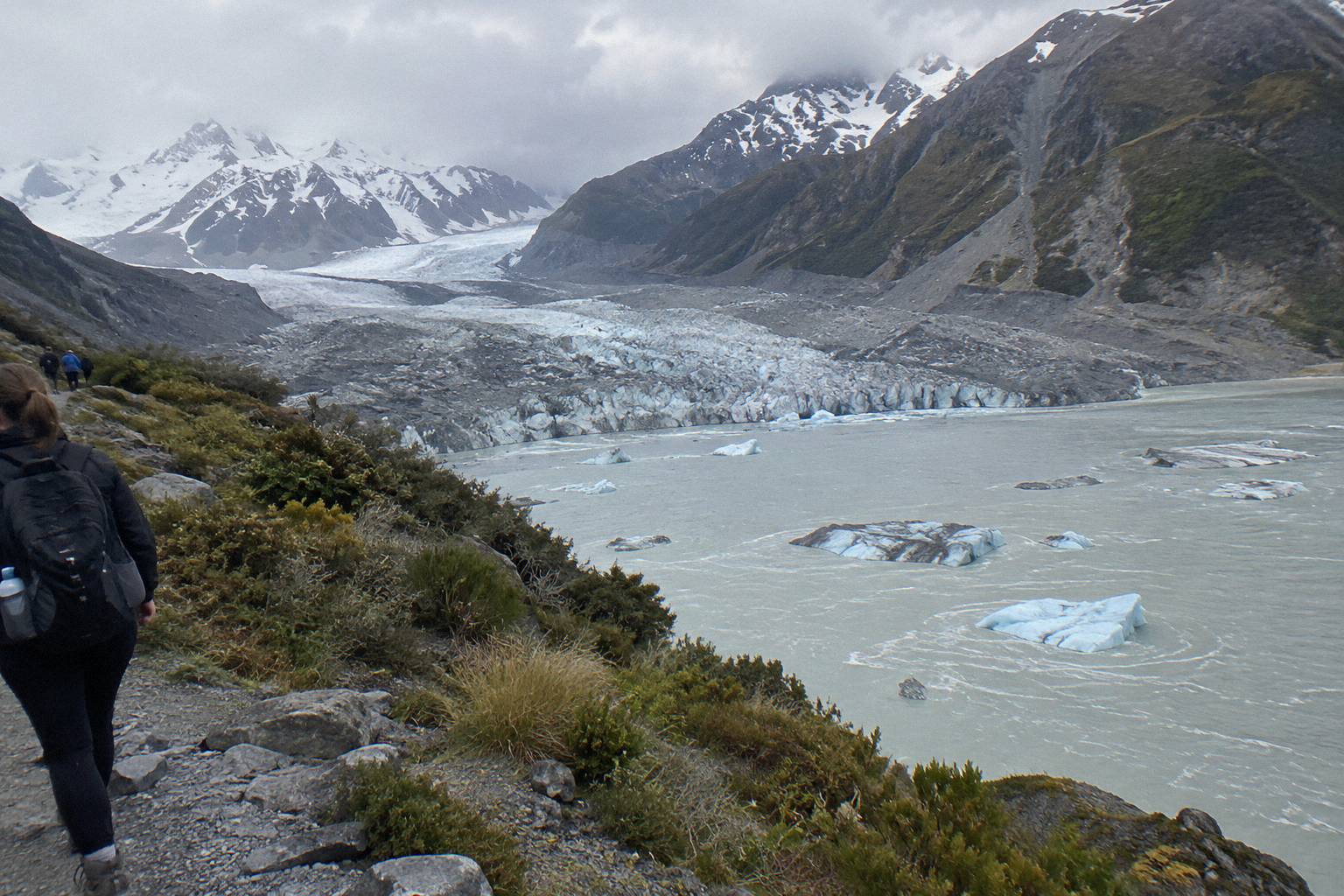
The contrast with the upper glacier is the entire premise of the helicopter flight. Within minutes of leaving Mount Cook Airport you are over clean white neve, and the landing zone sits in that upper ice. This is also why the question "can you just walk onto the glacier yourself" has a firm no for an answer, a point covered in detail in the separate guide to whether you can walk to the Tasman Glacier without a helicopter. The rock-covered tongue is unstable, and the attractive ice is out of walking reach.
The long-term picture is documented, not guessed at. The 2026 end-of-summer snowline survey by Earth Sciences NZ (formerly NIWA) found retained snow on some South Island glaciers, but its lead scientist called it "only a stay of execution and not a reversal in the long-term decline of ice coverage". That is the condition of the ice you are booking time on: still vast, still worth the flight, and shrinking.
What Do The Operators Say About Crevasses And Other Ice Hazards?
The Helicopter Line's risk disclosure names falling rocks, ice cliffs, crevasses, changing snow conditions, icy surfaces and rapidly changing mountain weather as terrain hazards on the glacier. Crevasses appear in that disclosure only; no operator describes crevasse walking on the standard hike, and the guided route is chosen to avoid such hazards rather than visit them.
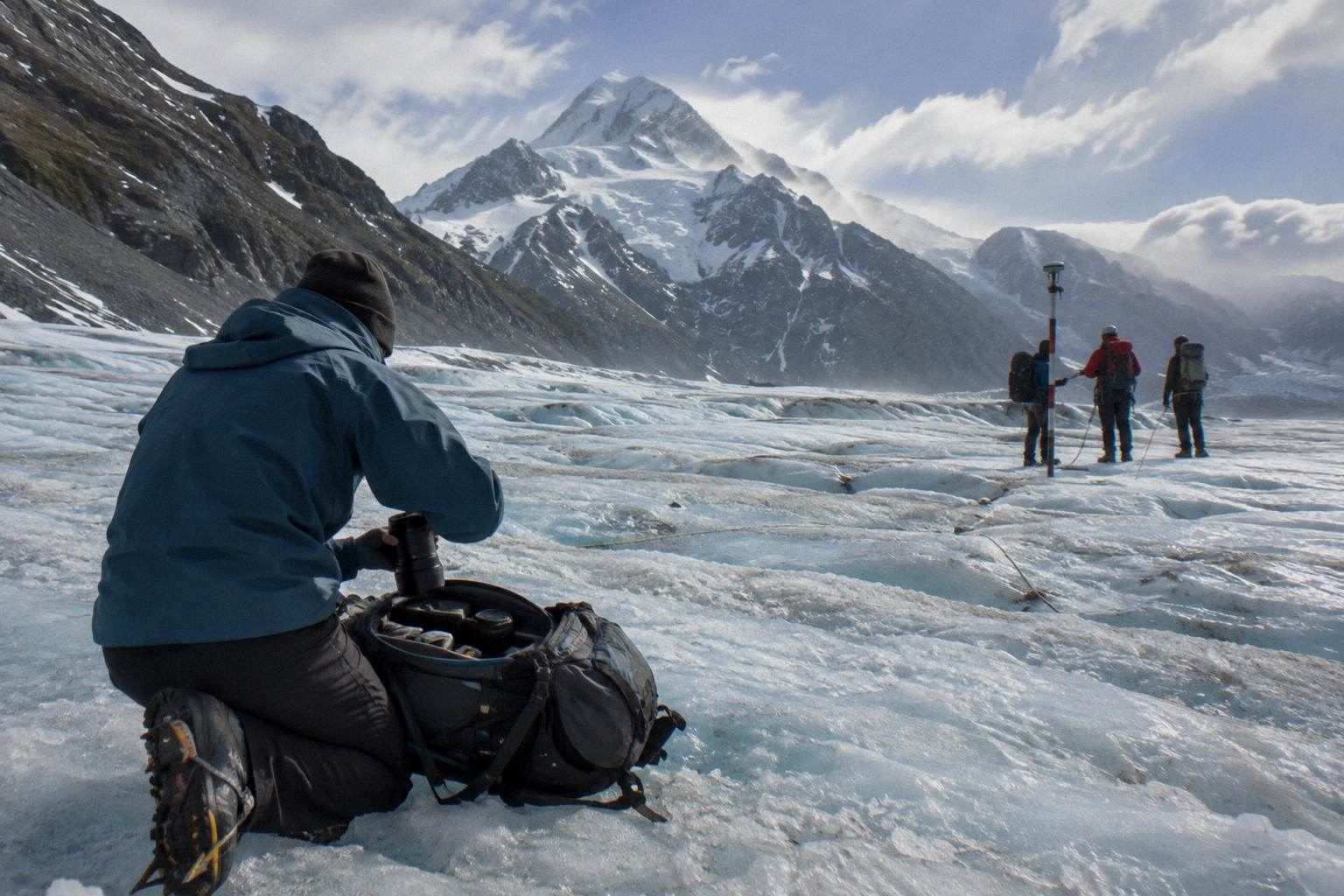
It is worth reading that list the way it is intended. A risk disclosure is what an operator tells you before you fly so you understand the environment is genuinely alpine, not a theme park. The same page notes the aircraft are inspected and maintained to Civil Aviation Authority standards, which is The Helicopter Line's wording and is attributed to that operator. The glacier is moving, cracking ice, and the guide's job on the day is to read it. The wider set of guides lives on Mount Cook Helicopter Hike.
| Hazard in the risk disclosure | What it means on a hike |
|---|---|
| Falling rocks and ice cliffs | Groups keep clear of the valley walls and serac faces |
| Crevasses | The guide selects a route around them; they are not an attraction |
| Changing snow conditions | The route and pace can change during the two hours |
| Icy surfaces | Crampons are fitted and checked by the guide before walking |
| Rapidly changing mountain weather | The operator can cancel or shorten a trip on the day |
Group management is the other half of the safety picture. Alpine Guides states a guide ratio of 1:12 on its Tasman heli hike, and the flag-table maximum group sizes differ by trip: 11 on the Glacier Guiding hike, 20 on The Helicopter Line's. Boots, crampons and, in winter, snowshoes are fitted by the guide, and Mt Cook Glacier Guiding lists a harness "if required". None of this makes the hike dangerous in a casual sense; moderate fitness is the stated bar, and The Helicopter Line asks only that you can walk at least 1 km and manage stairs easily. It does mean the ice sets the itinerary. More on that in the guide to whether a glacier heli hike is safe.
How Do Ice Conditions Change Through The Year?
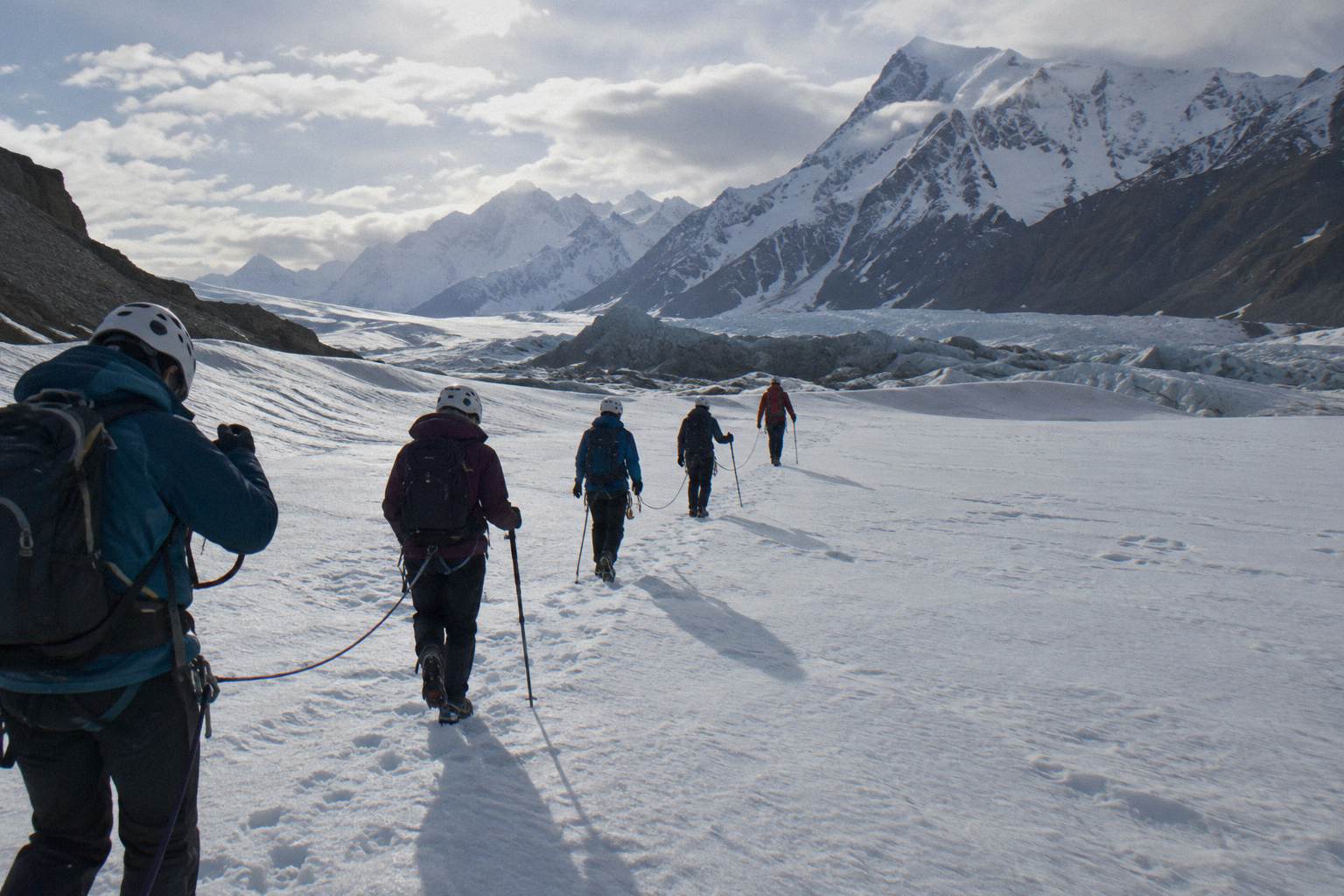
The heli hike runs all year, per Alpine Guides, and the ice changes character with the seasons: crampons on bare ice in summer, snowshoes or crampons in winter per Mt Cook Glacier Guiding, and a snowpack that the annual snowline survey tracks in decline. No operator claims a best month, and conditions on the day decide the route, not the calendar.
Summer brings the blue ice and the meltwater features, along with warmer air at the landing zone. Winter brings a deeper snow surface, colder temperatures and the snowshoe option, and short daylight hours shape the schedule. What no season brings is a reliable cave. The Earth Sciences NZ snowline survey measures the retained snow at the end of each summer, and the 2026 result, retained snow on some glaciers described as a stay of execution rather than a recovery, is the clearest public statement of the trend the operators are working around.
| Season | Ice underfoot | Gear fitted | What stays constant |
|---|---|---|---|
| Summer | Bare ice, blue sections, meltwater streams | Crampons | Landing is never promised; guide sets the route |
| Autumn | Mixed ice and early snow cover | Crampons | Same 2-hour guided walk, weather permitting |
| Winter | Deeper snowpack over the ice | Crampons and snowshoes | Landing site may vary with conditions |
| Spring | Softening snow, fresh meltwater channels | Crampons, snowshoes if needed | Operator's weather call decides the day |
The gear column follows the operators' own descriptions rather than a fixed calendar: Mt Cook Glacier Guiding lists crampons in summer and crampons and snowshoes in winter, fitted by the guide on the day, which is the final word in every case.
The practical reading for a planner: book the season that suits your clothing and camera rather than chasing an ice feature. The two-hour ice experience is broadly similar year-round, and the operator's weather call, covered fully in the guide to heli hike weather and cancellations, matters far more to your day than the month on the calendar.
Who Decides The Route, And Can You Ask For The Best Ice?
The guide decides. Every operator states the landing site and route depend on conditions on the day, the landing is never promised, and the weather call sits with the pilot and operator. You can tell the guide what you hope to photograph, and a good guide will shape the walk where the ice allows, but no request overrides conditions.
This is the part of the product that surprises people who are used to fixed itineraries. Even the landing itself is conditional: Mt Cook Glacier Guiding says the Tasman primary landing site may vary with conditions, and The Helicopter Line states every activity depends on the weather, with a full refund or credit when the operator cancels. The Helicopter Line asks guests to call 24 hours ahead to check the weather and reconfirm, which tells you how live the decision stays.
The booking terms across the trips we cover are consistent on one point: free cancellation up to 24 hours before the start, and an operator weather cancellation gets you another date or a full refund or credit. Beyond 24 hours out, the calendar is yours; inside it, the glacier and the sky have the final word.
What If You Only Want A Snow Landing, Not A Hike?
For a traveller whose interest in caves is really an interest in dramatic ice from the air, these flights are the alternative. The 55-Minute Glacier Flight from The Helicopter Line at Glentanner Park covers Aoraki / Mount Cook, the Tasman Glacier and the West Coast glaciers with an alpine snow landing, from NZ$949 per person. The 40-Minute Tasman Landing, from NZ$713 per person, lands you on snow for 5 to 10 minutes. Mount Cook Ski Planes' 25-Minute Alpine Landing, from NZ$379 per person, is the entry point, with live commentary and a four-person minimum before a flight operates.
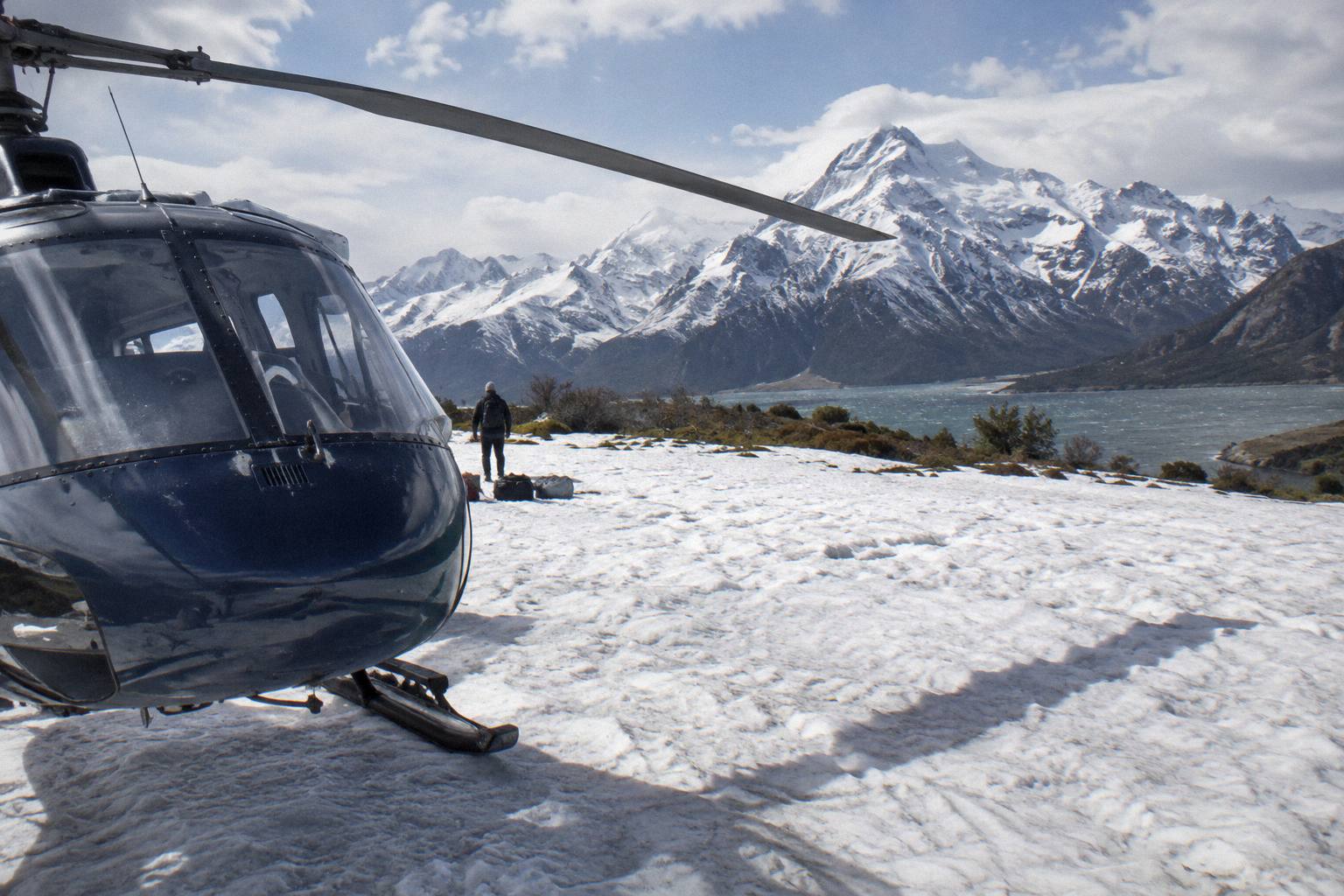
The comparison that matters is time and touch. A landing flight gives you minutes on snow and no engagement with the ice. A heli hike gives you two hours on the glacier surface, crampons biting, with a guide reading the route. Caves sit outside both. The full trade-off, including the free valley walks, is laid out in the guide to choosing between a heli hike and a snow landing.
Operator pages with the full ice and conditions wording: Mount Cook Ski Planes on the Tasman heli hike, The Helicopter Line's heli hike page, and Alpine Guides on the guiding side of the same trip.
Common Questions About Tasman Glacier Ice Caves And Ice Conditions
Can You Go Inside The Ice Caves On The Glacier Heli Hike?
No. Ice caves are not part of the standard heli hike. The only ice cave trip is a private charter, enquiry only, and even that is conditional: the operator says you either explore the ice caves or the seracs of the upper Glacier Neve, depending on snow and ice conditions.
What Ice Do You Actually See On The Heli Hike?
A glacier landing at around 1,200 metres above sea level per Alpine Guides, roughly two hours walking on ice with crampons, blue ice and meltwater features underfoot, and the Hochstetter Icefall, which the operator describes as about 1,000 metres high, on the return flight.
Is The Lower Tasman Glacier Covered In Rock?
Yes. DOC describes the lower reaches of the glacier as covered with rock, and Tasman Lake did not exist until 1974, growing rapidly as the glacier melts. That is why the helicopter flies guests to the clean ice of the upper glacier.
Do You Walk Over Crevasses On The Heli Hike?
No operator describes crevasse walking on the standard hike. Crevasses appear only in The Helicopter Line's risk disclosure, which lists terrain hazards including falling rocks, ice cliffs, crevasses, changing snow conditions and icy surfaces. The guide chooses a route around such hazards.
Does The Heli Hike Run In Winter?
Alpine Guides states the season runs all year round, and Mt Cook Glacier Guiding fits snowshoes and crampons in winter. No operator claims a best month; conditions on the day decide the landing and route.
What If The Weather Cancels The Heli Hike?
The booking pages for these trips all state free cancellation up to 24 hours before the start, and an operator cancellation for weather gets you an alternative date or a full refund or credit. The Helicopter Line asks guests to call 24 hours ahead to check the weather and reconfirm.