How Cold Is It On The Ice During A Glacier Heli Hike?
No operator publishes an on-ice temperature, but the airport climate record, the operator gear lists and the winter snowshoe switch tell you exactly how cold a Tasman Glacier heli hike feels and what to wear.
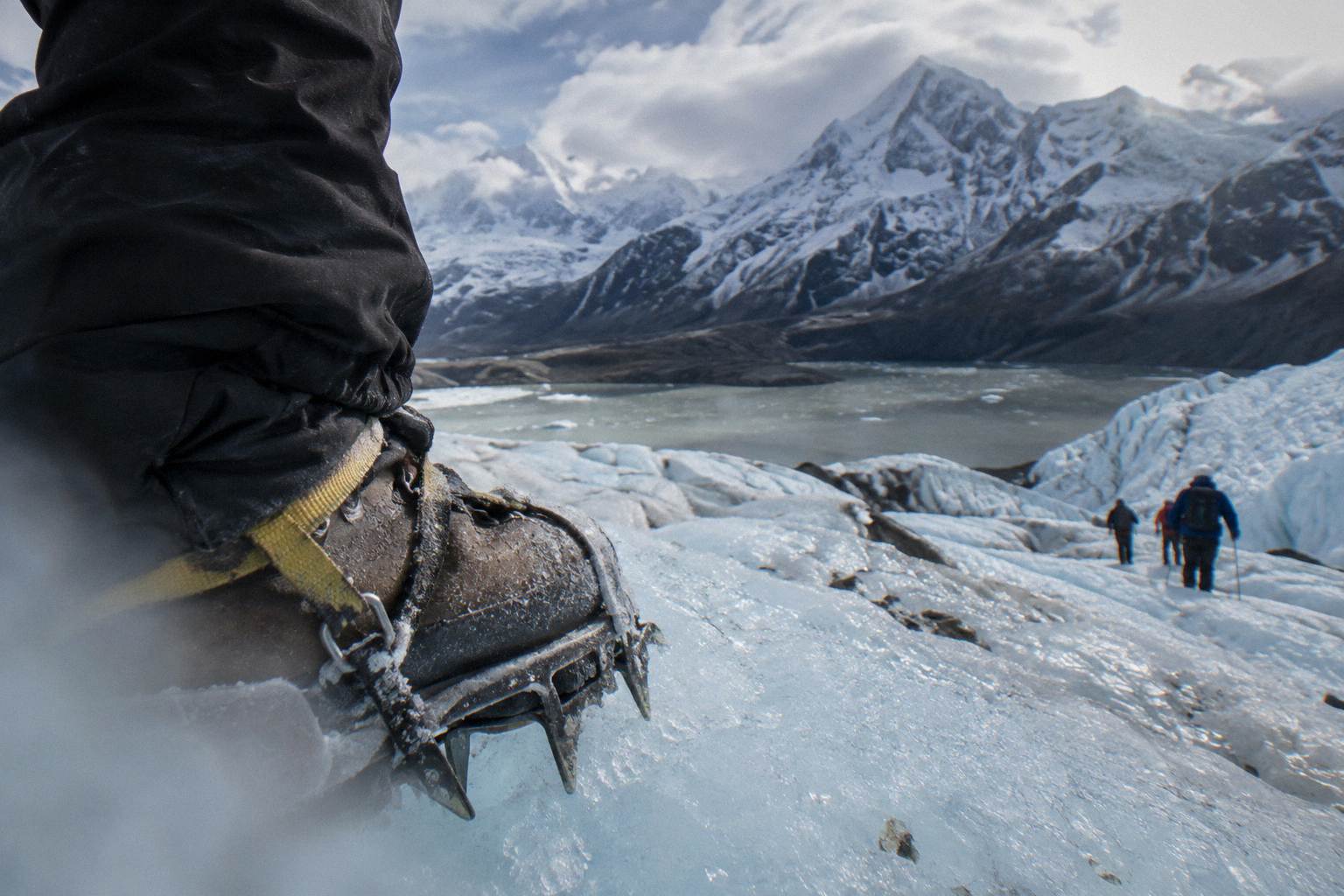
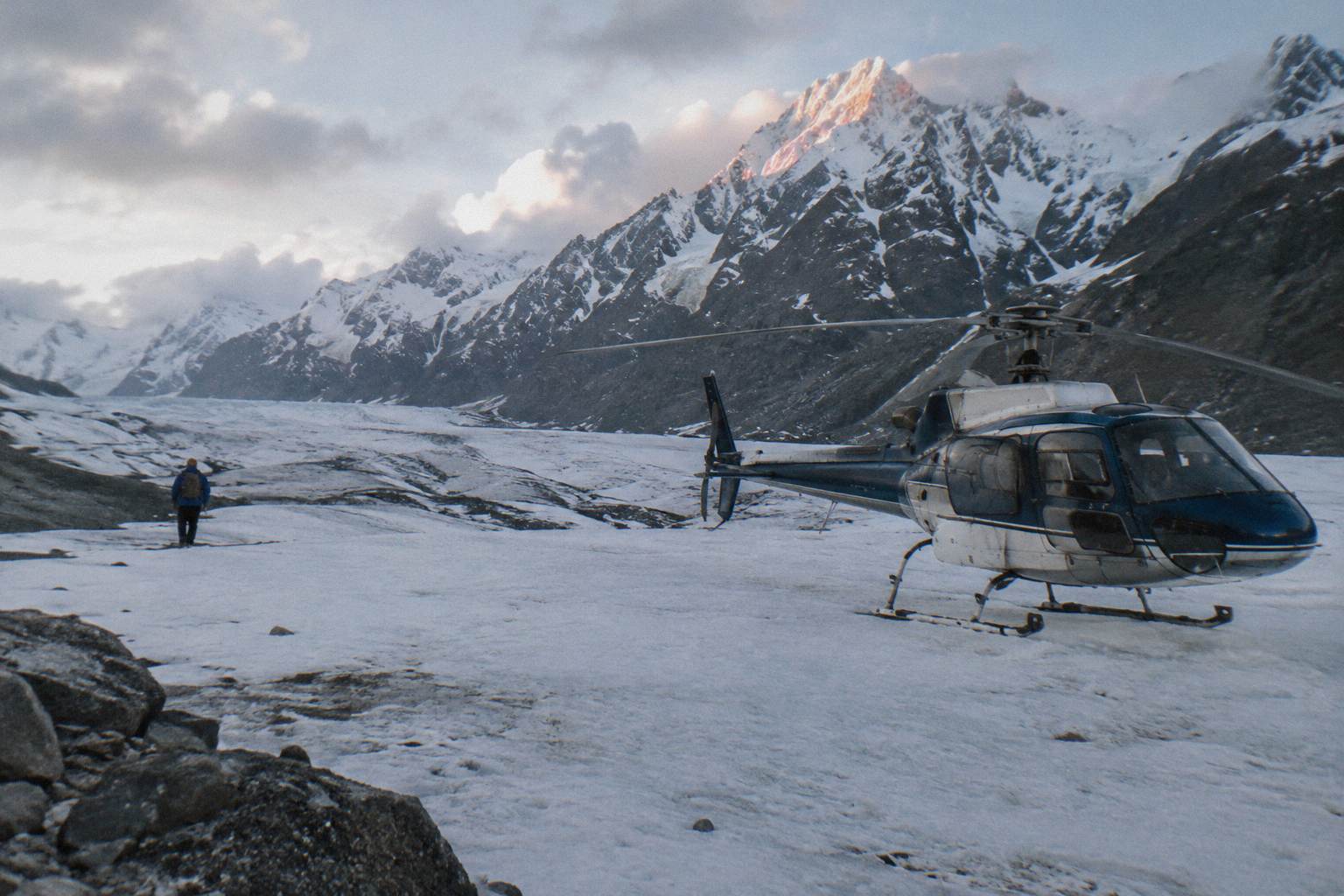
No operator publishes an on-ice temperature reading for the Tasman Glacier, so there is simply no number available to rely on. What is known: the landing site sits around 1,200 metres above sea level on ice, summer days at the nearby airport average a mild 22 degrees, winter nights fall below freezing, and every operator deals with the cold by dressing you in their gear and asking for three to four warm layers of your own.
That answer feels like a dodge until you understand why the number does not exist. A glacier surface temperature depends on the season, the time of day, the cloud cover, the wind on the landing site and whether you are standing on bare ice or fresh snow, and it changes between the morning flight and the afternoon one. Any single figure a blog printed would be a guess dressed up as a fact. What the operators do publish is far more useful for planning: a full equipment list of what they hand you on the day, a shorter list of what you must bring yourself, and a climate record at the airport down the road that brackets what the air feels like before you even climb into the helicopter.
The Mount Cook Helicopter Hike question keeps coming up because the answer changes what people pack. Under-dress and the two hours on the ice become an endurance test. Over-dress in jeans and a parka and you will sweat on the hike and then freeze when the rotor wash hits at the pickup. The sweet spot is layers you can open and shut as the day swings.
If you are already leaning toward booking, the two heli hikes from Mount Cook Airport and the shorter snow-landing flight below cover the three realistic ways to stand on this glacier.
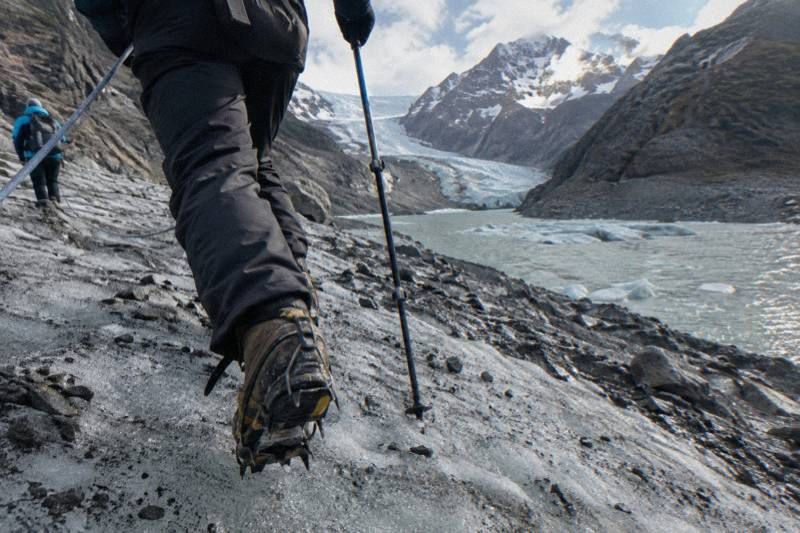
The featured trip we cover is the Helicopter Line 3-Hour Heli Hike, operated by The Helicopter Line with Alpine Guides guiding on the ice, rated 4.8 from 270+ reviews and from NZ$1,021 per person in New Zealand dollars. Its booking page runs about 3 hours door to door with a 2 hour guided hike on Tasman Glacier, and the cold-specific detail is in the inclusions: glacier boots, crampons or snowshoes, woollen socks, walking poles and a waterproof jacket if required. That list is the operator telling you, without a thermometer, how cold it can get.
What Does The Mount Cook Climate Record Say?
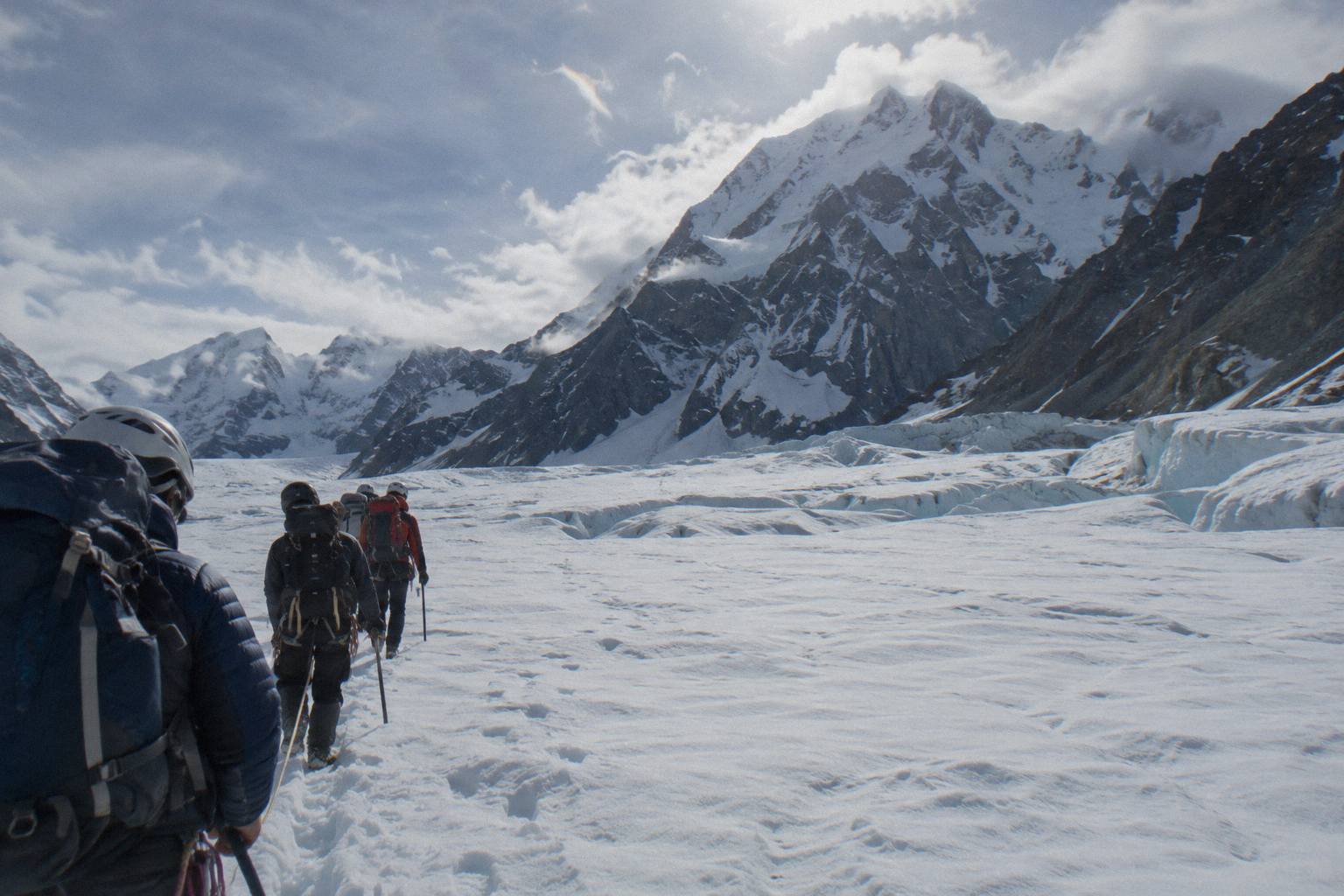
At Mount Cook Airport, 656 metres up and minutes from the glacier, the mean daily maximum is 22 degrees in January and 7.9 in July, with a mean daily minimum of minus 2.4 in July. Annual means sit at 15.0 for the daily high and 3.6 for the low. In plain terms: mild summer days, genuinely cold winter nights, and no rainfall or wind figure published anywhere reliable.
Those normals cover 2012 to 2024 and come from the airport's own climate table. They describe the air at the base, not the ice at 1,200 metres, and the gap between the two is exactly why the operators lean so hard on layering. A January day that starts at a pleasant 22 degrees can still put you on a snow surface where the wind cuts through a cotton shirt in minutes. A July day that never climbs past 8 degrees at the airport is a different proposition again, and that is the season when Mt Cook Glacier Guiding switches from crampons to crampons and/or snowshoes.
| Month | Mean daily maximum | Mean daily minimum |
|---|---|---|
| January | 22.0 °C | not published |
| July | 7.9 °C | minus 2.4 °C |
| June | not published | minus 1.8 °C |
| Annual average | 15.0 °C | 3.6 °C |
Two limits on that table: the climate normals shown are the ones that could be confirmed, and the gaps stay gaps rather than being filled with guesses. No source publishes an on-ice temperature, wind chill on the glacier, or snow depth at the landing site, and a reader planning a winter trip deserves to know that the only firm winter numbers are those airport minima.
The glacier itself frames the whole story. Department of Conservation figures describe Tasman Glacier as New Zealand's largest and longest, 23 km long and up to three km wide, and note that Tasman Lake at its terminus did not exist until 1974 and is growing rapidly as the ice melts. You will be standing on ice that is simultaneously vast and, in the long run, shrinking. For the depth of background before you fly, the glacier facts worth knowing before a heli hike piece collects the DOC numbers in one place.
What Gear Do The Operators Hand You?
Every brand running the standard Tasman heli hike supplies the cold-weather core: stiff glacier boots, woollen socks, crampons or snowshoes depending on season, walking poles, and a waterproof jacket, with waterproof over-trousers and a harness where required. Alpine Guides goes further and lends hats, gloves, socks, backpacks and jackets to anyone caught short. In other words, the operators assume the ice can be cold enough to matter, and they dress you accordingly.
- Glacier Guiding 3-Hour Heli HikeNZ$1,021
- Helicopter Line 3-Hour Heli HikeNZ$1,021
- 12-Hour Bus Combo, Heli HikeNZ$1,210
- 7-Hour Fly-In Heli HikeNZ$2,149
The details differ slightly by brand, which matters because the same basic hike is sold under more than one name. Mt Cook Glacier Guiding, whose Adventurer trip flies with aircraft from Mount Cook Ski Planes and Helicopters, lists leather boots, woollen socks, a harness if required, crampons and/or snowshoes in winter, adjustable walking poles, and a waterproof jacket and over-trousers. The Helicopter Line's version lists glacier boots, crampons or snowshoes, a waterproof jacket if required, walking poles and woollen socks. Neither list is a hint that you can travel light; it is a floor, not a ceiling, and the bring-list is where the real warmth comes from.
| Item | Mt Cook Glacier Guiding | The Helicopter Line / Alpine Guides |
|---|---|---|
| Glacier boots | Yes, leather | Yes |
| Woollen socks | Yes | Yes |
| Crampons | Yes, and/or snowshoes in winter | Yes, or snowshoes |
| Walking poles | Yes, adjustable | Yes |
| Waterproof jacket | Yes | Yes, if required |
| Over-trousers | Yes | If required |
| Harness | If required | Not listed on the standard hike |
| Hats, gloves, spare layers | Not listed | Alpine Guides lends them if needed |
The operator pages behind these lists are public: the Mt Cook Ski Planes heli hike page and the Helicopter Line Tasman Glacier Heli Hike page both publish their own versions, and the booking pages summarise them again at checkout. Reading them side by side is the fastest way to see that the cold is treated as a solved problem, not a surprise. Nobody hands out this much wool and steel for weather they expect to be gentle.
What Should You Bring Yourself?
Mt Cook Glacier Guiding's bring list is the most specific: three to four warm upper layers, warm trousers with no jeans, sunglasses and sun protection, a daypack with drink and snacks, a warm hat and gloves, and a camera. The Helicopter Line asks for sunglasses, sun block and lip balm, a warm hat and gloves, a windproof jacket, a small backpack and long trousers, with no shorts or skirts. Sun protection on both lists is the detail people miss.
Glacier ice reflects sunlight upward from below as well as down from above, and at 1,200 metres the ultraviolet load is noticeably stronger than at sea level, which is why sunglasses and lip balm appear on every list next to the gloves. The layering arithmetic is simple: three to four thin warm layers you can shed one at a time beat one thick jacket, because the hike itself is steady exercise and you will warm up within the first twenty minutes on the ice. Jeans are banned outright by both operators because wet cotton holds cold against the skin.
| Bring | Why | On whose list |
|---|---|---|
| 3-4 warm upper layers | Shed and add as the day swings | Mt Cook Glacier Guiding |
| Warm trousers, no jeans | Wet cotton stays cold | Both |
| Sunglasses | Ice glare and high-altitude UV | Both |
| Sun block and lip balm | Reflected sun burns from below | Both |
| Warm hat and gloves | The two items people forget | Both |
| Windproof jacket | Rotor wash and glacier wind | Helicopter Line |
| Small daypack, drink, snacks | Nothing is sold on the ice | Mt Cook Glacier Guiding |
| Long trousers, no shorts or skirts | Crampon straps and cold | Helicopter Line |
The Helicopter Line also publishes a leave-behind list, and it is worth reading before you pack: bags, jeans, drones, power banks, iPads, loose clothing and scarves, and large cameras on a strap all stay at the base. Loose scarves near an aircraft door are a hazard, not a fashion question. If you want the full packing argument, our what to wear on a glacier heli hike guide expands each item and the reasons behind it.
Does Winter Feel Different From Summer?
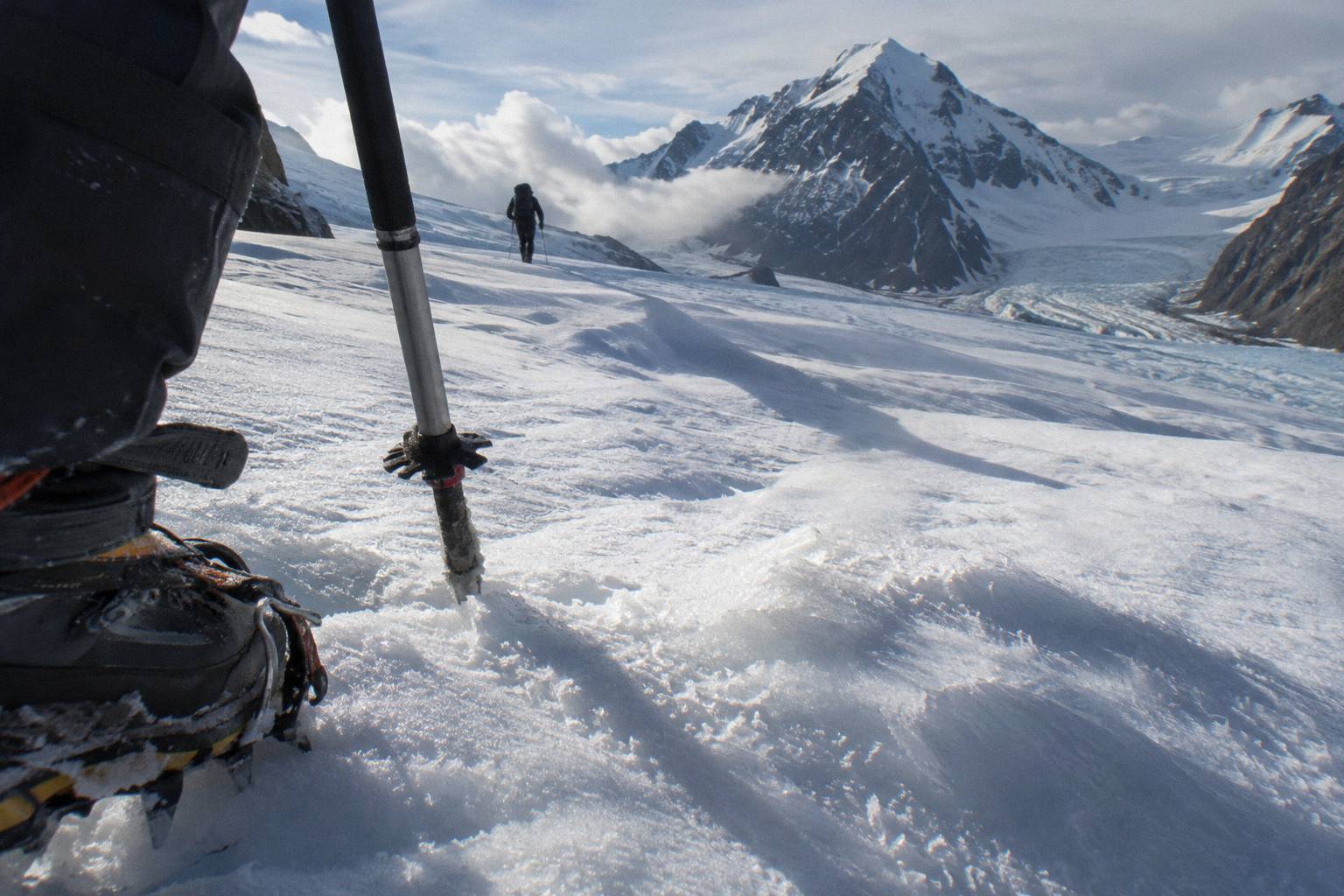
In winter, Mt Cook Glacier Guiding fits crampons and/or snowshoes instead of crampons alone, and the airport record shows July nights averaging minus 2.4 degrees, so assume snow underfoot and real cold in the air. In summer, crampons go straight onto the boots and January days average a mild 22 degrees at the airport, though the ice surface never is. Alpine Guides runs the hike all year round and no best month is published.
The gear change is the operators' own temperature signal. Snowshoes appear when fresh or soft snow makes crampon points ineffective, which tells you the winter landing site is a snowfield rather than bare ice. Neither brand names a best month, and no single best month exists: the choice is between longer, milder days with firmer ice in summer and colder, snowier, quieter conditions in winter, and both are legitimate ways to see the glacier.
Winter also changes the drive, not just the ice. The Department of Conservation notes that winter access to the park may be limited from June to September by snow, that snow can close SH80, and that avalanches can occur in any season. Those are reasons to check road conditions the day before a winter trip, not reasons to skip one. The seasonal argument, month by month, is laid out in our best time of year for a glacier heli hike guide.
There is a longer shadow over the question, too. The 2026 end-of-summer snowline survey by NIWA's Earth Sciences team found retained snow on some South Island glaciers but called it, in Dr Andrew Lorrey's words, "only a stay of execution and not a reversal in the long-term decline of ice coverage". The glacier you stand on is changing, and the operators' gear lists are quietly adapting with it.
Will The Cold Cancel My Trip?
The cold itself does not cancel heli hikes; the weather that comes with it does. Every operator states the trip is subject to favourable weather, the landing and the time on the ice are never promised, and if the operator cancels for weather you get an alternative date or a full refund. The booking pages for the featured trips allow free cancellation up to 24 hours before the start.
Mountain weather changes faster than valley weather, and The Helicopter Line advises calling 24 hours ahead to reconfirm and check conditions, noting that weather decisions can come down to about the last ten minutes before departure on the scenic side of the operation. Fog, cloud on the landing site and wind matter more to the flight than the temperature does: a bitterly cold, clear, calm morning flies, while a mild, cloudy, gusty one often does not. The Helicopter Line's own risk disclosure names falling rocks, ice cliffs, crevasses, changing snow conditions and icy surfaces as terrain hazards, which is why the guide, the harness rules and the fixed routes exist.
For readers weighing the risk side of the ledger before booking, the weather and cancellations explained guide covers what happens when a flight is scrubbed. The short version is that a weather cancellation costs you nothing but the day.
The Mt Cook Glacier Guiding 3-Hour Heli Hike, the other main brand on the same airport, is rated 4.9 from 340+ reviews and also runs from NZ$1,021 per person, with about 3 hours total and up to 2 hours on the glacier, weather permitting. Its winter setup, crampons and/or snowshoes fitted by the guide, is the practical answer to the cold question in the coldest months.
Is There A Warmer Way To See The Ice?
Yes, if the two-hour hike is the part that worries you. A snow-landing flight puts you on the glacier for minutes rather than hours, in the clothes you arrived in, with no crampons and no hiking. The Helicopter Line's 40-Minute Tasman Landing, from NZ$713 per person with 60+ reviews on the booking page, includes a 5 to 10 minute snow landing beside the pilot guide.
It is a different product, and we treat it as an alternative rather than a substitute. You land, you stand in the snow, you take photographs, you fly out, and the cold is a brief novelty instead of a two-hour companion. For travellers with limited mobility, younger children below the heli hike minimum ages of 9 or 10 depending on brand, or a budget that cannot stretch past NZ$1,021, it is the better fit. The trade-offs between the two formats are set out in full in our heli hike versus glacier snow landing comparison.
The same logic applies to the three brands question. Southern Alps Guiding sells a third version of the Tasman heli hike, and Mt Cook Glacier Guiding and The Helicopter Line sell two more; they are different companies running a very similar day out, with different minimum ages, gear lists and terms, and none of them is the original or the only one. The cold does not care which brand you book, and neither should your packing list: whatever the logo on the helicopter, the ice is the same temperature.
If the answer to the temperature question has settled the last doubt, these are the trips described above.
Common Questions About Cold On A Glacier Heli Hike
How Cold Is It On The Ice During A Glacier Heli Hike?
No operator publishes an on-ice temperature. The airport record shows mean daily maxima of 22 degrees in January and 7.9 degrees in July with July nights averaging minus 2.4 degrees, and the landing site sits around 1,200 metres on the glacier. The operators' answer to the cold is their gear list: boots, socks, crampons or snowshoes, jacket and poles are all provided, and you bring three to four warm layers.
Do I Need To Bring My Own Warm Clothes?
Yes. Boots, socks, crampons or snowshoes, poles and a waterproof jacket are provided, but the warmth is your job: three to four warm upper layers, warm trousers with no jeans, a warm hat, gloves and sunglasses are on the operators' bring lists. Alpine Guides also lends hats, gloves and spare layers if you are caught short.
Are Jeans Okay On The Glacier?
No. Both Mt Cook Glacier Guiding and The Helicopter Line exclude jeans, and The Helicopter Line bans shorts and skirts as well. Wet cotton holds cold against the skin, and crampon straps sit directly on the trouser leg. Warm synthetic or wool trousers are the standard advice.
Is The Heli Hike Colder In Winter?
Yes, on the available evidence. July nights at the airport average minus 2.4 degrees, and Mt Cook Glacier Guiding switches to crampons and/or snowshoes in winter. The hike runs all year round per Alpine Guides, no best month is published, and winter road access to the park may be limited by snow from June to September.
Can The Cold Cancel The Trip?
The cold alone does not cancel trips; cloud, wind and fog do. Every operator states the trip is subject to favourable weather, and an operator weather cancellation earns you an alternative date or a full refund. Free cancellation up to 24 hours before the start applies on the featured trips' booking pages.
Is There A Version Without Two Hours In The Cold?
Yes. A snow-landing flight such as the Helicopter Line's 40-Minute Tasman Landing, from NZ$713 per person, includes a 5 to 10 minute snow landing with a pilot guide, no hiking and no crampons. It is a different product from the heli hike, suited to travellers below the minimum age or short on time.